A Historic Shift in American Currency
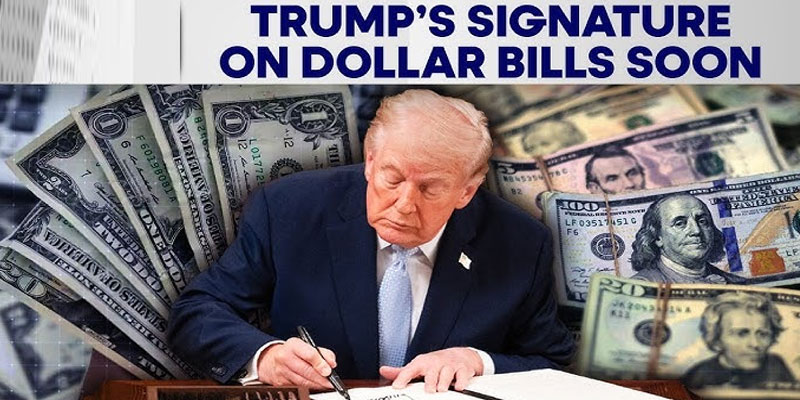
In a move that is drawing both attention and debate, US President Donald Trump is set to have his signature appear on new Federal Reserve notes starting later in 2026. The redesign, unveiled as part of the 250th anniversary of American independence, marks a significant departure from a 165-year-old tradition. For the first time, a sitting president’s name will feature on US paper currency, alongside Treasury Secretary Scott Bessent, replacing the long-standing inclusion of the US Treasurer’s signature.
The Tradition That Defined US Notes
Since the 19th century, US currency has followed a consistent format established under legislation dating back to the Civil War era. Notes have traditionally carried the signatures of two officials: the Treasury Secretary and the US Treasurer. This dual-signature system symbolized institutional continuity rather than individual prominence.
The design philosophy extended beyond signatures. American currency has historically avoided featuring living individuals, with portraits limited to deceased figures to maintain neutrality and prevent politicization. Even when design changes occurred, they adhered to these principles, reinforcing the idea that currency represents the state, not any one leader.
How the New Design Breaks Convention
The upcoming redesign fundamentally alters this framework. By including President Trump’s signature, the US Treasury is effectively replacing the Treasurer’s role on the note—a position currently held by Brandon Beach.
Legally, the Treasury has flexibility in note design under its anti-counterfeiting mandate, which allows adjustments to security features and formatting. This has enabled the administration to introduce the president’s signature without violating formal statutes. However, the symbolic shift is significant: it moves US currency away from institutional representation toward a more personalized form.
Rationale Behind the Move
Officials have framed the change as a tribute to economic stability and leadership during a milestone moment in US history. The redesign coincides with the “America 250” celebrations, and proponents argue that it reflects a period of strong economic indicators, including steady growth and low unemployment.
Supporters, including Treasury leadership, have described the inclusion as appropriate recognition of executive leadership during a defining era. The decision also aligns with previous instances where President Trump’s signature appeared on stimulus checks, reinforcing a pattern of direct association with government actions.
Criticism and Political Optics
The move has sparked criticism from opponents who view it as a departure from long-standing norms of neutrality. Critics argue that currency should remain free from contemporary political influence, warning that such changes could set precedents for future personalization by other leaders.
Experts in currency design have also noted that while legally permissible, the shift is unusual and may be reversed by future administrations. At the same time, collectors and numismatists anticipate that these notes could gain rarity value if the design proves short-lived.
Symbolism Over Substance
The inclusion of a sitting president’s signature on US currency represents more than a design change—it signals a shift in how national symbols are interpreted. While the practical value of the currency remains unaffected, its symbolic meaning is evolving.
Whether this becomes a lasting feature or a temporary deviation will depend on future political decisions. For now, the move underscores a broader tension between tradition and personalization, raising important questions about how nations choose to represent authority, identity, and continuity in their most everyday instruments.
(With agency inputs)