A Different Oval Office Encounter
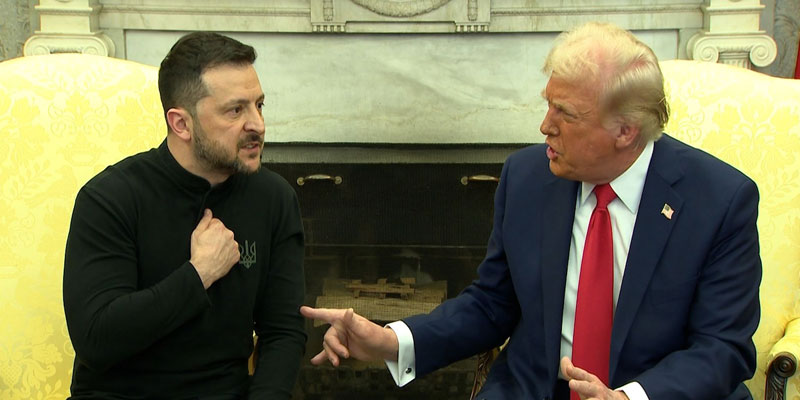
When Donald Trump welcomed Ukrainian President Volodymyr Zelenskyy back to the White House on August 18, the atmosphere was noticeably changed. Unlike their earlier February meeting—marked by tense exchanges and Zelenskyy’s hasty exit—this time there was laughter, lighter exchanges, and a show of unity. Accompanying Zelenskyy was an impressive array of European leaders: Germany’s Friedrich Merz, France’s Emmanuel Macron, Britain’s Keir Starmer, NATO’s Secretary General Mark Rutte, European Commission President Ursula von der Leyen, Finland’s Alexander Stubb, and Italy’s Giorgia Meloni. Their presence underscored the collective European effort to reinforce Kyiv’s position at a moment of critical diplomacy.
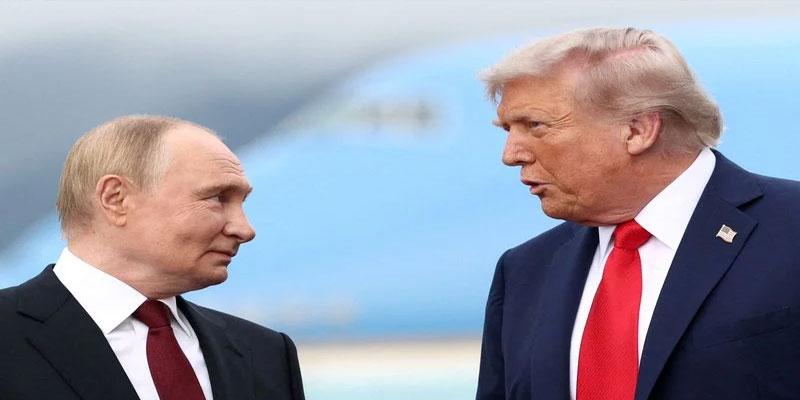
The talks followed closely on the heels of Trump’s private meeting with Russian President Vladimir Putin in Alaska—an encounter that has added intrigue to Washington’s new diplomatic maneuvering. What emerged was not only the prospect of historic talks between Putin and Zelenskyy but also an evolving discussion of Western security guarantees for Ukraine, debates over a ceasefire, and even small but symbolic gestures like Zelenskyy’s suit, which reflected a calculated shift in tone.
A Possible Putin–Zelenskyy Breakthrough
Perhaps the most consequential outcome of Monday’s discussions was Trump’s announcement that he had already spoken with Putin by phone and had started paving the way for direct talks between the Russian and Ukrainian leaders. If realized, this would mark their first face-to-face since Russia’s full-scale invasion began more than three years ago.
Trump declared on Truth Social: “At the conclusion of the meetings, I called President Putin, and began the arrangements for a meeting… between President Putin and President Zelenskyy.” His framing emphasized optimism, saying “everyone is very happy about the possibility of peace.”
For Zelenskyy, who later told reporters he was “ready” for such a dialogue, the prospect represents both opportunity and risk. Moscow continues to view him as illegitimate, and any talks would carry immense symbolic weight. German Chancellor Friedrich Merz hinted that a meeting might happen within two weeks, though no venue or date has been agreed. Kremlin aide Yuri Ushakov described Trump’s 40-minute phone call with Putin as “frank and constructive,” suggesting Moscow is at least prepared to engage.
Security Guarantees: America’s Role in Ukraine’s Shield
Central to the Oval Office conversation was Ukraine’s security framework. Trump told Zelenskyy and the European leaders that the U.S. was willing to help guarantee Ukraine’s safety, though he carefully avoided laying out specifics.
When asked directly whether this meant deploying U.S. troops, Trump kept the door open: “Europe is the first line of defence, but we’ll be involved. We’ll give them good protection.” That ambiguity was enough to spark debate. Ursula von der Leyen welcomed the idea of “Article Five-like security guarantees,” a reference to NATO’s mutual defense clause, though Ukraine remains outside NATO.
Behind the scenes, financial commitments also surfaced. Reports suggested Kyiv had agreed to procure up to $100 billion worth of U.S. weapons financed largely by European partners. Zelenskyy later referenced a $90 billion figure and said the framework for guarantees would be formalized within 10 days. The convergence of American and European commitments signals a deepening military-economic partnership, though the contours remain hazy.
Ceasefire or Continued Conflict?
On the issue of a ceasefire, Trump struck a pragmatic but controversial note. Previously, he had threatened Putin with “severe consequences” if Russia resisted halting hostilities. Yet on Monday, he softened, suggesting that a ceasefire was not a prerequisite for negotiations.
“I don’t think you need a ceasefire,” Trump remarked. “I like the concept because you’d stop killing immediately… but strategically, it could disadvantage one side.” He proposed that peace talks could run parallel to continued fighting.
This stance troubled allies. Chancellor Merz countered, “I can’t imagine the next meeting will take place without a ceasefire.” Even Zelenskyy, once vocal about an immediate halt to fighting, did not press the issue on this occasion. The divergence reflects a strategic dilemma: while a ceasefire saves lives in the short term, it can cement battlefield realities in Russia’s favor.
Europe Shows Up United
Perhaps the most striking feature of the day was Europe’s collective presence. By arriving en masse, leaders from Berlin, Paris, London, Brussels, Helsinki, and Rome made clear that Ukraine’s fate is not Kyiv’s burden alone. Their combined presence prevented a repeat of February’s fiasco and ensured that Kyiv’s demands were not drowned out by Trump’s political theater.
The solidarity also highlighted Europe’s stake in the war’s outcome. Security on the continent depends on Ukraine’s defense, and the leaders underscored that point while simultaneously nudging Trump toward commitments. Even so, analysts caution that the war’s trajectory remains uncertain. As one Council on Foreign Relations report concluded: “It’s never quite enough. And so, in the short-to-medium term, for better or worse, this war will likely go on.”
Diplomacy in Motion, War Unresolved
The August 18 meeting marked a clear shift in tone—away from open hostility and toward cautious engagement. Trump’s outreach to Putin, Zelenskyy’s readiness for talks, and Europe’s united front all point to a fluid diplomatic moment. Yet ambiguity clouds every step: U.S. guarantees remain undefined, ceasefire terms unresolved, and Putin’s true intentions unknown.
For Ukraine, the stakes are existential. For Europe, the war threatens regional stability. And for Trump, the opportunity lies in delivering on his pledge to end the conflict swiftly. Whether this Oval Office reset leads to a breakthrough or merely another round of inconclusive talks remains to be seen. What is certain is that the world is watching closely as diplomacy, symbolism, and power politics intertwine on the uncertain path toward peace.
(With agency inputs)