Strong Gulf demand drives recovery after conflict disruptions
After disruptions caused by the West Asia conflict, Air India Express has restored nearly 90% of its Middle East network and expects to return to pre-war operations by October, provided the regional security situation does not deteriorate. The airline has also highlighted that the United Arab Emirates remains one of its largest international markets, with passenger demand continuing to grow. The recovery reflects not only operational resilience but also the enduring importance of India-Gulf connectivity for trade, tourism and the movement of millions of Indian expatriates.
A network built around the Gulf
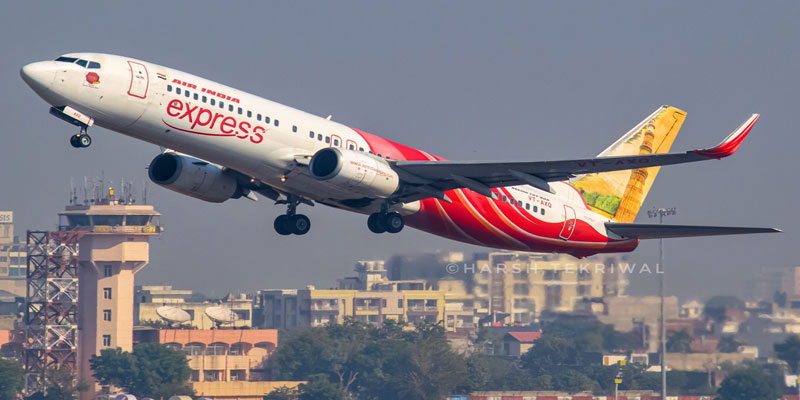
Air India Express, the low-cost arm of the Air India Group, operates more than 500 daily flights across domestic and international destinations. Its international strategy has traditionally focused on connecting Tier-II and Tier-III Indian cities with Gulf countries, serving migrant workers, families and budget-conscious travellers.
The recent West Asia conflict, fuelled by escalating tensions involving the US and Iran, disrupted aviation across the region. Airspace restrictions, heightened security concerns and increased insurance costs forced several airlines, including Air India Express, to temporarily suspend or reduce services to destinations such as Kuwait and Oman. The constraints stemmed largely from operational risks rather than weakening passenger demand.
Restoring operations in phases
According to Air India Express Chairman Nipun Aggarwal, the airline has already restored around 90% of its Middle East operations and expects a complete return to pre-conflict schedules from October if conditions remain stable.
Flights to destinations such as Salalah in Oman and Kuwait have resumed, with services from Kozhikode and Bengaluru among the first to restart. By early July, the carrier had restored its broader Gulf network, operating approximately 780 weekly flights connecting 18 Indian cities with 13 destinations across Bahrain, Kuwait, Oman, Qatar, Saudi Arabia and the UAE.
The remaining recovery is expected to focus primarily on increasing frequencies and optimising aircraft deployment rather than reopening suspended routes.
Why the UAE remains central
The UAE continues to anchor Air India Express's international business. Group officials estimate that nearly a quarter of the Air India Group's overall business comes from the UAE market, reflecting deep economic and social ties between the two countries.
The airline continues expanding connectivity with Abu Dhabi, Dubai and Sharjah through new services from cities such as Navi Mumbai, Lucknow, Indore and the upcoming Guwahati-Abu Dhabi route. Meanwhile, Abu Dhabi's aviation and tourism sectors have demonstrated remarkable resilience, with airport traffic exceeding last year's levels and hotel occupancy remaining healthy despite regional instability.
These trends indicate that demand has remained robust even during periods of geopolitical uncertainty.
Balancing opportunity with operational caution
The phased restoration demonstrates a measured approach to risk management. Air India Express has prioritised high-demand labour corridors linking southern India with Gulf destinations while closely monitoring airspace safety and regulatory developments.
The strategy also supports the Air India Group's broader network model, where Air India serves premium and long-haul travellers while Air India Express focuses on regional and value-conscious passengers. At the same time, restoring Gulf connectivity strengthens remittance flows, business travel and trade relations that are vital for India's economy.
Nevertheless, the airline's October target remains contingent on the regional security environment. Any escalation affecting Gulf airspace, aviation infrastructure or insurance costs could delay the final phase of recovery.
A Strong Signal of India-Gulf Aviation Resilience
Air India Express's rapid network restoration highlights the structural strength of India-Gulf travel, where labour mobility, family connections and commercial ties generate sustained demand even during periods of geopolitical instability. While the conflict exposed the vulnerability of regional aviation to security shocks, the swift recovery demonstrates the corridor's enduring economic importance. If stability prevails, the airline is well positioned to regain its full Gulf operations, reinforce India's connectivity with the region and support the Air India Group's broader international expansion strategy.
(With agency inputs)