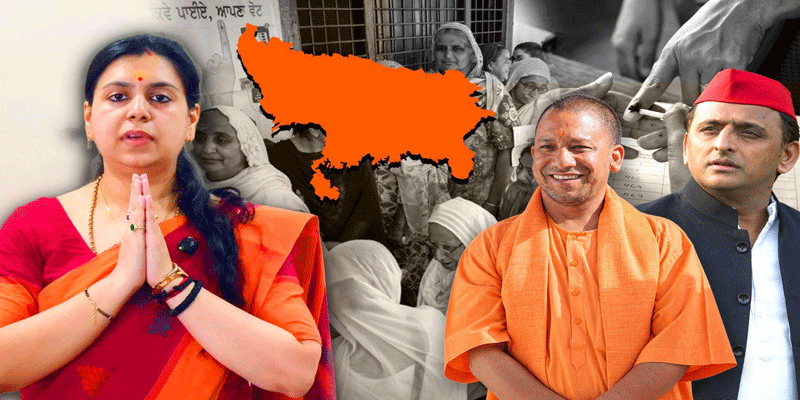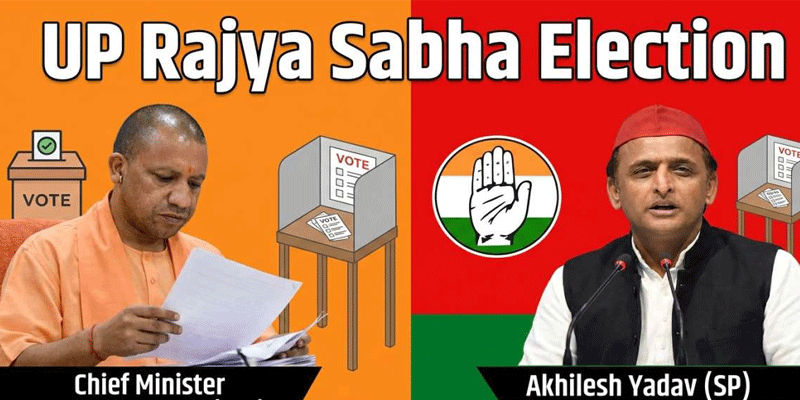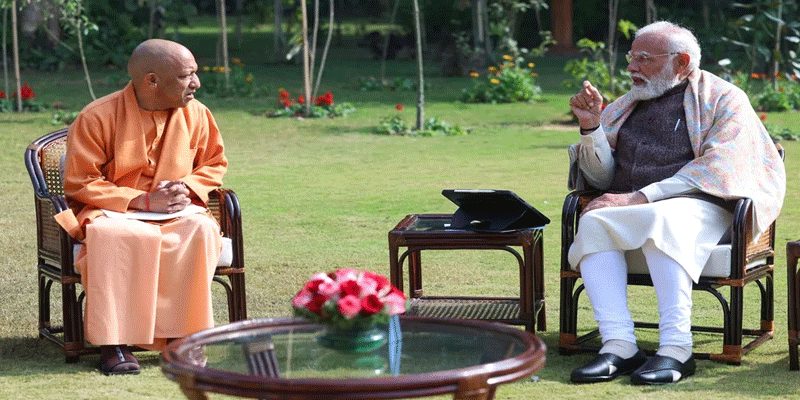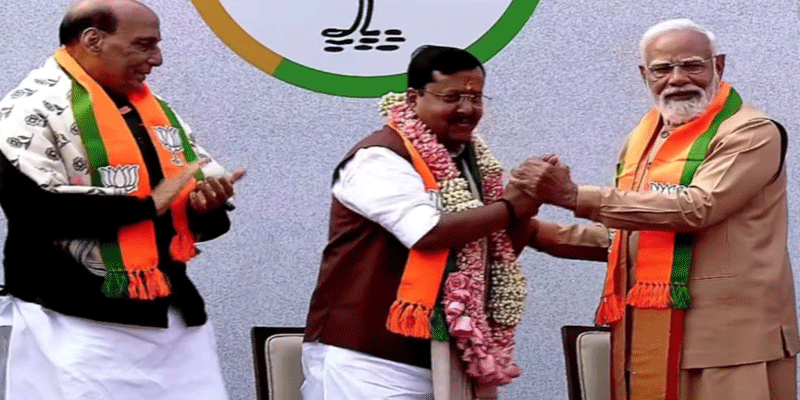
The Rajya Sabha polls from Uttar Pradesh are set to become an important political exercise ahead of the 2027 Assembly elections, with the BJP using the opportunity to reshape its representation in the Upper House. With 10 seats falling vacant in November 2026 and polling scheduled for October 16, the contest carries significance beyond the arithmetic of the Rajya Sabha.
UP’s Numbers Give BJP a Clear Advantage
Rajya Sabha members serve six-year terms, with roughly one-third of the House retiring every two years. In Uttar Pradesh, the BJP’s commanding strength in the Legislative Assembly means it is expected to secure eight of the 10 seats, leaving the remaining two for opposition parties, depending on the final electoral arithmetic.
The election has therefore become less about whether the BJP will win and more about whom the party chooses to represent it in Parliament.
BJP Opts for Eight New Faces
The BJP on October 5 announced its eight candidates from Uttar Pradesh, delivering a significant surprise by dropping all eight sitting BJP Rajya Sabha MPs whose terms are ending.
The nominees are:
· Dharampal Singh
· Radhakant Ojha
· Prakash Pal
· Vidyasagar Sonkar
· Gopi Krishna Pandey
· Priyanka Singh Rawat
· Ram Pratap Singh Chauhan
· Shruti Gangwar
The list includes two women—Priyanka Singh Rawat and Shruti Gangwar—and brings together leaders from different regions and social backgrounds.
The decision marks a clear departure from the conventional practice of retaining experienced parliamentary faces. Among those denied renomination are Hardeep Singh Puri, Union Minister for Petroleum and Natural Gas, and B.L. Verma, Minister of State and a sitting Rajya Sabha member from Uttar Pradesh. Other outgoing BJP MPs, including Arun Singh, Geeta Shakya, Neeraj Shekhar, Brij Lal and Seema Dwivedi, have also been left out.
New Faces Over Seniority and Ministerial Status
The selection appears to reflect several strategic considerations as the BJP prepares for the 2027 Assembly battle.
Party discussions had reportedly considered a much larger panel of around 22–25 names. It included prominent figures such as Smriti Irani, Hardeep Puri, Sanjeev Balyan and former AAP leader Kumar Vishwas. The central leadership ultimately opted for a different combination.
The choices indicate emphasis on:
· Organisational workers and grassroots leadership
· Caste and social representation
· Regional balance across Uttar Pradesh
· Fresh political faces
· Strengthening the party’s organisational base ahead of 2027
This suggests that parliamentary experience alone was not the decisive criterion.
A Bigger Signal Beyond Rajya Sabha
The exclusion of Hardeep Puri is particularly significant because he is a senior Union Cabinet minister. With his Rajya Sabha tenure ending in November and his name absent from the new UP list, questions could emerge about the future composition of the Union Council of Ministers.
More broadly, the BJP’s wholesale replacement of its outgoing UP Rajya Sabha contingent signals a willingness to undertake major political recalibration well before the Assembly elections.
A Strategic Reset for the 2027 Battle
The BJP’s Uttar Pradesh Rajya Sabha nominations represent more than a routine biennial election. By replacing its entire outgoing contingent, the party has prioritised renewal, representation and organisational calculations over continuity. The move gives emerging leaders a larger national platform while allowing the central leadership to fine-tune caste and regional equations ahead of 2027. For the opposition, the BJP’s numerical advantage remains formidable; politically, however, the new nominations reveal how seriously the party is preparing for the next electoral battle in Uttar Pradesh.