Trade Tensions Rekindled
The uneasy truce between Washington and Beijing has fractured once more. In a dramatic escalation of trade hostilities, China announced sweeping new restrictions on the export of rare-earth materials, a vital component for industries ranging from defence and electronics to electric vehicles. In a swift countermeasure, US President Donald Trump slapped an additional 100 per cent tariff on Chinese imports, reigniting a conflict that had shown brief signs of easing earlier this year.
Rare earths—seventeen metallic elements used to make high-performance magnets, semiconductors, and weapon systems—are a cornerstone of modern manufacturing. China, which dominates over 80% of global rare-earth supply, has long held a strategic advantage in this sector. Its latest decision to tighten export rules sent shockwaves through the global market and triggered a fierce response from Washington.
China’s Rare Earth Curbs: A Strategic Move
On Thursday, China’s Ministry of Commerce announced that foreign companies would now require special licenses to export rare-earth elements and related technologies. The new policy further bars the export of items intended for military use, citing “national security” considerations.
This move effectively gives Beijing greater leverage over global supply chains. Rare earths are indispensable for producing magnets used in electric vehicles, smartphones, wind turbines, and missiles. Analysts believe the decision is a strategic countermeasure against mounting US trade and technology restrictions on Chinese companies.
Beijing’s announcement sparked panic across Western markets, with manufacturers fearing potential shortages and price surges. It also rekindled debate in Washington over America’s heavy dependence on China for critical materials essential to its tech and defence industries.
Trump’s 100% Tariffs: A Swift Counterattack
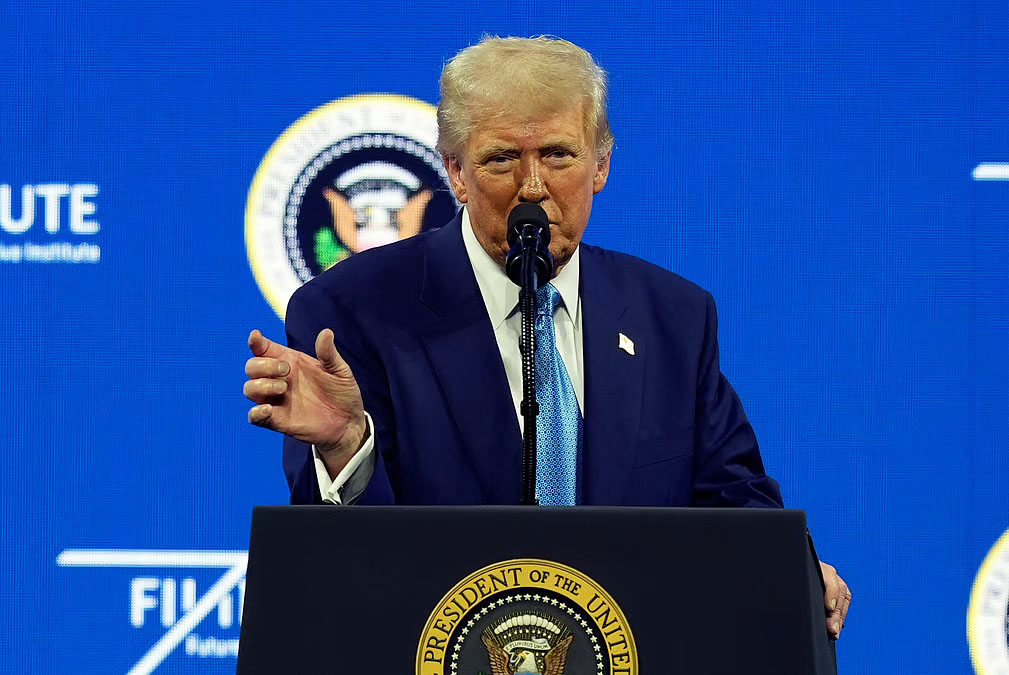
Within hours of Beijing’s declaration, President Trump retaliated with a fresh round of economic firepower, imposing an additional 100 per cent tariff on all Chinese imports, effective November 1. The move raises the overall US tariff rate on Chinese goods to 130 per cent, marking one of the harshest trade measures in modern US-China relations.
In a lengthy post on Truth Social, Trump accused China of taking an “extraordinarily aggressive position” by “imposing large-scale export controls on every product they make.” Calling Beijing’s actions “a moral disgrace in international trade,” he claimed the policy had been planned “years in advance” as part of a broader economic strategy.
Trump also announced plans to impose export controls on all critical US software, a measure aimed at curbing China’s access to advanced technologies. “The Treasury and Commerce Departments are working together to ensure no US innovation fuels China’s dominance,” he declared.
Meeting with Xi Still on the Cards—For Now
Despite the escalating rhetoric, Trump clarified that he had not cancelled his upcoming meeting with Chinese President Xi Jinping, though uncertainty looms. When asked if he would consider lifting tariffs should China reverse its rare-earth curbs, Trump replied cautiously: “We’ll have to see what happens. That’s why I made it November 1.”
He added that while the meeting “might still happen,” China’s sudden export restrictions had “shocked the world” and “caught everyone off guard.” The remarks hint at a volatile diplomatic climate where negotiation and confrontation coexist uneasily.
Global and Sectoral Impact
The economic fallout from this tit-for-tat could be widespread. The United States imports hundreds of billions of dollars’ worth of Chinese goods each year, and higher tariffs are expected to inflate prices for electronics, apparel, and furniture—key consumer categories reliant on Chinese manufacturing.
Although India is unlikely to face direct repercussions, analysts suggest that countries heavily integrated into US or Chinese supply chains may experience ripple effects. In contrast, producers of non-Chinese rare-earth alternatives could benefit from rising demand and price premiums as buyers seek to diversify sources.
A Battle of Resources and Influence
Trump’s latest tariff strike marks a new chapter in a broader contest for economic and technological dominance. For Washington, it’s an attempt to assert leverage over a trade partner it views as manipulative and opaque. For Beijing, the rare-earth restrictions are a calculated show of strength, signaling that it still holds key cards in the global supply chain.
Both nations now face heightened stakes: the US risks inflation and supply shortages, while China confronts potential isolation from lucrative Western markets. Yet neither side appears ready to back down.
A New Front in the Global Trade War
China’s rare-earth restrictions and Trump’s retaliatory tariffs have reignited one of the world’s most consequential economic rivalries. Beneath the surface, the clash reflects a deeper struggle for technological supremacy and geopolitical influence.
As both nations double down, the world watches with concern. For global industries, the message is clear—supply chains are the new battleground, and economic security has become as critical as military power. Whether diplomacy can cool these renewed hostilities remains uncertain, but one fact stands firm: the era of trade détente between Washington and Beijing is over, at least for now.
(With agency inputs)