The turbulence surrounding IndiGo has shifted from airport terminals to the regulatory corridors of Delhi. What started as a wave of mass flight cancellations has now triggered one of the most sweeping crackdowns the aviation sector has seen in recent years. Four DGCA officials assigned to oversee India’s biggest carrier have been dismissed, and IndiGo’s CEO has been repeatedly summoned as investigators dissect how the airline’s crew-management breakdown spiralled into a national disruption.
A Crisis of Planning, Oversight and Public Trust
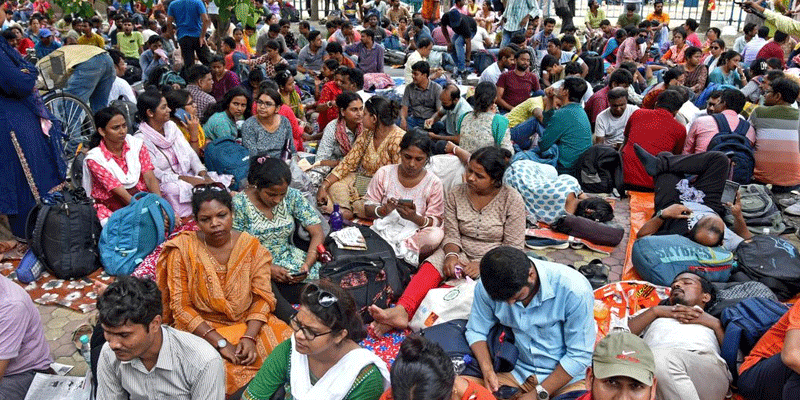
Beginning around 2 December, IndiGo’s operations entered a freefall. As the airline struggled to transition to Phase-2 of the DGCA’s revised Flight Duty Time Limit (FDTL) rules, cancellations surged—some days crossing an estimated 1,000 flights. Major airports, from Delhi to Bengaluru, saw passengers stranded for hours amid long queues, scarce updates and aircraft left idle for want of rested pilots.
The public humiliation became acute as images of families sleeping on terminal floors flooded social media, forcing the government to respond decisively.
Regulatory Shock Therapy: DGCA Sacks Its Own Inspectors
In an unprecedented move, the DGCA dismissed four Flight Operations Inspectors responsible for continuous oversight of IndiGo’s crew planning and scheduling systems. These officials were expected to evaluate whether IndiGo had the manpower, training capacity and rostering resilience to operate the ambitious winter schedule it filed.
Their removal signals official acknowledgement of an oversight lapse: IndiGo’s schedules were approved without adequately stress-testing the effects of stricter FDTL norms that increased captain requirements and curbed consecutive night operations. The message is categorical—airlines will be penalised for operational mismanagement, and regulators will not be insulated from consequences when systemic risks go unflagged.
Simultaneously, a high-level four-member inquiry panel has been constituted to probe IndiGo’s planning failures, rostering architecture, and compliance preparedness, while the airline has been ordered to trim its schedule by roughly 10%.
Detailed Analysis: Why IndiGo’s System Cracked
1. Underestimating the Impact of FDTL Phase-2
Phase-2 of the fatigue-mitigation rules introduced tighter rest requirements and stricter night-duty caps. IndiGo calculated it needed about 2,422 captains and 2,153 first officers to operate its A320 network under the new norms. In reality, it had fewer rested pilots available than required—creating a structural shortfall before accounting for sick leave, training or weather-driven delays.
Where other carriers adjusted operations in anticipation, IndiGo maintained a high-utilisation model, assuming existing buffers would suffice. When the new rules took full effect, each flight required more crew-hours than expected, triggering a rapid depletion of deployable pilots.
2. Rostering Failures in a Night-Heavy Network
IndiGo’s network depends heavily on late-night and early-morning operations—precisely the areas hit hardest by FDTL restrictions. The airline did not rebalance schedules or redesign roster banks to create sufficient slack.
Instead, it attempted to operate near-old schedules with pilots who were frequently timed-out under the new limits. With inadequate standby crews, even minor disruptions cascaded into mass cancellations.
3. Compounding Stressors Exposed Fragile Crew Buffers
Winter-season peaks, intermittent weather disruptions and minor technology glitches further strained the crew-management system. Each small delay pushed more pilots over legal limits, resulting in a domino effect that left nearly half the fleet underutilised at one point.
4. Regulatory Consensus: Planning, Not Policy, Is to Blame
DGCA insists the fatigue-mitigation rules will remain intact. The crisis, regulators argue, reflects IndiGo’s flawed manpower estimates, insufficient contingency buffers and rostering systems that failed to adapt to a predictable regulatory shift.
A Defining Moment for India’s Aviation Ecosystem
The IndiGo meltdown was not an unforeseeable shock but a foreseeable planning failure exacerbated by tight scheduling and inadequate oversight. While the airline miscalculated the pilot strength required under new FDTL norms, the DGCA’s decision to sack four inspectors marks a rare admission of regulatory accountability.
As the inquiry proceeds, the outcomes are likely to reshape crew-planning practices, schedule-filing norms and enforcement mechanisms across the industry. This episode stands as a watershed moment—highlighting the need for balanced growth that aligns operational ambition with safety, labour welfare and consumer rights.
(With agency inputs)