Why Is the ‘Lehra Do Tiranga’ March Being Held?
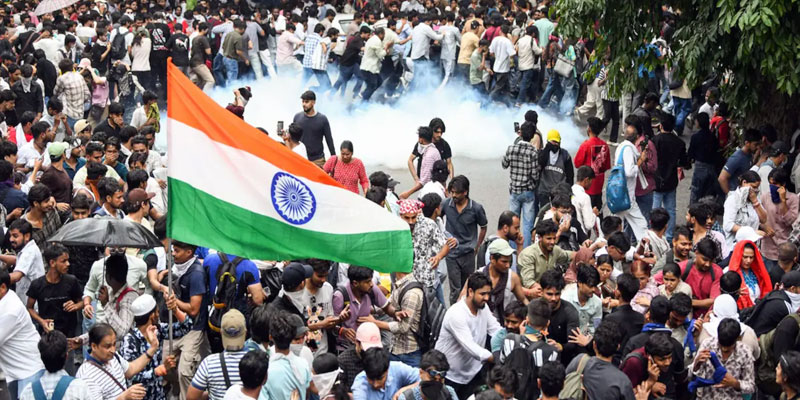
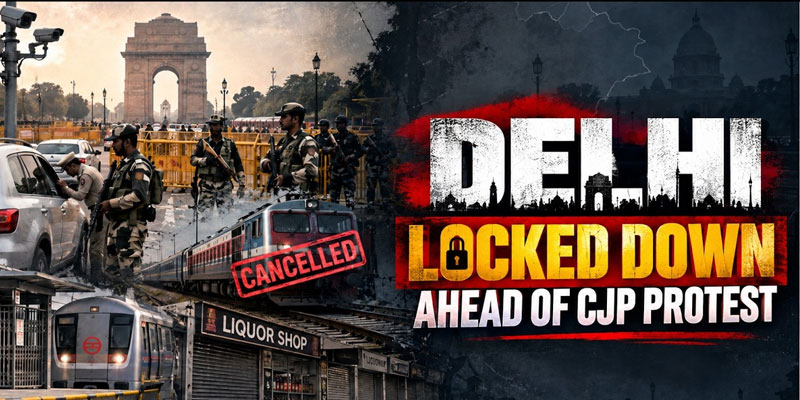
Central Delhi has been placed under heightened security ahead of the Cockroach Janta Party’s (CJP) “Lehra Do Tiranga” march at Connaught Place’s Central Park on Friday. The proposed gathering has triggered a political confrontation over electoral-roll revisions, the detention of party leaders and the limits of peaceful protest. While the Delhi Police has restricted the event, allowing only a small group to participate in a symbolic flag-hoisting arrangement, opposition parties have rallied behind the demonstration.
Detentions and Electoral Disputes Behind the Protest
CJP founder Abhijeet Dipke announced the Tiranga Yatra after the party’s co-conveners, Ashutosh Ranka and Saurav Das, were sent to five-day judicial custody for allegedly violating peace bonds by entering Jantar Mantar, recently denotified as a protest site, and waving the national flag.
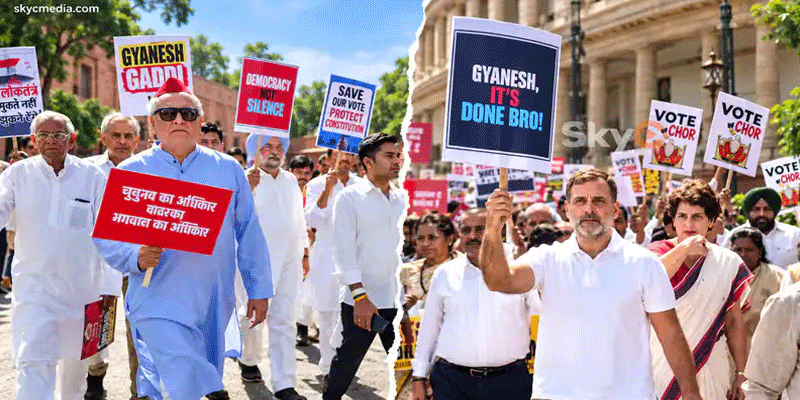
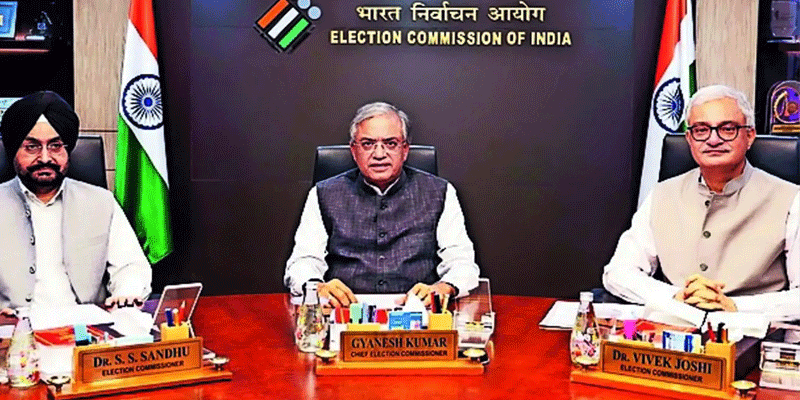
The march also forms part of the party’s wider campaign against the Special Intensive Revision (SIR) of electoral rolls and its demand for the removal of Chief Election Commissioner Gyanesh Kumar. CJP and allied organisations have raised concerns over the revision exercise and called for safeguards to ensure electoral transparency.
Dipke has described the march as a peaceful, Gandhian expression of democratic dissent, arguing that waving the national flag cannot be treated as a crime. He has invited political parties, students, workers, farmers, traders and civil-society groups to join the gathering scheduled for 5 pm.
Police Restrictions and Heightened Security
The Delhi Police has refused permission for the proposed march, invoking Section 163 of the Bharatiya Nagarik Suraksha Sanhita (BNSS) to prevent disturbances and protect public safety. However, it has indicated that a select group, reportedly comprising 11 people, may wave the Tricolour and sing the national anthem at a designated location.
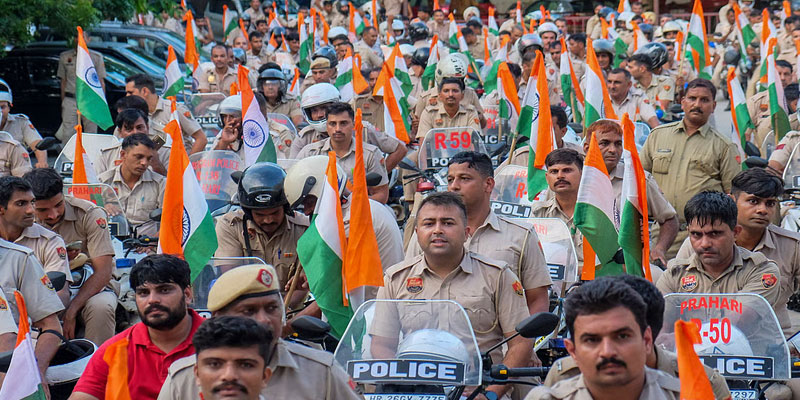
Security personnel, including Rapid Action Force members, have been deployed around Central Park, Rajiv Chowk, Connaught Place, Jantar Mantar and nearby Metro stations. CCTV surveillance and traffic diversions have also been intensified.
Opposition Backs Protest, Questions Police Action
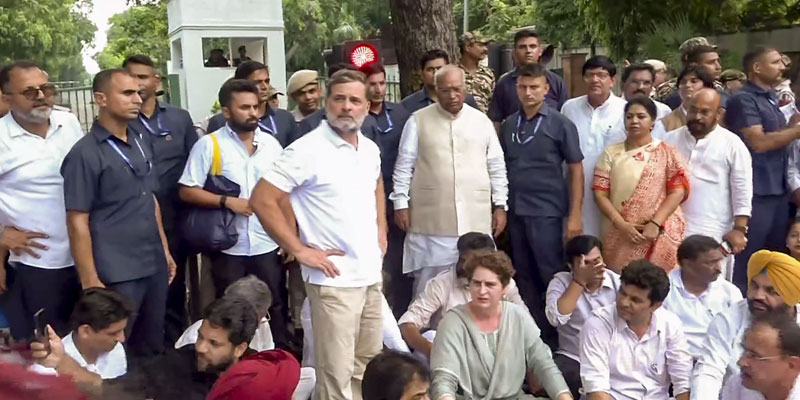
The Aam Aadmi Party (AAP) has urged its workers and supporters to participate, backing the demand for electoral accountability. The Congress has separately opposed the SIR exercise and demanded CEC Gyanesh Kumar’s resignation. Rahul Gandhi and other Congress leaders were previously detained during related demonstrations.
The All India Students’ Association (AISA), an ally of CJP, has condemned the police restrictions and demanded the repeal of the law governing Election Commissioner appointments.
Opposition leaders argue that the security measures represent excessive restrictions on democratic dissent. CJP and AISA have questioned why Connaught Place appears to be guarded like an international border.
BJP Defends National Pride, Questions Protest Agenda
BJP MP Sanjay Jaiswal welcomed the idea of a Tiranga Yatra, stressing respect for India, its citizens and peaceful national progress. However, he cautioned against working on the agenda of “foreign forces,” suggesting that national symbols should not become instruments for politically motivated agitation against constitutional institutions.
Democracy Must Balance Dissent and Public Order
The confrontation highlights a fundamental democratic question: how can authorities maintain public order without unnecessarily restricting peaceful political expression? With the Delhi High Court declining to restrain the march while accepting the police’s assurance to manage the situation, the focus remains on the event’s conduct. Ultimately, respect for the national flag, electoral transparency and public safety should reinforce—not undermine—India’s democratic institutions.
(With agency inputs)