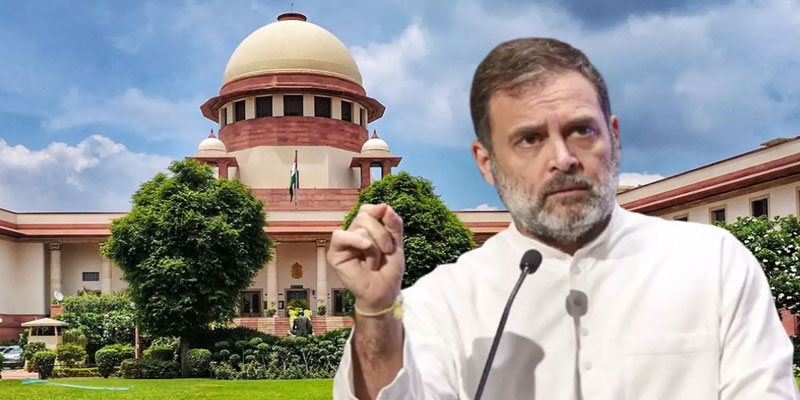
The Supreme Court has expressed strong reservations about Rahul Gandhi-led opposition leaders marching to its premises, with Chief Justice of India Surya Kant emphasising that “nobody can browbeat the judiciary.” On October 15, while issuing notice on petitions challenging the Election Commission of India’s Special Intensive Revision (SIR) of electoral rolls, the court made it clear that examining the legal challenge would not amount to approving conduct that could be perceived as pressuring the judiciary.
Opposition Challenges Voter Roll Revision
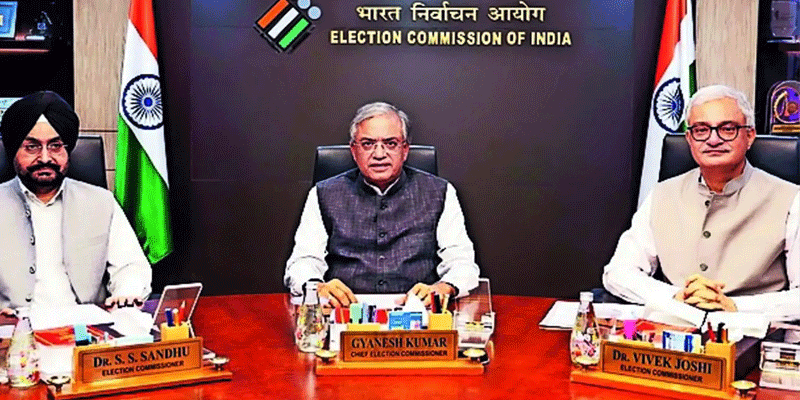
The controversy centres on opposition allegations that the Election Commission’s SIR exercise has resulted in improper deletions from electoral rolls, potentially affecting voters’ rights and the fairness of elections. Opposition parties have demanded greater transparency and scrutiny of the revision process, while questioning the decisions of Chief Election Commissioner Gyanesh Kumar.
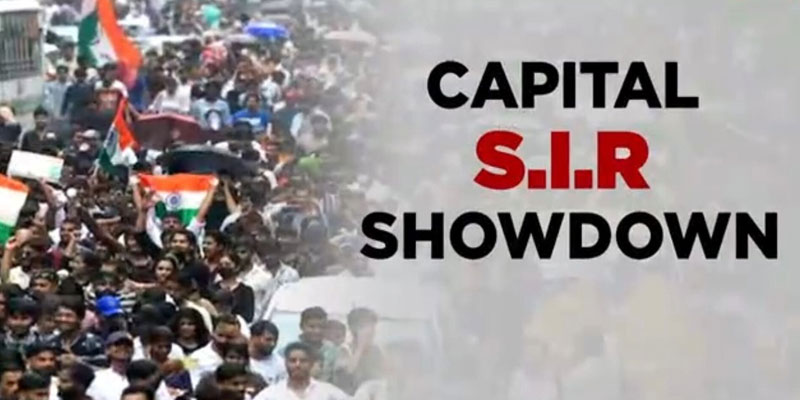
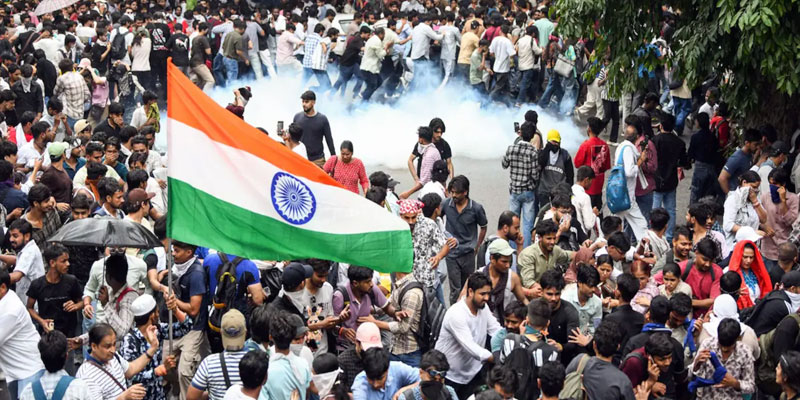
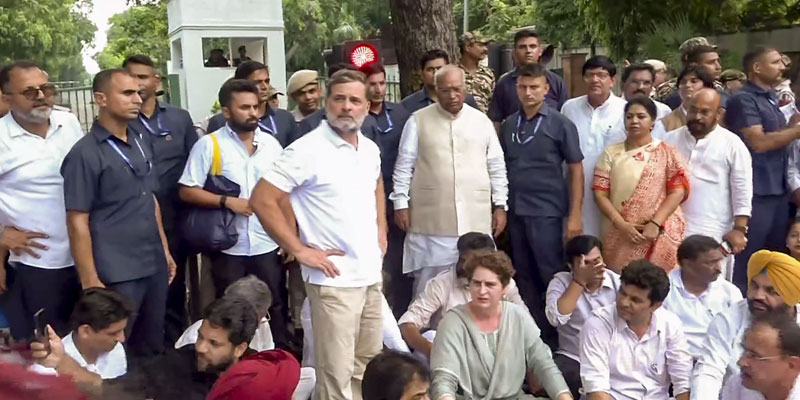
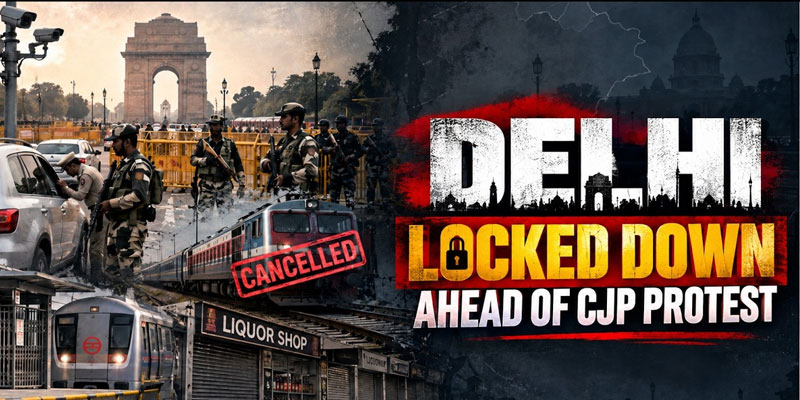
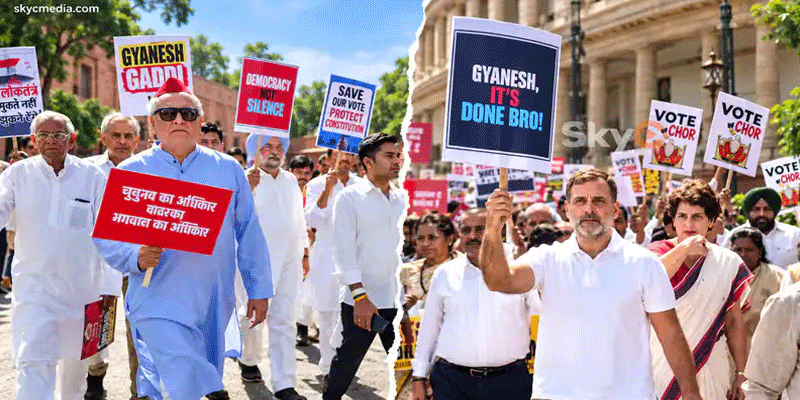
On October 12, Rahul Gandhi led an INDIA bloc march from central Delhi towards the Supreme Court, accompanied by opposition leaders, party workers, activists and student groups. The demonstration culminated in a joint petition seeking judicial scrutiny of the electoral revision and the Election Commission’s decisions.
What the Supreme Court Observed
A bench comprising Chief Justice Surya Kant and Justice Joymalya Bagchi heard approximately 32 petitions on October 15, including challenges filed by Rahul Gandhi, CPI(M) general secretary M.A. Baby, AIMIM chief Asaduddin Owaisi and other petitioners.
The bench issued notice on the substantive challenges but separately sought an explanation from Gandhi regarding the march and the gathering at the court premises.
The observations followed submissions by senior advocate Gaurav Bhatia, who argued that the protest and associated public commentary could be construed as an attempt to influence judicial proceedings. The Chief Justice stressed that although the judiciary was not operating in an “ivory tower,” it must remain independent of external pressure.
The distinction is significant: the court can examine allegations concerning electoral procedures while independently addressing questions about conduct surrounding pending litigation.
Multiple Petitions Seek Judicial Scrutiny
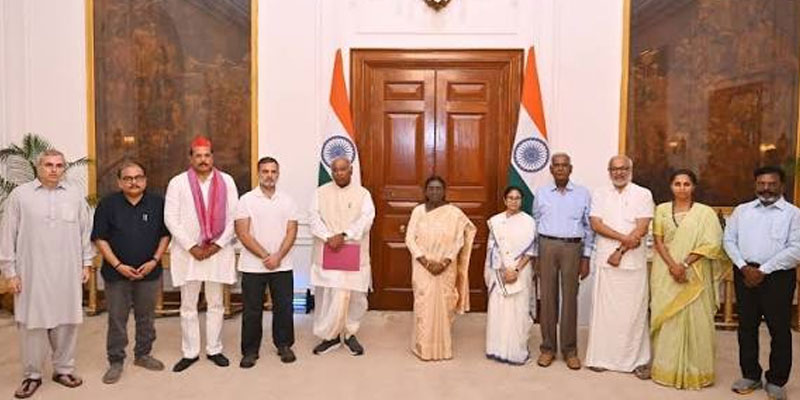
The principal opposition petition includes Congress president Mallikarjun Kharge and leaders from several INDIA bloc parties, including Akhilesh Yadav, Tejashwi Yadav, Sanjay Raut, Saugata Roy, D. Raja and Supriya Sule. Separate petitions have also been filed by Owaisi and Congress leader Digvijaya Singh.
The petitioners seek examination of the SIR process, alleged irregularities in voter lists and the Election Commission’s decision-making. The court’s notice, however, does not constitute a finding that the allegations are established. The merits will be assessed through judicial proceedings.
BJP and Opposition Offer Contrasting Arguments
The BJP criticised the march, with Delhi BJP president Harsh Malhotra describing it as a theatrical exercise that disrespected the Supreme Court. The party argued that protesting outside the institution while seeking relief from it risked undermining the judicial process.
The opposition, meanwhile, characterised its action as a democratic expression of concern over electoral transparency. Rahul Gandhi maintained that demonstrations against the Chief Election Commissioner formed part of a broader protest against the SIR exercise.
Judicial Independence Must Remain Above Political Pressure
The proceedings now have two distinct dimensions: the legality of the electoral-roll revision and the court’s examination of the conduct surrounding the protest. The next hearings will clarify how the bench approaches both issues.
The controversy underscores a fundamental democratic principle: electoral processes must remain open to judicial scrutiny, while courts must be able to adjudicate disputes without intimidation or external pressure. The strength of democracy lies not merely in the right to protest, but also in respecting the independence of institutions entrusted with resolving constitutional disputes. The Supreme Court’s eventual decisions on the SIR petitions and Gandhi’s conduct will therefore carry significance beyond the immediate political confrontation, testing both electoral accountability and the boundaries of democratic dissent.
(With agency inputs)