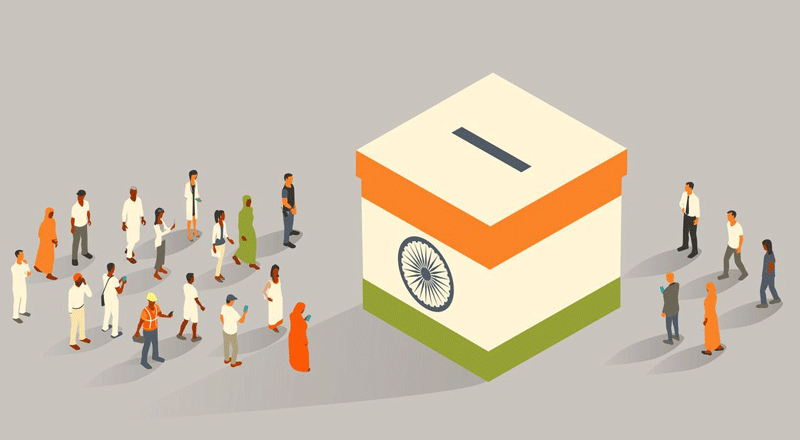
What is Delimitation and Why Does it Matter?
Delimitation is the process of redrawing the boundaries of parliamentary and state assembly constituencies to reflect changes in population. It ensures fair political representation based on demographic shifts and also determines the number of seats reserved for Scheduled Castes (SC) and Scheduled Tribes (ST). However, as India prepares for another round of delimitation, concerns are rising, especially in southern states, about potential imbalances in political representation.
The upcoming delimitation, expected after the 2026 census, will likely increase the number of Lok Sabha seats significantly. This has triggered apprehensions among southern states, which fear a loss of representation due to their slower population growth compared to northern states. The debate raises important questions about fairness in representation, economic contributions, and political influence in a rapidly evolving democracy.
Understanding Delimitation: A Constitutional Mandate
The Constitution of India mandates delimitation under Articles 82 and 170, ensuring that electoral constituencies align with population growth. The Delimitation Commission, established through a parliamentary law, carries out this exercise based on the latest census data.
Historically, delimitation exercises were conducted after the 1951, 1961, and 1971 censuses. The number of Lok Sabha seats has evolved accordingly:
However, in 1976, India froze the number of Lok Sabha seats based on the 1971 Census to incentivize population control. This freeze was extended in 2001 for another 25 years, delaying any adjustments until after the 2026 Census.
What Will Be the Impact of Delimitation?
The next delimitation process, guided by the 2031 Census, could significantly reshape the political landscape by increasing, decreasing, or altering constituencies. The biggest concern for southern states is the potential redistribution of seats in favour of northern states, which have experienced higher population growth rates.
If past patterns continue, India’s total Lok Sabha seats could increase from 543 to 753. This would drastically alter the share of seats across states:
- Uttar Pradesh: Could rise from 80 to 128
- Bihar: May increase from 40 to 70
- Madhya Pradesh: Likely to grow from 29 to 47
- Maharashtra: Expected to gain 20 seats, reaching 68
- Rajasthan: May rise from 25 to 44
- Telangana: From 17 to 20
- Andhra Pradesh: From 25 to 28
- Kerala: From 20 to 19
- Tamil Nadu: From 39 to 41
- Karnataka: From 28 to 36
- Tamil Nadu Chief Minister MK Stalin argued that states excelling in development and population control should not be penalized.
- BRS leader KT Rama Rao called delimitation based purely on population a “curse” for Telangana and other southern states.
- Communist Party of India’s MA Baby questioned the lack of clarity from the central government on how concerns of southern states would be addressed.