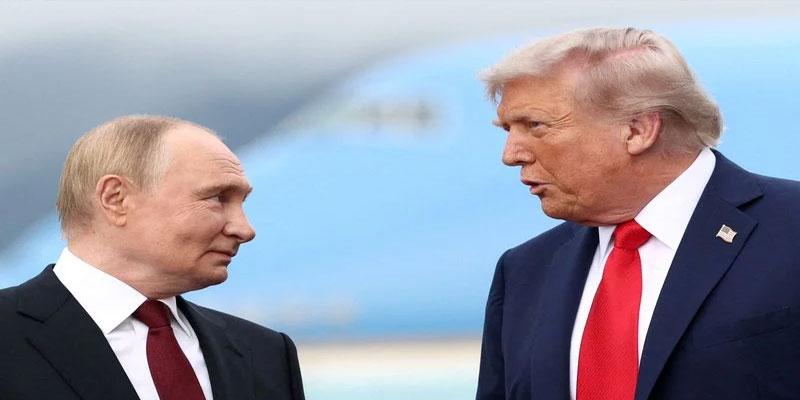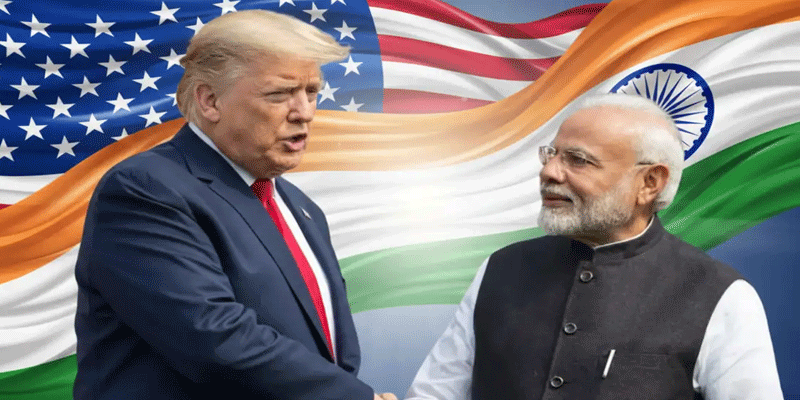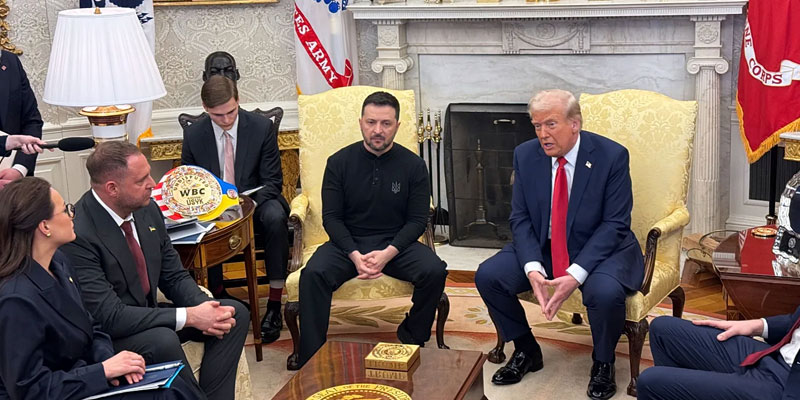
U.S. President Donald Trump has again stirred international debate by calling out European nations for their continued energy trade with Russia, even as they support Ukraine in its war against Moscow. Speaking at a recent rally and in media interviews, Trump criticized what he sees as Europe’s hypocrisy — condemning Russia's military actions while simultaneously funding its economy through oil and gas purchases.
They’re fighting Russia, but they’re also buying massive amounts of oil and gas from Russia. It’s embarrassing.”— Donald Trump, U.S. President
Since Russia’s invasion of Ukraine in February 2022, the European Union (EU), the United States, and other Western allies have imposed severe sanctions on Russian banks, oligarchs, defense contractors, and energy firms. Billions in military aid and humanitarian assistance have flowed into Ukraine, while leaders have voiced full-throated support for Ukrainian sovereignty.
Yet despite this diplomatic and financial backing, European dependence on Russian energy has remained difficult to untangle. Even after more than two years of conflict, several EU nations continue to import Russian crude oil, refined petroleum products, and liquefied natural gas (LNG) — directly or indirectly.
Energy Dependence: The Numbers
Here’s a snapshot of Europe’s continued energy relationship with Russia:
|
Energy Product |
Pre-War Import Share (2021) |
2023/2024 Status (Approx.) |
|
Natural Gas (pipeline) |
~40% of EU supply |
Reduced to ~10%, but still ongoing |
|
Crude Oil |
~25% of EU supply |
Banned via seaborne imports, but some landlocked countries still buy |
|
LNG |
~20% of LNG imports |
Russia remains the second-largest LNG supplier to Europe (after the U.S.) |
|
Oil Products (diesel etc) |
Significant volumes |
Some continue via third-party trade routes |
Despite partial embargoes and sanctions, loopholes and exceptions have allowed energy trade to persist — either directly or via intermediaries (e.g., Indian refineries buying Russian oil and selling refined products to Europe).
Trump’s comments reflect a long-standing position he held even during his presidency — that NATO members, particularly Germany, were too reliant on Russian energy while expecting U.S. military protection.
“Germany is totally controlled by Russia because they will be getting from 60 to 70% of their energy from Russia…” — Trump, 2018 NATO Summit
His latest remarks are framed as a moral indictment of European strategy:
- On one hand, Europe supports Ukraine with weapons and diplomacy.
- On the other, it funds the Russian economy — the very engine sustaining the Kremlin’s war machine — through continued fossil fuel purchases.
Energy revenues form over 40% of Russia's federal budget. Every barrel and cubic meter sold contributes, indirectly, to Moscow’s war chest.
Europe’s continued energy trade with Russia is not simply due to diplomatic weakness or hypocrisy — it’s a product of complex interdependence, logistical constraints, and political-economic trade-offs.
The crux of Trump’s argument — and others who share his view — lies in the ethical inconsistency: can Europe morally justify funding Russia’s war effort while aiding Ukraine militarily?
While some argue this reflects realpolitik and strategic compromise, critics say it undermines the West's credibility and prolongs the conflict.