A Foundation of Trust and Shared Vision
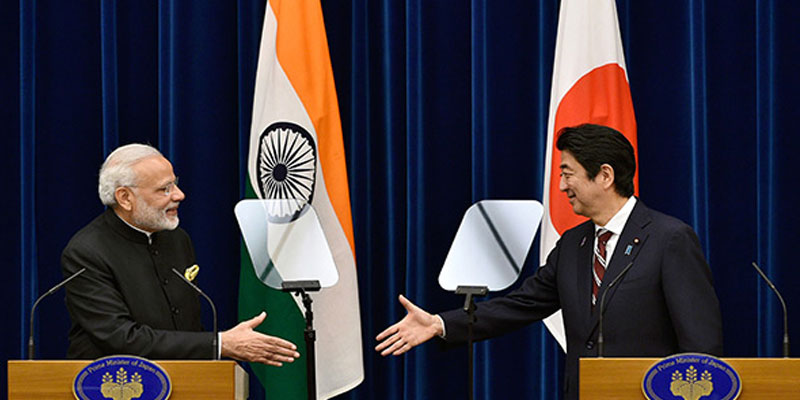
India and Japan have long shared a partnership built on mutual trust, democratic values, and strategic cooperation. From cultural linkages dating back centuries to modern collaboration in technology, infrastructure, and defence, the two nations have consistently deepened ties. Prime Minister Narendra Modi’s upcoming visit to Japan marks yet another milestone in this journey. Scheduled as his eighth trip to the country, and his first bilateral summit with Japanese Prime Minister Shigeru Ishiba, this engagement underscores the special significance of the India-Japan Special Strategic and Global Partnership.
The 15th Annual Summit is expected to review a wide spectrum of cooperation, ranging from defence and economic ties to advanced technology and people-to-people exchanges. With an ambitious investment plan on the agenda, this visit is being closely watched as a turning point in regional economic and strategic cooperation.
A $68 Billion Commitment: Tokyo’s Big Push for India
During the summit, Japan is set to unveil one of its most ambitious investment pledges to India: a 10 trillion-yen (USD 68 billion) commitment over the next decade. This massive financial push goes well beyond symbolic gestures—it represents Tokyo’s confidence in India’s long-term growth trajectory and its desire to co-shape the Indo-Pacific order.
The new target builds upon the earlier 5 trillion-yen investment pledge made in 2022 by former Prime Minister Fumio Kishida. With this enhanced commitment, Japan aims to accelerate cooperation in critical areas like semiconductors, clean energy, pharmaceuticals, and advanced manufacturing.
The move is also strategically aligned with the vision of a “free and open Indo-Pacific”, where India and Japan are seen as twin anchors of stability, growth, and security.
Beyond Bullet Trains: Technology and Economic Security
While Japan’s role in India’s ambitious Ahmedabad-Mumbai bullet train project has long captured attention, the partnership today extends far beyond railways. Both governments are expected to launch an Economic Security Initiative, designed to safeguard critical infrastructure and ensure reliable supply chains for essential materials.
Semiconductors, artificial intelligence, and clean energy will be at the heart of this cooperation. With India aspiring to become a global semiconductor hub and Japan bringing decades of expertise, a powerful synergy is unfolding. The expected visit of both leaders to Sendai—renowned for its semiconductor research—symbolizes this forward-looking vision.
Furthermore, a new AI collaboration framework will connect Indian startups with Japanese corporations, strengthening innovation ecosystems and complementing each nation’s comparative advantages.
Expanding Trade, Industry, and Rural Empowerment
Japan’s investments in India are already reshaping industries. In the last two years, over 170 Memoranda of Understanding (MoUs) worth USD 13 billion have been signed, spanning steel, automotive, renewables, aerospace, and real estate.
· Steel & Manufacturing: Nippon Steel is expanding operations in Gujarat and Andhra Pradesh with multi-billion-rupee projects, while JFE Steel is investing heavily in electrical steel production.
· Automobiles & Mobility: Suzuki Motor, Toyota, and other automakers are committing over Rs 600 billion to plants in Gujarat, Karnataka, and Maharashtra. These ventures not only expand domestic capacity but also position India as a hub for exporting hybrid and EV vehicles to Africa, the Middle East, and Southeast Asia.
· Real Estate & Aerospace: Sumitomo Realty’s $4.76 billion investment and Astroscale’s collaboration with ISRO mark Japan’s diversification into new frontiers.
Crucially, these partnerships are not limited to urban and industrial centers. Projects like biogas plants in Gujarat and rural India, developed by Sojitz Corporation in partnership with Indian Oil, highlight how Japanese technology is fueling India’s clean energy transition. Farmers are becoming stakeholders in this transformation by supplying crop residues and agri-waste for biofuel, thereby earning supplementary income.
Building Human Capital: The Talent Bridge
A defining aspect of the India-Japan relationship lies in its emphasis on people. Under the Talent Exchange Target, more than 50,000 Indians and Japanese have participated in cross-border opportunities in just five years. Universities, corporations, and governments are facilitating internships, research collaborations, and professional exchanges.
Japanese companies like Fujitsu are hiring thousands of Indian engineers, integrating them into global capability centers, and creating avenues for Indian SMEs to enter global value chains. This human capital partnership ensures that the bilateral relationship is not confined to economics but is anchored in shared skills and knowledge transfer.
The Broader Strategic Context
The Modi-Ishiba summit will also address regional and global concerns. From ensuring maritime security in the Indo-Pacific to mitigating risks in global supply chains, India and Japan are aligning their strategies to meet common challenges. Their cooperation is increasingly seen not as bilateral, but as a pillar of regional and global stability.
A Deep and Enduring Foreign Policy Vision
India’s partnership with Japan illustrates the essence of its foreign policy—balancing tradition with modernity, and pragmatism with vision. The collaboration goes beyond transactional deals; it is about building resilient economies, empowering citizens, and shaping the global order together.
As India welcomes Japan’s $68 billion push, the message is clear: this is not just about bullet trains or steel plants, but about crafting a shared future of growth, innovation, and security. With steadfast determination, India’s foreign policy continues to weave partnerships that are long-term, people-centric, and globally relevant—strengthening the nation’s role as a rising power on the world stage.
(With agency inputs)