MEA Summons Ukrainian Envoy Over Fatal Maritime Strike
The Ministry of External Affairs (MEA) has summoned Ukraine's Ambassador to convey India's "serious concern" over the death of an Indian seafarer in an attack on the commercial vessel MV OMORFI in the Black Sea. The diplomatic démarche marks New Delhi's strongest response yet to the worsening security situation in the conflict-hit maritime region. Reiterating its long-standing position, India stressed that attacks on civilian commercial shipping are unacceptable, endanger innocent lives and must cease immediately, while also urging all parties to respect international maritime obligations.
Rising Risks in the Black Sea Conflict
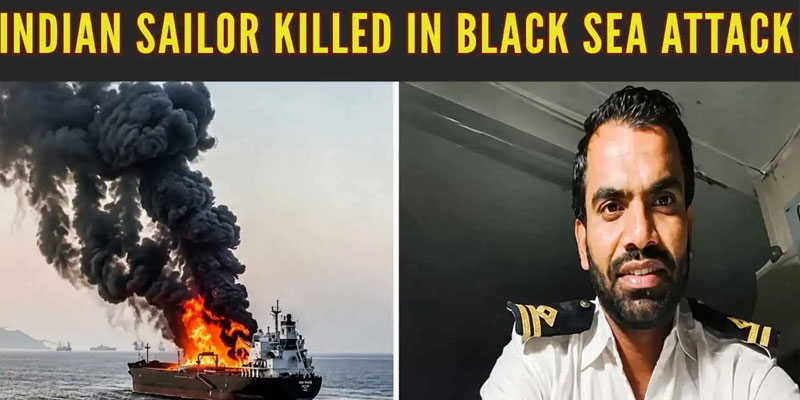
The MV OMORFI came under attack on July 18 while transiting the Black Sea, reportedly in Russian territorial waters. The vessel had 10 crew members, including three Indian nationals. According to the MEA, one Indian seafarer lost his life in the attack, while the remaining two Indians escaped unharmed.
The incident occurred against the backdrop of escalating hostilities in the Black Sea, a region that has witnessed repeated attacks on commercial vessels since the outbreak of the Russia-Ukraine conflict. The security situation has increasingly affected global shipping routes, maritime trade and civilian seafarers employed aboard merchant vessels.
India’s Diplomatic Response
In its formal communication to the Ukrainian envoy, the MEA expressed grave concern over the attack, stating that targeting commercial vessels places innocent civilian seafarers at risk, threatens freedom of navigation and disrupts international commerce.
India requested the ambassador to convey New Delhi's concerns to the Ukrainian government and reiterated that attacks on civilian shipping are "unacceptable and must be avoided."
This démarche follows the MEA's statement issued on July 24, in which India condemned attacks on merchant shipping and emphasised that such actions undermine maritime safety and global trade. The government has consistently maintained that civilian vessels should never become casualties of armed conflict.
A Growing Pattern of Maritime Tragedies
The MV OMORFI incident is not an isolated event. Only days earlier, another commercial vessel, MV Golden Leo, was struck near Odesa, resulting in the deaths of four Indian seafarers, while another Indian crew member sustained critical injuries.
With the latest fatality aboard MV OMORFI, the number of Indian seafarers killed in incidents linked to the Black Sea conflict has risen to five, underscoring the increasing dangers faced by Indian maritime professionals working in conflict-prone waters.
The recurring attacks have raised concerns about the vulnerability of civilian shipping operating in one of the world's most strategically important maritime corridors.
Latest Advisory and Wider Implications
Responding to the deteriorating security environment, the MEA has issued an advisory urging Indian nationals to exercise extreme caution before accepting employment on ships operating in or transiting the Black Sea.
The advisory encourages seafarers to carefully verify voyage routes, assess emergency evacuation arrangements, review insurance coverage and ensure adequate compensation clauses before joining vessels scheduled to operate in conflict-affected waters.
Diplomatically, India has sought to maintain its balanced approach toward the Russia-Ukraine conflict. Rather than framing the matter as a bilateral dispute with either side, New Delhi has focused on the universally accepted principle that civilian shipping and innocent seafarers must remain protected under international law.
Maritime Security Emerges as a Strategic Concern
The repeated loss of Indian lives has transformed the issue from a routine consular matter into a broader question of maritime security and the protection of Indian nationals working overseas. It also highlights emerging concerns over recruitment practices, voyage disclosures, insurance mechanisms and employer responsibilities for seafarers deployed in active conflict zones.
India's diplomatic démarche signals that attacks affecting its citizens will invite formal protest while preserving its broader policy of engaging all sides in the conflict. The emphasis remains firmly on safeguarding civilian lives rather than assigning political blame.
Protecting Seafarers Must Remain a Global Priority
The MEA's decision to summon Ukraine's envoy reflects India's determination to defend the safety of its citizens and uphold the sanctity of international maritime commerce. As hostilities in the Black Sea continue to endanger civilian shipping, the international community faces an urgent responsibility to protect merchant vessels and those who crew them. For India, the deaths of its seafarers serve as a sobering reminder that geopolitical conflicts increasingly carry human costs far beyond the battlefield, making stronger diplomatic engagement and enhanced safeguards for maritime workers more essential than ever.
(With agency inputs)