Lok Sabha Clears Judge Hike Amid Massive Case Backlog
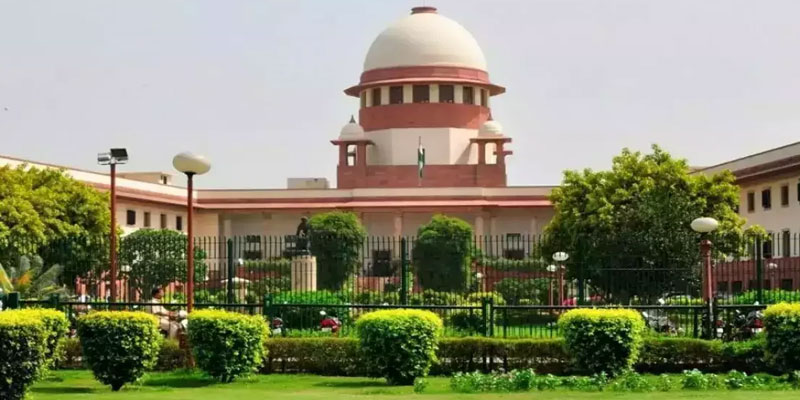
In a significant move aimed at strengthening India's judicial system, the Lok Sabha has passed the Supreme Court (Number of Judges) Amendment Bill, 2026, increasing the sanctioned strength of the Supreme Court from 34 to 38 judges, including the Chief Justice of India. While the government has presented the legislation as an important step towards reducing judicial delays, legal experts caution that the addition of four judges alone is unlikely to make a substantial dent in India's staggering backlog of more than 5.46 crore pending cases, most of which are awaiting disposal in lower courts.
Expanding the Apex Court
The amendment raises the number of Supreme Court judges, excluding the Chief Justice of India, from 33 to 37. It replaces an ordinance promulgated in May 2026, which had already authorized the increase and facilitated the appointment of additional judges. The legislation will take retrospective effect from May 16, 2026.
According to the Union government, the expansion is intended to enhance the efficiency of the apex court by enabling faster disposal of pending matters and reducing the burden on existing benches. This marks the first increase in the Supreme Court's sanctioned strength since 2019, when the number of judges was raised from 30 to 33.
The Bill was passed in the Lok Sabha on August 3 amid Opposition protests and without an extensive debate. It will now be taken up by the Rajya Sabha before becoming law.
The Real Scale of India's Judicial Crisis
Although increasing the Supreme Court's strength is a positive development, the country's pendency crisis extends far beyond the apex court.
Official data as of February 10, 2026, shows that the Supreme Court has around 92,320 pending cases. In comparison, the 25 High Courts together are burdened with over 63.62 lakh cases, while district and subordinate courts account for more than 4.81 crore pending cases, taking the national total to over 5.46 crore.
These figures reveal that the overwhelming majority of delays occur at the trial court level, where cases depend not only on judges but also on prosecutors, investigators, witnesses, court staff, infrastructure and forensic support.
The problem is compounded by judicial vacancies. As of December 2025, nearly 4,855 posts remained vacant in district and subordinate courts, significantly reducing the judiciary's capacity to dispose of cases efficiently.
Why Experts Say Numbers Alone Are Not Enough
Legal experts have welcomed the expansion of the Supreme Court but argue that increasing judicial strength is only one part of a much larger solution.
A larger bench can certainly hear more appeals, constitute Constitution Benches more frequently and reduce the growing pressure of Special Leave Petitions (SLPs). However, systemic bottlenecks continue to slow the judicial process.
Frequent adjournments, prolonged investigations, incomplete documentation, excessive government litigation, repeated challenges to interim orders and inconsistent adoption of digital court management continue to delay justice. Many experts also emphasize the need for better case management, stronger registry support and wider use of e-filing and virtual hearings.
Beyond Expansion: The Need for Comprehensive Judicial Reform
The increase in Supreme Court judges is an important capacity-building measure, but it cannot, by itself, resolve India's deep-rooted judicial crisis. Meaningful reform requires filling vacancies across all levels of the judiciary, expanding court infrastructure, improving administrative efficiency and promoting mediation and other alternative dispute resolution mechanisms. Equally important is reducing avoidable government litigation, which constitutes a substantial share of pending cases. Ultimately, justice will become faster not merely through more judges at the top, but through a stronger, better-resourced and more efficient judicial system that delivers timely justice to every citizen. Will India's Justice System Change?
(With agency inputs)