Old Monk, Royal Challenge Variants Face Regulatory Heat
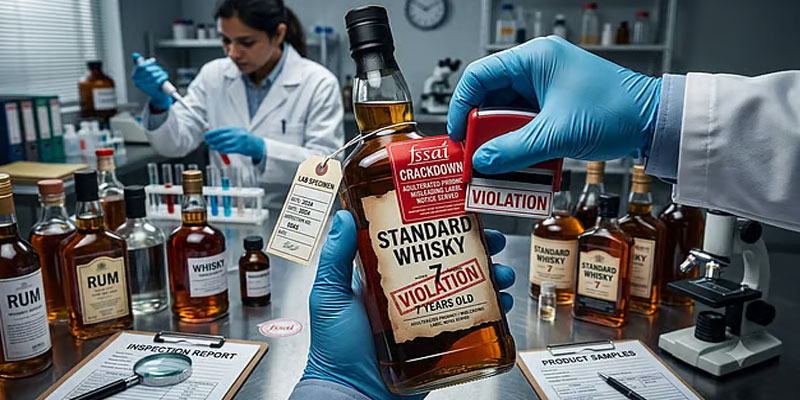
India's liquor industry has come under intense regulatory scrutiny after the Food Safety and Standards Authority of India (FSSAI) prohibited the sale of select variants of popular liquor brands, including Old Monk, Royal Challenge, Antiquity Blue and Bagpiper. The action follows findings that certain products allegedly contained artificial or "nature-identical" flavouring substances that imitated the natural taste and aroma expected from standardized alcoholic beverages. Importantly, the move is not a blanket ban on these brands but is limited to specific variants manufactured at designated facilities.
Why FSSAI Stepped In
The regulatory action traces its origins to July, when FSSAI issued notices to several liquor manufacturers for allegedly violating the Food Safety and Standards (Alcoholic Beverages) Regulations, 2018. The regulator identified two key concerns: the use of unauthorised flavour additives and misleading claims regarding the age or maturation of blended spirits.
Under existing regulations, beverages such as whisky, rum, brandy, gin, beer and wine are expected to derive their characteristic flavour and aroma naturally through ingredients, fermentation, distillation, blending or ageing. According to FSSAI, adding flavours that mimic the inherent taste of the same beverage category—for instance, whisky flavour in whisky or rum flavour in rum—can mislead consumers by creating the impression of superior maturation or traditional production methods.
The regulator has clarified that it has not banned all flavouring agents in alcoholic beverages. The objection is specifically against flavour additives that replicate the defining characteristics of standardized spirits, thereby potentially masking the actual production process.
Brands and Variants Under the Scanner
The prohibition covers three Old Monk rum variants manufactured at Mohan Rocky Springwater's Khopoli plant in Maharashtra. It also includes selected batches of Antiquity Blue Whisky and Royal Challenge Whisky produced by United Spirits, the Indian arm of Diageo, at specific manufacturing units in Madhya Pradesh.
Additionally, Bagpiper Deluxe Whisky and Old Cask Deluxe XXX Rum manufactured by Inbrew Beverages have been included in the regulatory action. Reports also indicate that McDowell's No. 1 Rum and certain products manufactured by Associated Alcohol & Breweries have come under similar scrutiny.
The focus, however, remains on identified manufacturing units and laboratory-tested batches rather than every product sold under these well-known brand names.
Latest Developments and Industry Response
The FSSAI orders have triggered concern across the liquor industry, with manufacturers, distributors and retailers assessing the financial implications of product withdrawals, relabelling, inventory losses and potential reputational damage.
At the same time, the regulatory process remains dynamic. Two companies have secured conditional relief after challenging the prohibition orders. Under the revised arrangement, existing stocks may continue to be sold, provided the front labels clearly disclose the product's actual nature, including whether it is a flavoured spirit wherever applicable.
The episode is expected to encourage manufacturers to revisit formulation practices, labelling standards and quality compliance to avoid similar regulatory action in the future.
A New Era of Regulatory Oversight
The FSSAI's action marks a significant shift towards stricter oversight of India's alcoholic beverage sector. Rather than focusing solely on product safety, the regulator is emphasizing transparency, truthful labelling and consumer awareness. The central issue is not whether the beverages are unsafe, but whether consumers are accurately informed about how their flavour profiles are achieved.
As legal challenges and regulatory reviews continue, the outcome could reshape industry practices and establish stronger standards for formulation and marketing. Ultimately, the case reinforces a broader principle: consumer trust depends not only on product quality but also on honest representation, making transparency an indispensable pillar of India's evolving food and beverage regulatory framework.
(With agency inputs)