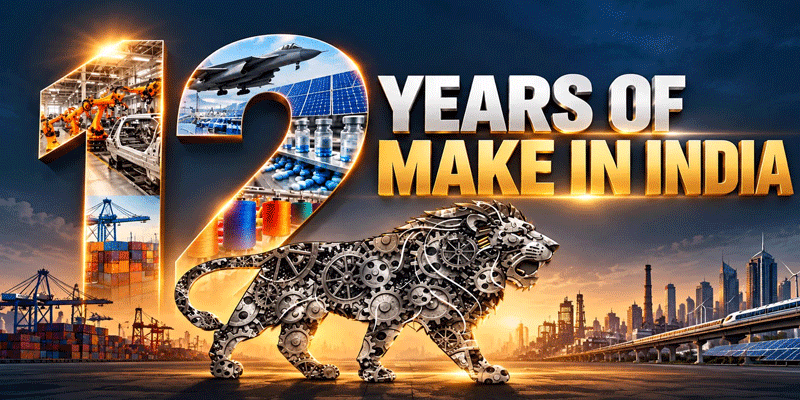
PM Modi highlights 12-year journey of ‘Make in India’, cites growth in manufacturing, investment and exports, as the initiative completes 12 years on September 25, 2026. Launched in 2014 to turn India into a global manufacturing, design and innovation hub, the programme has evolved from FDI liberalisation and ease-of-doing-business reforms into a broader industrial strategy combining incentives, infrastructure, technology and export promotion.
From Make in India to a Wider Industrial Strategy
The original initiative focused on attracting investment, simplifying regulations and strengthening manufacturing infrastructure. Its second phase has expanded across 27 sectors, including 15 manufacturing sectors, while programmes such as the National Single Window System, PM GatiShakti, industrial corridors and the Production Linked Incentive scheme have added an implementation layer to the original vision.
The PLI framework, introduced across strategic sectors, links incentives to incremental production and investment. By March 2026, PLI schemes had attracted more than ₹2.16 lakh crore in investment, generated over ₹20.41 lakh crore in production and supported 14.39 lakh jobs, according to government data.
Modi Highlights Production, Investment and Exports
Marking the anniversary, Prime Minister Narendra Modi said the transformation was visible across sectors, summarising the journey as “More made in India. More investment in India. More exports from India.” He also described Make in India as an effort to create infrastructure, enterprise and innovation that enable India to grow and prosper.
Commerce and Industry Minister Piyush Goyal similarly presented the 12-year milestone as evidence that the vision of manufacturing for the world is taking shape. The latest government data points to particularly sharp expansion in electronics and mobile manufacturing.
Electronics Emerges as a Flagship Success
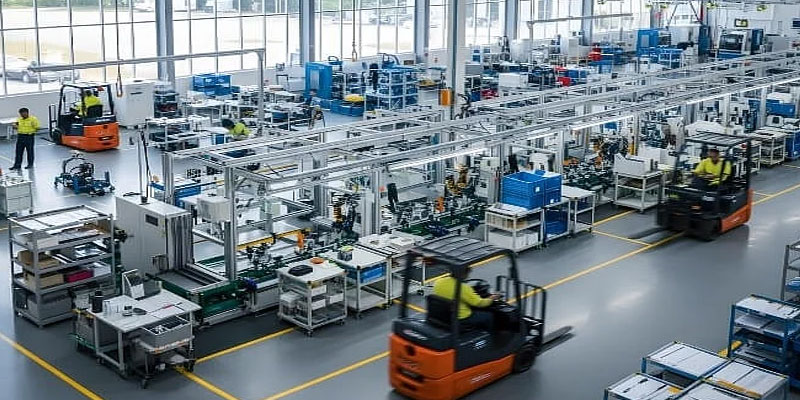
Electronics production increased from approximately ₹1.9 lakh crore in 2014-15 to ₹13.11 lakh crore in 2025-26, nearly sevenfold. Mobile-phone production rose from about ₹18,000 crore to ₹6.27 lakh crore, while mobile-phone exports climbed dramatically from around ₹1,500 crore to ₹2.59 lakh crore. India is now the world's second-largest mobile-phone manufacturer by volume.
Other sectors have also expanded:
· Automobiles: production reached 31.03 million units in 2024-25.
· Pharmaceuticals: India remains among the world's largest producers by volume.
· Defence: domestic production has expanded substantially alongside localisation efforts.
· Semiconductors: new projects are aimed at building capabilities beyond assembly and into advanced manufacturing.
Investment Must Create Deeper Value Chains
The headline numbers demonstrate increased manufacturing scale, but the next challenge is depth. India needs stronger domestic component ecosystems, skilled manpower, research and development, competitive logistics and greater value addition.
The electronics experience illustrates both the opportunity and the next step: production and exports have surged, while government data also points to increasing domestic value addition.
The Next 12 Years Must Deliver Global Competitiveness
Twelve years after its launch, “Make in India has moved from an investment-attraction campaign towards a wider manufacturing strategy. The gains in electronics, mobile phones, exports and industrial investment provide measurable evidence of expanding capacity.
But the next phase will be judged less by factories established and more by what India designs, develops and adds domestically. Moving from assembly to components, intellectual property and high-value manufacturing will determine whether today's production surge becomes a durable global manufacturing advantage.
(With agency inputs)