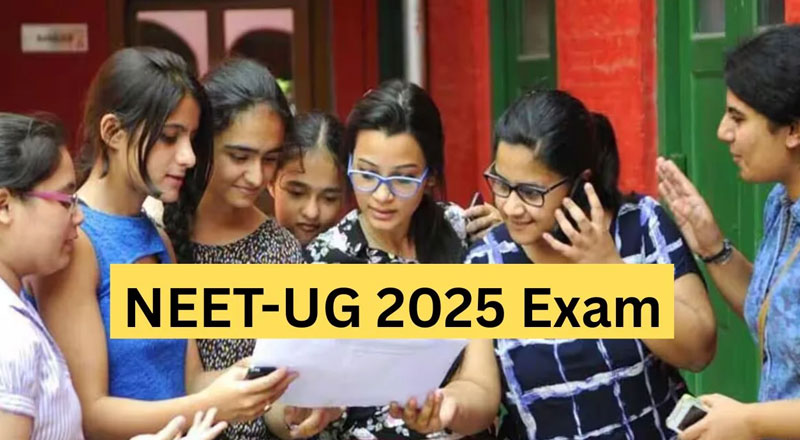
The Gateway to India’s Medical Dream
The National Eligibility cum Entrance Test for Undergraduates (NEET UG) is more than just an exam—it is a gateway to one of the most sought-after career paths in India: medicine. Conducted annually by the National Testing Agency (NTA), NEET is the sole entrance examination for admission to MBBS, BDS, BAMS, BHMS, and other allied health courses in both government and private institutions across India. With millions of students competing for a limited number of seats, NEET reflects both the aspirations of Indian youth and the structural challenges in the country’s medical education landscape.
In 2025, the test was conducted on May 4 across 5,453 centres in more than 500 cities. However, early student reactions suggest that Physics proved to be a major hurdle for many—potentially affecting cut-off trends and admission chances.
NEET 2025 Registrations: Slight Dip, But Intensity Remains High
This year, approximately 23 lakh students registered for NEET UG 2025, compared to 24.06 lakh in 2024. While this marks a slight decrease, it still reinforces NEET’s status as one of the most competitive entrance exams in the world.
The competition is staggering: with 1.20 lakh MBBS seats available nationwide, roughly 19 aspirants are vying for each seat. This high ratio underscores not only the popularity of medicine as a profession, but also the severe pressure placed on students to succeed in a single, high-stakes test.
Exam Day and Pattern: Standard Format, Strict Conduct
NEET 2025 retained its established structure: three core subjects—Physics, Chemistry, and Biology (Botany and Zoology)—with a total of 720 marks. The exam was conducted in a single shift from 2 PM to 5 PM, with strict entry protocols.
Students were required to report hours in advance, carrying multiple identification documents and photographs in various formats. This year, security was especially stringent due to controversies surrounding the 2024 exam, prompting NTA to implement enhanced vigilance measures to maintain credibility and fairness.
Student Reactions: Physics a Major Roadblock
The dominant sentiment among students this year: Physics was unexpectedly tough.
- Mayank Kumar, a second-time aspirant, noted that even experienced candidates found it difficult to secure full marks in the Physics section.
- Abha Singh, a first-time test-taker from Lucknow, expressed that while she hadn’t expected to score highly in her first attempt, the difficulty of Physics and Chemistry still came as a shock.
- Saurabh, who took the test in Chandigarh, said the length of the Physics questions created fear at first glance, affecting his confidence mid-exam.
- Deepak Singla observed that while Biology followed NCERT closely, Physics did not.