The Largest Walkout in Decades
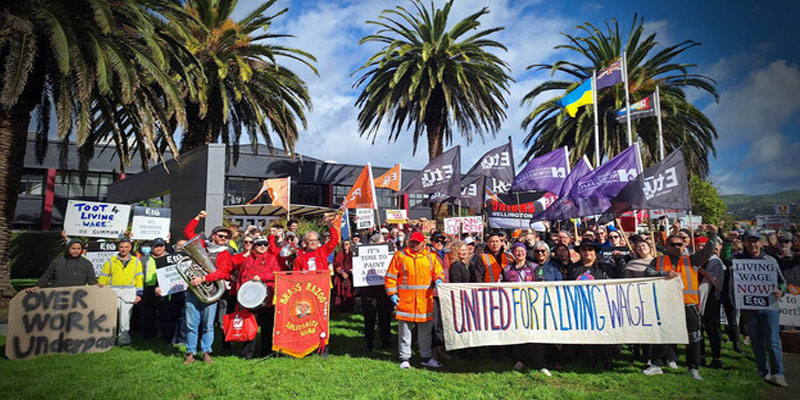
On October 23, 2025, New Zealand experienced one of its largest public sectors strikes in forty years, as more than 100,000 workers across the country walked off the job demanding fair wages, improved working conditions, and increased investment in essential services. The protest, spanning major cities from Auckland to Christchurch, involved teachers, nurses, doctors, firefighters, and support staff, and was coordinated by major unions including the New Zealand Nurses Organisation (NZNO), Public Service Association (PSA), Post Primary Teachers Association (PPTA), NZEI Te Riu Roa, and the Association of Salaried Medical Specialists (ASMS). The strike caused widespread disruption to public transport, schools, and non-emergency hospital operations, though emergency services remained functional.
The Grievances: Pay, Safety, and Overwork
Workers cited stagnant wages, chronic understaffing, resource shortages, and rising living costs as key triggers for the strike. Inflation has reached 3%, while public sector pay increases have averaged just 1–2.7%, effectively cutting real wages. Teachers, nurses, and emergency workers criticized the government’s latest offer as insufficient. Becks Kelsey, a nurse from Auckland, said, “Patients should not have to be harmed, or die, before things improve. We demand the government invest in the fabric of our community — not cut the threads that hold it together.”
Schoolteachers, representing the largest contingent at around 60,000, rejected a 2.7% annual pay rise, citing rising classroom complexity. Health workers—including 40,000 nurses and salaried medical specialists—and roughly 15,000 civil servants and emergency personnel joined the action, emphasizing the strain on frontline public services.
Government and Political Reactions
The centre-right coalition government, led by Prime Minister Christopher Luxon, described the strike as “unnecessary and politically orchestrated,” asserting that fair offers remain available. Public Service Commissioner Sir Brian Roche expressed disappointment that unions opted for disruption over negotiation but emphasized ongoing dialogue.
Opposition parties and civil society groups, however, praised the strike as a legitimate protest against systemic neglect. Green Party co-leader Chloe Swarbrick condemned the government’s stance, framing the walkout as a question of power, wages, and equitable distribution of national wealth. Polls indicate strong public support, with 68% of New Zealanders backing higher pay for teachers and healthcare workers, even if it entails higher taxes or budget reallocations.
A Nation at a Crossroads
The strike underscores deep-seated social and economic tensions, fueled by underfunding, low morale, and austerity measures. Analysts note that the repeal of the Fair Pay Agreements Act (2022) weakened collective bargaining, leaving public demonstrations as the unions’ main recourse. Severe weather canceled some outdoor rallies, but Auckland’s Aotea Square and Hamilton’s Garden Place still drew over 25,000 participants combined, highlighting the scale of worker discontent.
Experts warn that failure to address the grievances could exacerbate talent migration, with skilled public sector professionals increasingly seeking opportunities in Australia and Canada.
Looking Ahead: Reform and Dialogue
Some unions have signaled willingness to return to negotiations, but most insist that meaningful concessions are required. The PSA and NZEI are exploring the creation of an inter-union task force to establish standardized benchmarks for wages and working conditions. Experts recommend long-term reforms such as inflation-indexed pay, recruitment drives, and targeted budget allocations for healthcare and education infrastructure.
The October 2025 mega-strike is more than a labor dispute; it represents a national reckoning over fairness, dignity, and the value of public service, sending a clear message that New Zealand’s public sector workers demand recognition, respect, and meaningful reform.
(With agency inputs)