Distant Diplomacy, Closer Warfare
As Russia and Ukraine gear up for their second round of direct peace talks in Istanbul on June 2, the mood is anything but conciliatory. Both sides remain entrenched in vastly divergent positions. While Ukrainian Defense Minister Rustem Umerov leads Kyiv’s delegation, Russia is sending Kremlin aide Vladimir Medinsky. Despite the diplomatic setting, neither side appears ready to compromise.
The May 16 talks—marked by the war’s largest prisoner swap—offered little substantive progress. This time, Ukraine intends to present a roadmap for peace, emphasizing sovereignty over occupied territories and unrestricted military rebuilding. Meanwhile, Moscow insists that any agreement must include Kyiv’s NATO withdrawal and the surrender of contested territories.
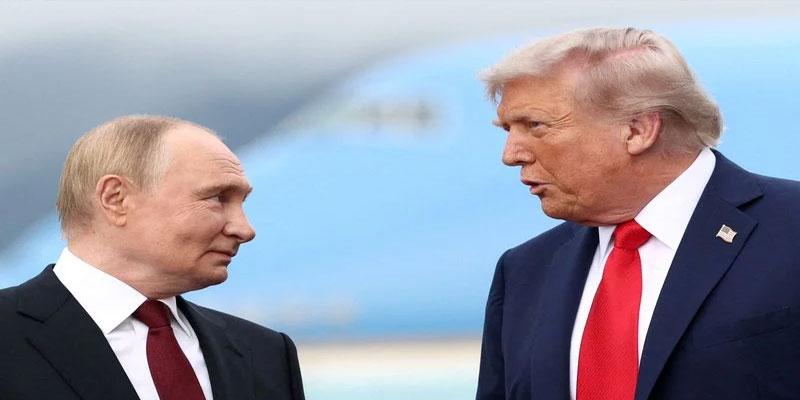
Amid these rigid positions, Washington is pushing for resolution. President Donald Trump has warned of consequences should the parties fail to move toward peace. But even with external pressure mounting, the real conversation unfolded not across a table in Istanbul, but in the skies above Russia on June 1.
Pearl Harbour Redux: Ukraine’s Boldest Operation Yet
On the eve of negotiations, Ukraine unleashed one of its most audacious strikes of the war—targeting multiple Russian airbases and reportedly destroying 41 long-range strategic bombers. The strike, dubbed “Pearl Harbour” by Russian media, struck facilities thousands of kilometers apart: Olenya in Murmansk and Irkutsk in Siberia.
Over 100 drones, launched from disguised shipping containers, saturated Russian air defenses. These drones, programmed for vertical launch near airbases, attacked bombers used in sustained aerial campaigns against Ukrainian cities. Included in the damage were Russia’s iconic Tu-95 and Tu-22M3 bombers, and possibly A-50 airborne warning systems.
It was a technological and psychological masterstroke. Strategically timed, the attack underlined Ukraine’s capability to reach deep into Russian territory and dismantle critical military assets—just before peace talks began.
Unprecedented Scale, Surgical Precision
In complexity, scale, and execution, the June 1 attacks mark a watershed in special operations history. Spanning over 6,000 kilometers and three time zones, Ukraine’s operation adhered to the classic pillars of elite warfare: simplicity, concealment, rehearsal, and speed. It mirrored historic operations like Israel’s 1976 Entebbe raid and India’s 1971 Operation Jackpot, but with a 21st-century twist—uncrewed, precise, and untraceable.
What makes this strike unique is its reliance on civilian logistics. No military aircraft flew over enemy airspace. No soldiers were captured. Modified cargo containers carried out the bulk of the work—blurring the lines between conventional and unconventional warfare.
Strategic Autonomy and Plausible Deniability
Though Ukraine receives extensive Western support, it emphasized that the operation was carried out using indigenous drones and commercially available satellite imagery. No Western missiles, such as Germany’s Taurus or Britain’s Storm Shadow, were used.
Zelenskyy’s government took immediate responsibility, avoiding the kind of ambiguity that could provoke direct NATO-Russia escalation. This strategic messaging not only preserves NATO’s formal neutrality but also showcases Kyiv’s growing independent strike capabilities.
The Fallout: Russia’s Retaliatory Posture and Nuclear Shadows
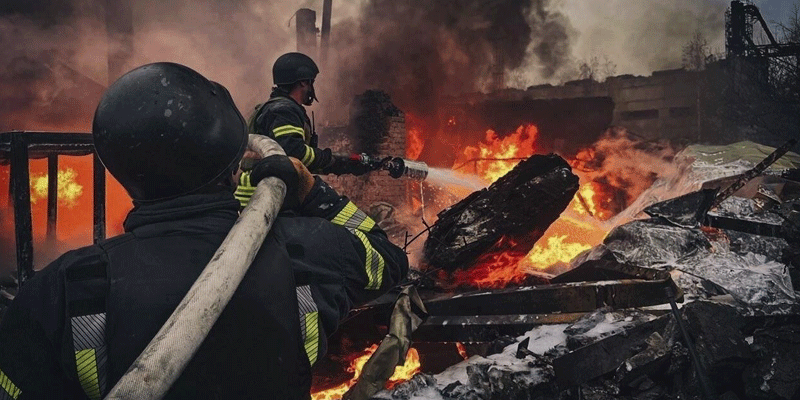
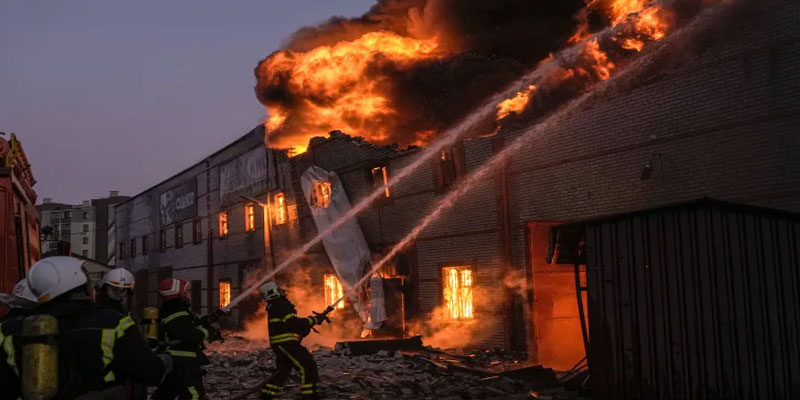
In response, Russia launched an unprecedented 472 drones at Ukrainian cities, indicating the scale of its rage and readiness to retaliate. But with over 30% of its bomber fleet incapacitated, Moscow faces a hard truth: one of its key pillars of power projection has been shattered.
There is concern now about whether Russia might escalate further. Its strategic bombers, many dual-capable for nuclear payloads, were part of its broader deterrence posture. Their destruction raises questions about whether the Kremlin will resort to unconventional options, including nuclear sabre-rattling, to reassert strategic parity.
That said, despite prior threats, Russia has not crossed the nuclear threshold, restrained perhaps by international scrutiny and fear of irreversible escalation.
The Drone Age Is Here
The June 1 strikes signify the apex of drone warfare. Where once manned bombers or cruise missiles would have been required, now small, affordable, swarm-capable drones can decimate strategic assets from thousands of kilometers away.
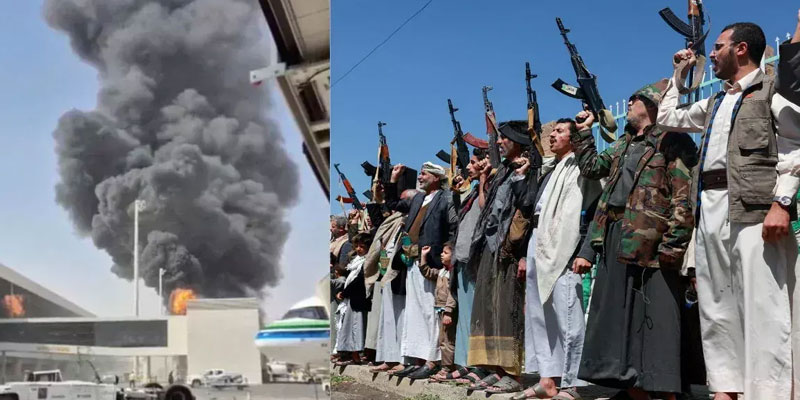
This is not new—drone usage in the Armenia-Azerbaijan war, and Houthi attacks on Saudi infrastructure foreshadowed it. But the scale and integration seen here are unprecedented. Both Russia and Ukraine have adopted First Person View (FPV) and wire-guided drones, making open maneuver almost impossible. Battlefield dynamics now resemble World War I trench warfare, where movement is punished and defense dominates.
Implications Beyond Ukraine: Lessons for India and Others
India, which has deployed drones effectively in limited cross-border operations such as Operation Sindoor, must take urgent note. In 2021, a minor drone strike on the Jammu airbase was a clear warning shot. That attack, using only two drones, could have caused devastating losses had it targeted helicopters or ammunition dumps.
Given the easy availability of high-resolution satellite imagery and commercial drone components, Indian airbases, ports, and other fixed installations are vulnerable to swarm attacks. Aircraft parked in the open are sitting ducks. India must act now to install hardened shelters, deploy domestic anti-drone systems, and redesign base layouts to mitigate this evolving threat.
Between Peace and Power Projection
As Russia and Ukraine exchange diplomatic memos in Istanbul, the ground truth is that neither side has stopped fighting. In fact, Ukraine's June 1 airbase strikes could be the turning point in the war—not just for their tactical brilliance, but for the strategic message they send.
These strikes underline a simple truth: Ukraine is not negotiating from a position of desperation, but of confidence. Russia, despite its vast arsenal, is no longer immune to asymmetric attacks deep within its borders.
While talks in Turkey may yield roadmaps and rhetoric, the battlefield remains the ultimate arbiter. Peace, if it comes, will be shaped not only at the negotiating table but also by the drones in the sky—a modern lesson for the entire world.
(With agency inputs)