Relief for Flyers, Reset for Airlines
In a move that promises immediate relief for millions of passengers, the Ministry of Civil Aviation has capped seat-selection fees and directed airlines to keep at least 60% of seats free. Issued through the Directorate General of Civil Aviation (DGCA), the order targets a long-standing grievance among air travellers—the growing list of add-on charges that made even basic conveniences come at a cost.
What the New Rules Change
At the core of the directive is a simple but impactful requirement: a majority of seats on every flight must now be available without extra payment. This ensures that passengers are no longer compelled to pay just to avoid middle seats or secure basic preferences like aisle or window positions.
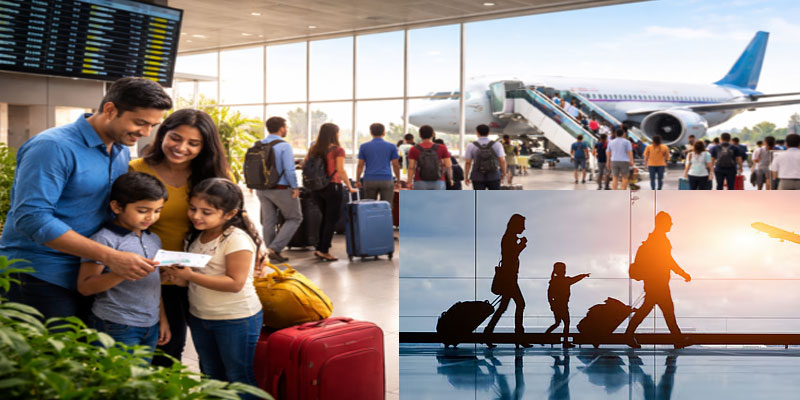
Equally significant is the mandate that passengers booked under the same PNR be seated together, preferably in adjacent seats. This addresses a common frustration faced by families and groups who were often split across the cabin unless they paid additional fees. By enforcing this, the regulator is restoring a sense of fairness and practicality to the flying experience.
A Shift in Passenger Experience
The broader aim of the reform goes beyond seat allocation. The DGCA is pushing airlines toward greater transparency and consistency in their services. Carriers are now expected to clearly communicate policies related to baggage, pets, sports equipment, and musical instruments, along with passenger rights—ideally in multiple languages to improve accessibility.
This marks a shift from a fragmented, often confusing system to one that is more standardized and user-friendly. For passengers, especially first-time flyers, this could significantly reduce uncertainty and improve overall satisfaction. The move also signals an effort to curb what many saw as “hidden charges” embedded within the booking process.
Implications for India’s Aviation Sector
India’s aviation market has expanded rapidly, becoming one of the largest domestic markets globally. With increasing passenger volumes driven by affordability and regional connectivity initiatives, maintaining trust and fairness is crucial.
By limiting excessive monetisation of seat selection, the government is nudging airlines to compete on transparent pricing and service quality rather than ancillary revenue tactics. While this may impact short-term earnings for carriers, it could strengthen long-term customer loyalty and credibility.
The directive also aligns with a broader vision of making air travel more inclusive, particularly for passengers from smaller cities who are newer to flying and more sensitive to hidden costs.
A Fairer Flight Path Ahead
The government’s intervention represents a necessary correction in a system that had gradually tilted against passengers. By ensuring that basic seating remains accessible and families are not split apart, the policy restores a sense of dignity to air travel.
If implemented effectively, these rules could redefine passenger expectations and push airlines toward a more transparent, service-oriented approach. In a fast-growing aviation landscape, this balance between commercial viability and consumer fairness may well determine the industry’s long-term success.
(With agency inputs)