NEET-UG Re-Test: PMO Steps in to Oversee Exam Security
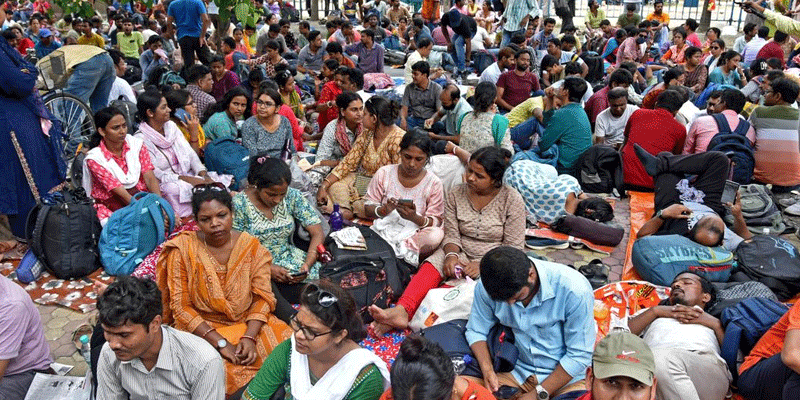
In an unprecedented move aimed at restoring public confidence in India's medical entrance examination system, the Prime Minister's Office (PMO) has stepped in to closely monitor the entire NEET-UG 2026 re-test process—from question paper preparation to its final delivery at examination centres. The intervention comes in the wake of the paper leak controversy that led to the cancellation of the original examination conducted on May 3, 2026. With lakhs of aspiring medical students affected, the Centre has adopted an extraordinary level of oversight to ensure the re-examination is conducted without any procedural lapses.
How the Crisis Unfolded
The controversy began after allegations emerged that parts of the NEET-UG question paper had been leaked before the examination. Reports of suspected malpractice surfaced from multiple locations, including Rajasthan and Uttarakhand, with investigators examining links to a WhatsApp-based "guess paper" network that allegedly circulated examination content in advance.
Following scrutiny of the allegations, the National Testing Agency (NTA) concluded that the integrity of the examination process had been compromised. As a result, the agency cancelled the examination on May 13 and announced a fresh test, triggering concerns among students, parents and educational institutions nationwide.
The episode raised serious questions about examination security and the credibility of one of India's most important competitive entrance tests.
PMO-Led Monitoring Framework
Under the new framework, PMO officials will oversee every critical stage of the process. This includes monitoring question paper preparation, supervision of secure printing facilities, tracking transportation logistics and ensuring safe delivery of examination material to centres.
The decision was reportedly taken during a high-level meeting involving senior government officials, underscoring the importance attached to restoring the credibility of the examination system.
Enhanced Security Measures for the Re-Test
The re-examination will be conducted under significantly stricter protocols than in previous years.
Among the key measures is Aadhaar-linked biometric verification, which will include fingerprint authentication and live candidate validation. Examination centres will operate under round-the-clock CCTV surveillance, supported by AI-assisted monitoring systems linked to central control rooms.
The transportation of question papers will be secured through GPS tracking and police protection, while centre-level monitoring will be strengthened to prevent unauthorized access and malpractice.
Education Minister Dharmendra Pradhan has directed authorities to ensure a secure, seamless and foolproof examination process, emphasizing zero tolerance for procedural lapses.
The Push for Stronger Examination Safeguards
The PMO's direct involvement represents one of the most significant government interventions in the administration of a national entrance examination. It reflects the seriousness with which the Centre views examination integrity and student trust.
For candidates and parents, the enhanced safeguards are intended to reassure them that the re-test will be conducted fairly. For educational authorities, the episode serves as a reminder of the vulnerabilities that exist in high-stakes examinations and the need for stronger technological and administrative safeguards.
The crisis has also accelerated discussions on broader reforms, including the proposed transition to Computer-Based Testing (CBT) from next year to improve transparency and reduce opportunities for leaks.
A Test Beyond the Examination Hall
The NEET-UG re-test is not merely an academic exercise; it has become a test of institutional credibility and public trust. By placing the examination process under direct PMO scrutiny, the government is sending a clear message that examination integrity is non-negotiable. While the immediate priority is to conduct a secure and fair re-test, the larger challenge lies in building a system that can prevent such controversies from recurring. The success of these measures could shape the future of competitive examinations in India for years to come.
(With agency inputs)