Ukraine's Starshield controversy raises concerns over foreign-controlled satellite networks, while India's cautious approach to Starlink underscores the growing importance of national security and digital independence.
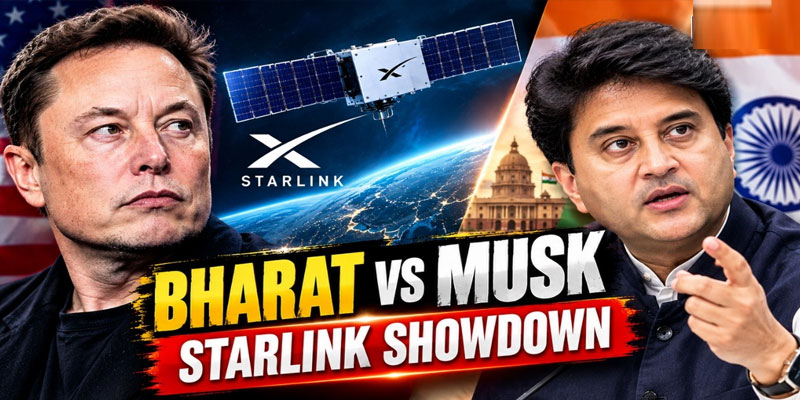
The recent controversy surrounding SpaceX's satellite communications services in Ukraine has triggered a fundamental debate over global security and digital sovereignty. The central question is whether nations can afford to depend on foreign-owned, privately operated infrastructure for critical defence, surveillance, intelligence and emergency communications.
Reports of restrictions affecting Ukraine's military-grade Starshield connectivity have exposed the strategic risks of such dependence. When battlefield communications, drone operations and military coordination rely on external networks, decisions taken thousands of kilometres away can directly influence national security operations.
According to Reuters reporting dated October 15, 2026, instructions to restrict certain Starshield operations reportedly originated within the White House. Elon Musk has maintained that operational restrictions on military systems are determined by the US government. However, the precise authorisation process and Musk's personal involvement remain disputed. Importantly, the incident did not establish that all Starlink services across Ukraine were shut down.
The controversy highlights a larger geopolitical reality: control over critical digital infrastructure can translate into strategic influence. Satellite communications are no longer merely commercial services; they have become essential components of modern defence, cybersecurity, intelligence gathering and national resilience.
For SpaceX, the episode could create significant reputational challenges in international markets. Governments evaluating Starlink and Starshield may increasingly question whether operational continuity can be guaranteed during military conflicts, diplomatic disagreements or national emergencies.
This could also influence procurement decisions worldwide. Countries may demand stronger contractual safeguards, transparent governance, independent operational oversight and alternative communication channels before allowing foreign satellite networks to support sensitive national-security functions.
India's position is particularly relevant. While Starlink received an Indian satellite communications licence in June 2025, its commercial rollout has remained subject to additional regulatory, security and spectrum-related requirements. India has not formally banned SpaceX, but its cautious approach reflects the importance attached to national-security oversight.
The Indian government has reiterated that security obligations apply to all satellite operators, including Starlink, Jio Satellite and Eutelsat OneWeb. Such requirements are essential when satellite connectivity intersects with sensitive data, lawful interception, border security and critical national infrastructure.
The Ukraine episode strengthens the case for India to prioritise indigenous satellite capabilities, diversified communication networks and sovereign control over strategic infrastructure. Dependence on a single foreign technology provider can create vulnerabilities that conventional cybersecurity measures alone cannot address.
There is also a wider commercial implication. SpaceX's technological advantages in satellite deployment, global coverage and connectivity remain substantial. However, governments purchasing strategic communications services evaluate more than technical performance. They also assess geopolitical exposure, service reliability, legal jurisdiction and operational independence.
The controversy could therefore become a turning point for SpaceX's global ambitions, particularly in defence and government markets. Whether it materially affects future contracts will depend on the findings of investigations, the safeguards SpaceX offers and how governments assess their exposure to external control.
Ultimately, the issue extends far beyond Elon Musk or SpaceX. As artificial intelligence, satellite networks, cloud computing and autonomous defence systems become increasingly interconnected, nations must reconsider who controls the digital infrastructure underpinning their sovereignty.
The message for India and the wider world is clear: Connectivity can be global, but national security cannot be outsourced without safeguards.
Technology may create market leadership, but trust, accountability and sovereign control will determine its long-term acceptance in strategically sensitive markets.