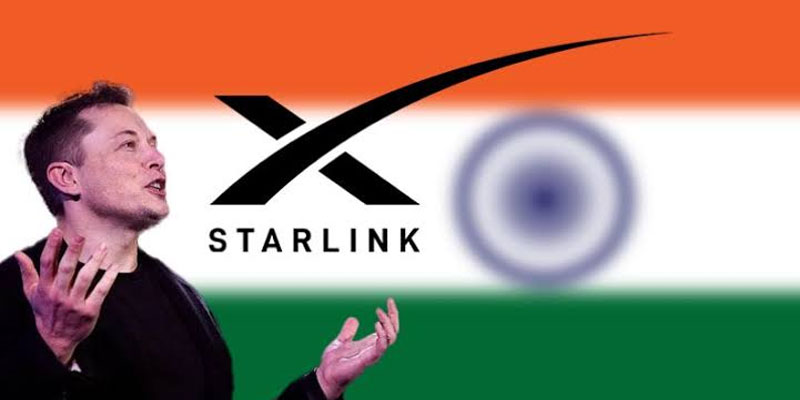
India's decision to deny preferential regulatory treatment to Elon Musk's Starlink signals a tougher approach towards American technology companies amid growing diplomatic and trade tensions between New Delhi and Washington.
According to the reported government position, Starlink must fulfil the same licensing, security and compliance requirements applicable to competing satellite communication providers, including Eutelsat OneWeb and Jio-SES.
Key Highlights
-
No preferential treatment: Starlink must meet India's regulatory and national security requirements.
-
Digital sovereignty: India is strengthening oversight of strategic communication infrastructure.
-
Satellite competition: Starlink, OneWeb and Jio-SES face a demanding compliance environment.
-
IT industry pressure: US immigration restrictions could accelerate offshore delivery and automation.
-
Trade uncertainty: Tariff disputes and market-access demands complicate bilateral negotiations.
-
Domestic opportunities: Indian telecom and technology companies could benefit from infrastructure investment and localisation.
-
Geopolitical implications: India-US technology cooperation may become increasingly transactional, with compliance, market access and strategic autonomy shaping future partnerships.
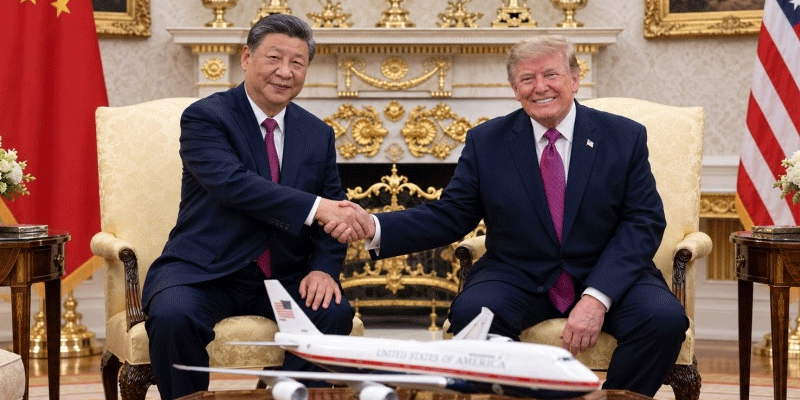
The development comes as India-US relations face mounting pressure over immigration restrictions, market access, tariffs and technology-sector employment. New Delhi appears determined to separate commercial opportunities from diplomatic expectations.
Musk has alleged that powerful business interests are obstructing Starlink's entry into India. However, India's Communications Ministry has rejected accusations of discriminatory treatment, maintaining that regulatory requirements apply equally to all operators.
For India's telecom industry, the implications are significant. Satellite broadband promises connectivity across remote regions, but operators must address national security, lawful interception, data protection and infrastructure compliance before commercial deployment.
The controversy also highlights India's growing emphasis on digital sovereignty. Authorities increasingly view satellite communications, cloud infrastructure, artificial intelligence and critical networks as strategic assets requiring strong domestic oversight.
Meanwhile, tighter US employment and immigration policies could create additional uncertainty for Indian IT companies. Restrictions affecting skilled professionals may encourage technology firms to accelerate offshore delivery, automation and domestic capability development.
Geopolitically, the dispute reflects a broader recalibration of India-US relations. Although both countries share strategic interests in technology, defence and Indo-Pacific security, disagreements over trade and immigration are complicating cooperation.
Bilateral trade negotiations face additional challenges involving agricultural market access, tariffs and industrial policies. Political uncertainty surrounding the upcoming US midterm elections could further delay meaningful progress.
For American technology companies, India's message is increasingly clear: access to one of the world's fastest-growing digital markets requires regulatory compliance rather than expectations of diplomatic accommodation.
Indian technology enterprises could benefit from stronger domestic innovation, satellite infrastructure investment and diversified international partnerships. However, prolonged bilateral friction could disrupt investments, talent mobility and cross-border technology collaboration.
Ultimately, the Starlink dispute represents more than a telecommunications licensing controversy. It illustrates how digital sovereignty, geopolitical competition and economic nationalism are reshaping global technology partnerships, making regulatory trust as important as technological innovation.