The UN Independent International Fact-Finding Mission on Iran has found “reasonable grounds” to believe that US forces committed war crimes in two February 28 strikes, including an attack on a school, while separately concluding that Iranian authorities committed crimes against humanity during their crackdown on anti-government protests. The findings, released on September 17, place civilian protection and accountability at the centre of scrutiny surrounding the conflict.
A War with A Heavy Civilian Toll
The conflict began on February 28, 2026, when the United States and Israel launched a major military operation against Iran, targeting missile capabilities, air-defence systems, military infrastructure and senior leadership. Iran retaliated with missile and drone attacks against US-linked and regional targets, widening the conflict across parts of the Middle East.
The war generated extensive casualties, displacement and infrastructure damage. The UN mission's findings now add a significant international-law dimension to the humanitarian consequences, although its report is not itself a judicial verdict.
Minab School Strike Under UN Scrutiny
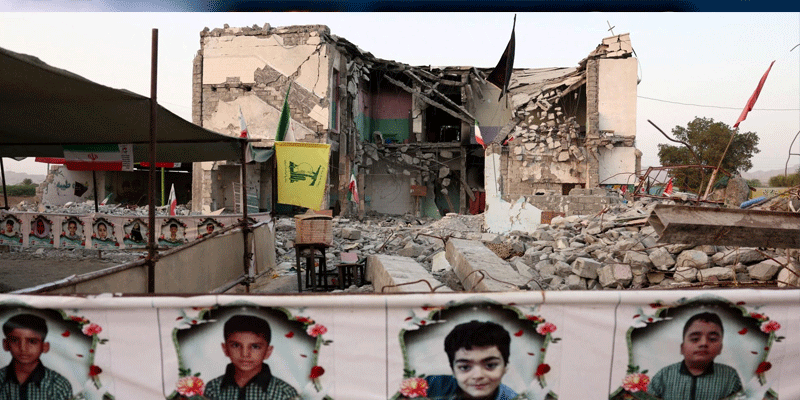
The fact-finding mission said it had reasonable grounds to believe that a US strike on the Shajareh Tayyebeh Primary School in Minab constituted a war crime. Investigators concluded that the school was a clearly identifiable civilian object and that the attack killed at least 150 civilians, including about 120 children, according to the mission's assessment.
The mission also examined a February 28 strike on a sports complex and residential area in Lamerd. It said the attack killed at least 22 civilians and raised serious concerns over whether the means and circumstances of the attack complied with international humanitarian law.
Tehran Also Faces Crimes-Against-Humanity Findings
The report simultaneously accused Iranian authorities of crimes against humanity in their response to nationwide protests that began in late 2025. Investigators documented allegations involving:
· Unlawful killings and torture
· Arbitrary detention and enforced disappearances
· Restrictions on freedom of expression
· Internet shutdowns and suppression of dissent
The mission characterised the abuses as part of a widespread and systematic attack against civilians. Earlier UN investigations had likewise documented serious human-rights violations and crimes against humanity in connection with repression in Iran.
Washington And Tehran Face Intensifying Scrutiny
The United States has previously maintained that its military operations comply with the law of armed conflict, while US officials had not immediately responded to the latest findings. Iran has consistently rejected allegations of systematic rights violations. The mission's conclusions are therefore best understood as findings by an independent UN-mandated investigative body rather than final court judgments.
Accountability Becomes the Conflict’s Next Front
The findings underline a central reality of modern warfare: military objectives cannot remove obligations to protect civilians. For Iran, the report simultaneously highlights the consequences of external attacks and domestic repression.
For the international community, the challenge now is preserving evidence, establishing responsibility and ensuring that alleged violations are subjected to credible legal scrutiny. The report does not end the dispute over the war; it strengthens the case for accountability on all sides, with civilian protection remaining the essential measure of any future resolution.
(With agency inputs)