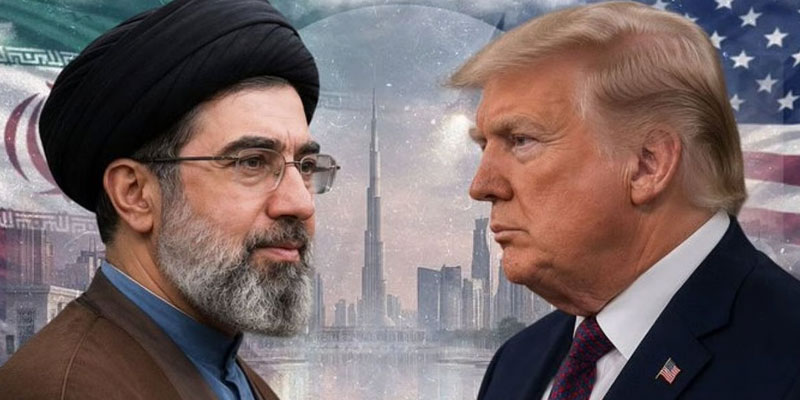
The United States has signalled a dramatic escalation in its economic pressure campaign against Iran, with Treasury Secretary Scott Bessent promising what he called the “toughest sanctions in history” alongside a naval blockade targeting Iran’s oil trade. The announcement comes as the nearly six-month conflict has disrupted Gulf energy flows, heightened tensions around the Strait of Hormuz, and pushed global crude prices to their highest levels in more than three weeks. While the proposed measures remain undefined, Washington’s message is clear: Iran’s oil revenues are becoming the central target of a renewed pressure strategy.
Escalation Without a Detailed Blueprint
The latest threat reflects an effort to intensify economic coercion while avoiding a broader military confrontation. Bessent described sanctions and maritime enforcement as a “one-two punch” capable of constraining Tehran’s financial capacity without requiring large-scale military operations.
However, the administration has not yet disclosed the precise legal framework, implementation timeline or foreign entities that could be affected. The announcement therefore represents a strong strategic signal rather than a fully operational sanctions package.
Why the Strait of Hormuz Matters
The immediate backdrop is the escalating confrontation around the Strait of Hormuz, one of the world’s most critical energy chokepoints. Before the conflict began in February, roughly one-fifth of globally traded oil passed through the narrow waterway.
Shipping disruptions, Iranian pressure on maritime traffic and US actions against Iranian ports and vessels have left millions of barrels of crude stranded, increasing freight costs and raising the geopolitical risk premium in energy markets. The impact extends beyond Iran, affecting Gulf producers whose exports depend on uninterrupted passage through the strait.
Targeting Iran’s Oil Lifeline
Washington’s strategy aims squarely at Iran’s principal source of foreign exchange—its oil exports. Over recent years, US sanctions have expanded beyond traditional financial restrictions to target Iran’s so-called “shadow fleet” of tankers, shipping managers, insurers, traders, terminals, front companies and alternative payment networks.
According to the US Treasury’s Office of Foreign Assets Control, more than 1,000 Iran-related individuals, vessels and aircraft have already been sanctioned since early 2025. The proposed escalation suggests an even broader attempt to tighten enforcement against networks helping Iranian crude reach international buyers.
China Emerges as the Strategic Variable
The greatest uncertainty surrounds China, which reportedly purchases more than 80% of Iran’s seaborne oil exports, much of it through independent “teapot” refineries. Previous US actions have already targeted Chinese refineries, Hong Kong-based firms, shipping companies and terminals connected to Iranian oil.
Yet imposing sweeping secondary sanctions on major Chinese financial institutions or corporations carries significant risks. Such action could provoke retaliation, deepen US-China trade tensions and accelerate efforts to bypass dollar-based financial systems. Washington therefore appears to be balancing deterrence with caution.
Global Energy Stakes and India’s Concerns
Stronger sanctions could reduce Iran’s oil revenues and increase pressure on Tehran, but their effectiveness depends on coordinated international enforcement and China’s willingness to curb purchases. Iran has repeatedly adapted through ship-to-ship transfers, falsified documentation and alternative payment mechanisms.
For India, the implications are substantial even without significant direct imports of Iranian crude. Higher oil prices, rising freight charges and increased insurance costs can fuel imported inflation and complicate energy security planning. The latest US threat therefore extends beyond bilateral tensions—it has become a test of whether economic pressure can shape geopolitical outcomes without triggering wider disruption in global energy markets.
(With agency inputs)