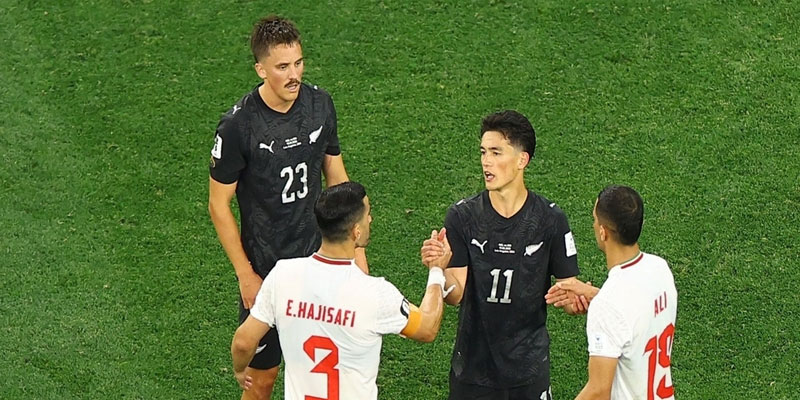
Iran have accused FIFA of unfair treatment after being ordered by US authorities to leave Los Angeles immediately following their 2-2 draw with New Zealand in their FIFA World Cup opener. Head coach Amir Ghalenoei described his side as “the most oppressed team” at the tournament, arguing that logistical restrictions, visa issues and the absence of key officials have placed the team at a significant disadvantage. What should have been a moment of celebration after a hard-fought opening match has instead sparked a wider debate about the impact of politics on international sport.
A Difficult Road to the World Cup
Iran’s challenges began long before the tournament kicked off. According to team officials, several members of the delegation faced visa-related difficulties, resulting in the exclusion of key support personnel from the World Cup environment. Among those reportedly unable to participate were senior football federation representatives, administrative officials and media staff whose roles are essential to managing a major international campaign.
The situation created operational difficulties for the squad, forcing coaches and team managers to assume additional responsibilities beyond their normal duties. Iranian officials have argued that such restrictions have affected the team's preparations and overall experience at the tournament.
Adding to the frustration, concerns were also raised over supporter access and travel arrangements, leaving the team feeling increasingly isolated on one of football’s biggest stages.
The Burden of Politics on Sport
The difficulties faced by Iran cannot be viewed in isolation from the broader geopolitical tensions between Iran and the United States. For decades, relations between the two countries have remained strained, and those realities have inevitably influenced logistical arrangements surrounding the tournament.
To comply with travel restrictions, Iran established its base camp in Tijuana, Mexico, rather than remaining in the United States. This arrangement meant repeated cross-border travel for matches, creating additional physical and logistical demands on players and staff.
For a team competing at the highest level, recovery time, training schedules and stable preparations are critical. Iranian officials contend that these challenges have disrupted normal sporting routines and placed their players at a competitive disadvantage.
Latest Developments After the New Zealand Match
The controversy intensified after Iran’s opening 2-2 draw against New Zealand at SoFi Stadium in Los Angeles. According to team representatives, authorities instructed the squad to leave the city immediately after the match and return to Tijuana rather than remain overnight for recovery and preparation.
Coach Amir Ghalenoei publicly criticized the decision, arguing that extensive travel had already exhausted the players. Team captain Mehdi Taremi also expressed concern, emphasizing the importance of post-match recovery in a demanding tournament schedule.
Reports indicate that FIFA officials acknowledged the difficulties faced by the Iranian delegation, but the travel arrangements remained unchanged. The episode has further fueled Iran’s belief that it is being treated differently from other participating nations.
A Tournament Beyond Football
Iran’s World Cup journey has become about far more than results on the pitch. The team’s experience highlights how international politics can intersect with global sporting events, influencing everything from visas and staffing to travel and recovery arrangements. While Iran continues its campaign with determination, the controversy has raised important questions about fairness, equal treatment and the ability of sport to remain insulated from geopolitical realities. As the tournament progresses, Iran’s performance will be judged not only by goals and points, but also by how it navigates one of the most challenging World Cup campaigns in its history.
(With agency inputs)