
High Drama, Quiet Certainty, and a Sudden Fall
April 17, 2026, marked an inflection point in Indian parliamentary politics. What began as a high-stakes legislative push by the BJP-led NDA government ended in its first major defeat on the Lok Sabha floor since 2014. The Constitution (131st Amendment) Bill—linking women’s reservation to delimitation—collapsed after over 12 hours of intense debate. Despite appeals for a “conscience vote” by Prime Minister Narendra Modi, the outcome appeared sealed even before ballots were counted. Speaker Om Birla announced 298 votes in favor and 230 against, far short of the required two-thirds majority of 352. The quiet certainty of defeat soon turned into political drama, with walkouts, protests, and the withdrawal of related delimitation and Union Territory bills.
What Led to the Government’s Setback
At the core of the bill was a proposal to reserve 33% of seats for women, but its linkage with delimitation proved contentious. The plan to redraw constituencies based on the 2011 census, potentially increasing Lok Sabha seats to around 850, triggered widespread concern. Opposition parties argued that such a move could disproportionately benefit northern states while disadvantaging others, especially in the south.
Home Minister Amit Shah, in his pre-vote remarks, acknowledged the uphill battle but reiterated the government’s commitment. However, the complexity of combining women’s reservation with structural electoral changes fractured support, even among some allies, exposing underlying coalition fragility.
Opposition Unity and Strategic Pushback
The opposition, particularly the INDIA bloc, displayed rare cohesion in opposing the bill. Leaders like Rahul Gandhi criticized it as an “unconstitutional trick,” arguing that the absence of a caste census could undermine representation for OBC communities. By framing the bill as both politically motivated and structurally flawed, the opposition successfully shifted the narrative from women’s empowerment to electoral manipulation. This unified stance ultimately proved decisive in defeating the legislation.
Priyanka Gandhi’s Sharp Critique
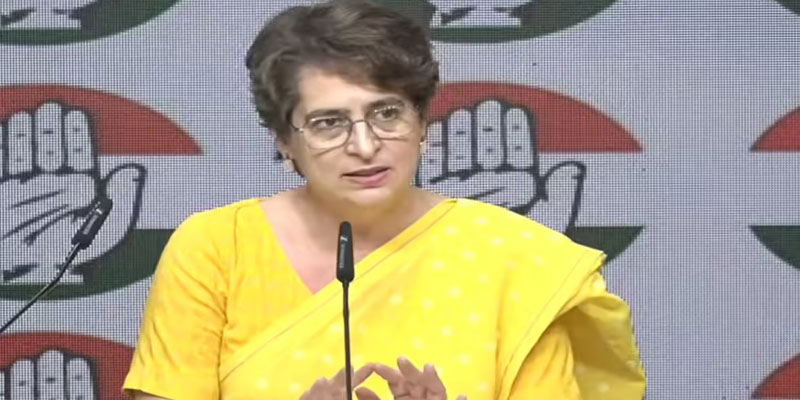
Among the most forceful responses came from Priyanka Gandhi Vadra, who described the outcome as a “big victory for democracy and national unity.” She accused the government of deliberately tying women’s reservation to delimitation using outdated census data, calling it a “conspiracy” to retain power.
Her remarks went further, questioning the intent behind the bill. She argued that the government never expected it to pass and instead sought political credit by portraying the opposition as anti-women. Emphasizing that “women aren’t idiots,” she insisted voters could see through what she termed an insincere strategy. Priyanka Gandhi also demanded immediate implementation of the 2023 women’s reservation law without additional conditions, labeling the day a “Black Day for BJP.”
Government Reaction and Political Fallout
The BJP responded strongly, with women MPs staging protests outside Parliament and accusing the opposition of sabotaging a historic reform. Leaders framed the defeat as a betrayal of women’s aspirations, signaling plans to take the issue directly to voters in upcoming state elections.
Politically, the loss carries significant implications. It not only boosts opposition morale but also raises questions about the NDA’s legislative strength after the 2024 elections. The defeat may delay the implementation of women’s reservation until at least 2029, while intensifying debates over delimitation and federal balance.
A Defining Moment in Legislative Politics
This episode underscores the complexities of pushing transformative reforms in a deeply divided political landscape. While the government positioned the bill as a milestone for gender equality, its structural linkages diluted consensus. The opposition’s coordinated resistance, coupled with sharp political messaging, turned the tide decisively. Going forward, the challenge for all stakeholders will be to separate genuine reform from political strategy—ensuring that the goal of greater representation does not remain entangled in partisan conflict.
(With agency inputs)