A Sharp Opening Salvo in Lok Sabha
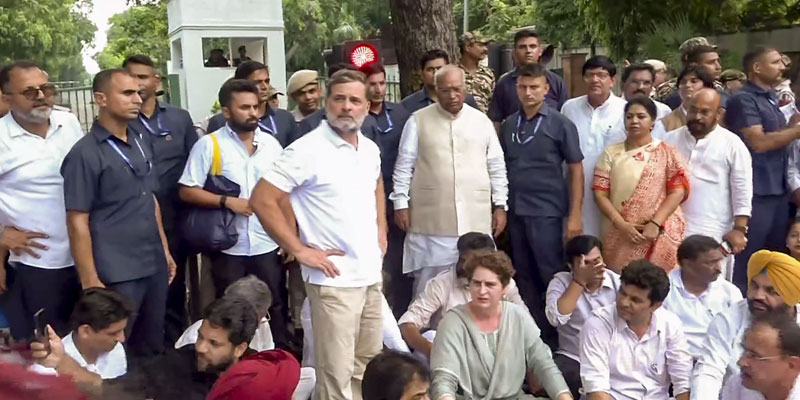
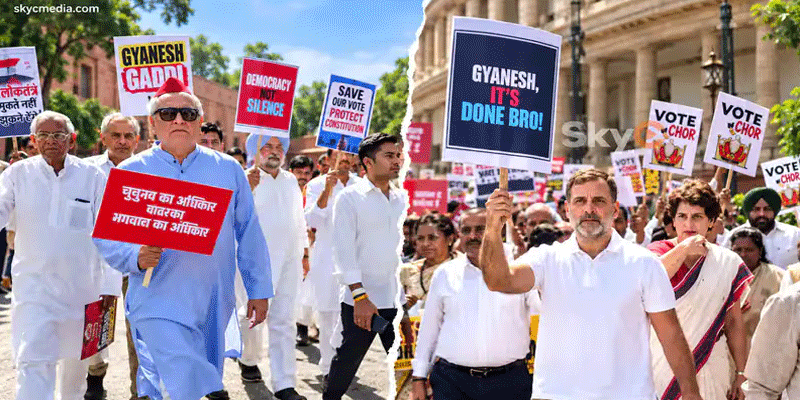
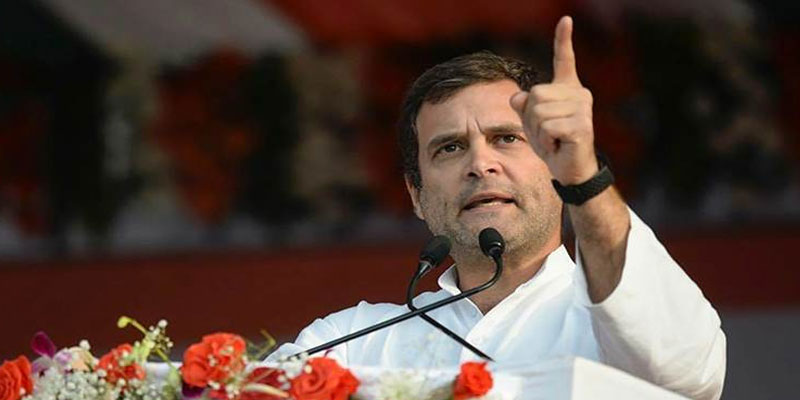
Leader of Opposition Rahul Gandhi launched a blistering attack on the Constitution (131st Amendment) Bill, 2026, calling it an “electoral power grab” disguised as a women’s empowerment measure. Speaking during a heated Lok Sabha debate on April 17, Gandhi argued that while the bill promises 33% reservation for women, its real intent lies in reshaping India’s electoral map through delimitation.
Despite his criticism, Gandhi reaffirmed his party’s full support for women’s reservation—making it clear that the objection is not to the idea, but to the way it is being implemented.
“Not About Women”: The Core Critique
His primary concern lies in the linking of the reservation to delimitation and the proposed expansion of the Lok Sabha to 850 seats. Gandhi described this as “hissa chori” (share theft), arguing that it could disproportionately increase representation from northern states while reducing the relative influence of southern states that have successfully controlled population growth.
Delimitation and the North-South Divide
At the heart of Gandhi’s argument is the fear of a shifting political balance. With the lifting of the 1971 population freeze, seat allocation would be recalibrated based on current population data. This, he warned, could shift nearly 200 seats toward northern states, many of which are seen as strongholds of the ruling alliance.
Leaders like Priyanka Gandhi and Mahua Moitra echoed similar concerns, questioning the necessity of linking delimitation to a bill that had already seen broad consensus in its earlier form.
Gandhi also called for a caste census to ensure that the benefits of reservation are equitably distributed among OBC, SC, and ST communities—adding another layer to the debate.
Broader Political Context and Strategy
The bill is being debated alongside other legislative measures aimed at enabling its rollout by 2029, making it part of a larger political and institutional shift. Prime Minister Narendra Modi has framed the bill as a historic step toward empowering “Nari Shakti,” urging cross-party consensus.
Gandhi’s intervention, however, attempts to reframe the narrative—positioning the Congress as a consistent advocate for women’s representation while questioning the government’s intent.
Low Chance of Bill Failure Despite NDA Shortfall
Despite the sharp political divide, the bill’s passage in the Lok Sabha appears highly likely. The National Democratic Alliance (NDA), with around 293 seats, falls short of the two-thirds majority required for a constitutional amendment (approximately 360 votes). However, the numbers tell a more nuanced story.
Opposition parties, including Congress, have openly supported the principle of women’s reservation, making outright opposition politically risky. Neutral and regional players such as BJD and YSRCP are also expected to back the bill, prioritizing its empowerment aspect over procedural concerns.
This bipartisan support significantly reduces the chances of failure. Early voting trends and political signaling suggest that the bill could comfortably cross the required threshold, even if some opposition members dissent on specific provisions.
Politics, Principle, and a Likely Passage
Rahul Gandhi’s critique has sharpened the debate, highlighting concerns about federal balance and electoral fairness. Yet, the broader political consensus on women’s reservation ensures that the bill is unlikely to be derailed.
What remains uncertain is not its passage, but its long-term impact. If implemented thoughtfully, it could transform gender representation in Indian politics. If not, it risks becoming another flashpoint in the ongoing contest over India’s democratic structure.
As the vote approaches, the bill stands at the intersection of principle and politics—poised to pass, but not without leaving behind a deeply contested narrative.
(With agency inputs)