A Controversial Proposal on a Fragile Stage
The search for peace in Gaza has long confounded world leaders. This week, U.S. President Donald Trump unveiled a sweeping new initiative, aiming to end years of bloodshed and instability. The plan—ambitious in scope and laden with conditions—has sparked reactions across the globe. While skepticism remains about its implementation, an unexpected coalition of eight Muslim-majority nations, including Pakistan, Egypt, and Turkey, have endorsed the framework. Their backing, coupled with strong words of encouragement from Indian Prime Minister Narendra Modi, signals cautious momentum toward a diplomatic breakthrough.
Muslim Nations Break Ranks: A Rare Consensus
In a joint statement, foreign ministers from the United Arab Emirates, Saudi Arabia, Qatar, Egypt, Jordan, Indonesia, Pakistan, and Turkey voiced support for Trump’s peace package. They praised the U.S. leader’s “genuine efforts” to halt the fighting, prevent Palestinian displacement, and revive a vision for long-term coexistence.
These countries—often divided on Middle Eastern geopolitics—outlined a shared blueprint for resolution. Among their demands:
· Free flow of humanitarian aid into Gaza.
· Safeguards against forced relocation of Palestinians.
· Immediate release of hostages.
· Security guarantees for all sides.
· Full Israeli withdrawal from Gaza.
· Large-scale reconstruction of the enclave.
· Integration of Gaza with the West Bank into a sovereign Palestinian state.
They insisted that any sustainable settlement must rest on a two-state solution consistent with international law, describing this as the cornerstone of regional stability.
White House Blueprint: A 20-Point Roadmap
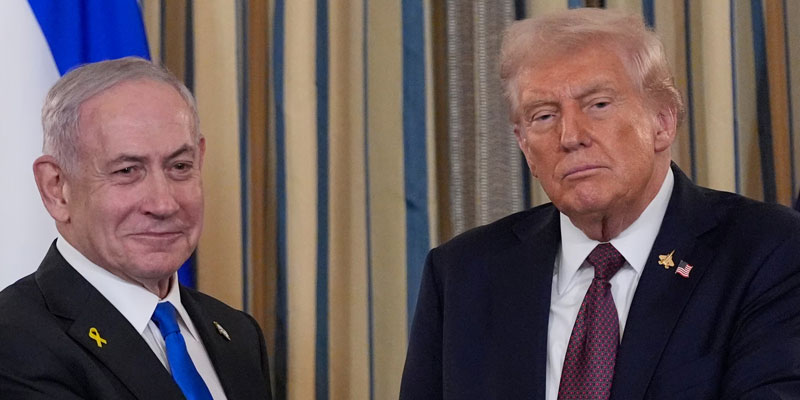
The U.S. plan, released after Trump’s meeting with Israeli Prime Minister Benjamin Netanyahu, envisions Gaza as a demilitarized and terror-free territory. Central to the proposal is an immediate ceasefire and the return of hostages within 72 hours of Israel’s acceptance. Hamas fighters who renounce violence and disarm would be granted amnesty, while those wishing to leave would receive safe passage abroad.
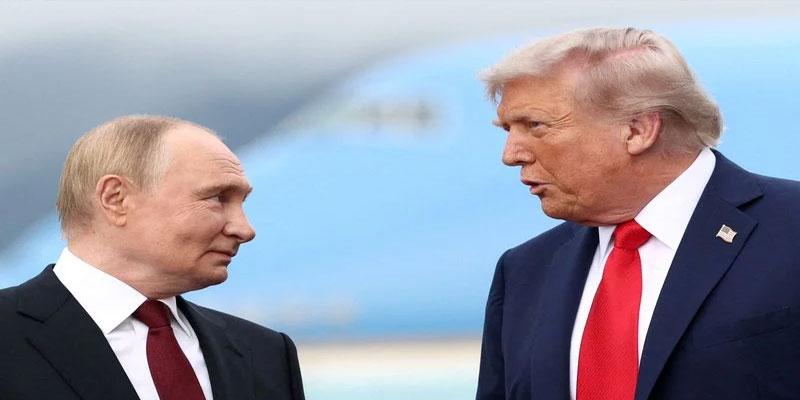
Trump’s 20-point plan also proposes the creation of a temporary governing council for Gaza, to be chaired by Trump himself and joined by figures such as former British Prime Minister Tony Blair. The initiative promises redevelopment of Gaza’s shattered infrastructure and vows to block any unilateral Israeli annexation of the West Bank. Yet, both Israel and Hamas have yet to formally endorse the deal.
Netanyahu’s Dual Track: Support and Defiance
At a joint press event with Trump, Netanyahu signaled cautious approval but delivered a stern warning: if Hamas rejects the terms, Israel would continue its military campaign until the group is decisively defeated. “It can be done the easy way or the hard way, but it will be done,” Netanyahu declared. The Israeli leader simultaneously extended a rare apology to Qatar’s prime minister for a recent strike that killed Hamas operatives on Qatari soil, an incident that briefly soured ties with Doha and drew U.S. criticism.
Modi’s Endorsement: India Steps into the Conversation
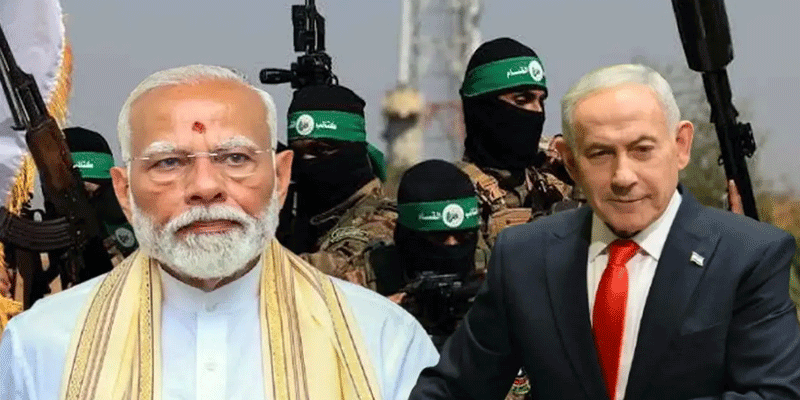
Indian Prime Minister Narendra Modi, responding shortly after the White House announcement, welcomed Trump’s peace proposal. “I hope all parties will unite behind this initiative to secure lasting peace,” Modi said, striking a note of optimism. India has historically walked a careful line in Middle Eastern diplomacy, balancing close ties with Israel while championing Palestinian aspirations. Modi’s support highlights New Delhi’s interest in stability across a region critical for its energy security and diaspora community.
Challenges Ahead: Between Vision and Reality
Despite the flurry of endorsements, significant hurdles loom. Hamas has given no indication of accepting a U.S.-led plan that requires it to disarm, while Israel remains wary of ceding full control of Gaza. Regional rivals, though momentarily aligned, could quickly splinter if political or religious sensitivities are overlooked. Moreover, questions linger about whether the U.S.—especially with Trump at the helm—can command the trust needed to mediate a deal of such magnitude.
A Narrow Opening for Peace
Trump’s Gaza peace plan represents both a high-stakes gamble and a rare window of opportunity. That eight influential Muslim-majority nations have publicly supported the framework is unprecedented, suggesting a shifting tide in Middle Eastern diplomacy. Modi’s backing adds another dimension, underscoring global recognition of the plan’s potential. Yet optimism must be tempered with realism: without acceptance from both Israel and Hamas, even the most comprehensive plan risks becoming another chapter in a long history of failed peace efforts.
For now, the world watches closely. If key stakeholders summon the political will to compromise, the proposal could lay the foundation for a more stable and prosperous Gaza. If not, it will join the ranks of ambitious but unrealized peace initiatives—a reminder that in the Middle East, vision often collides with hard realities on the ground.
(With agency inputs)