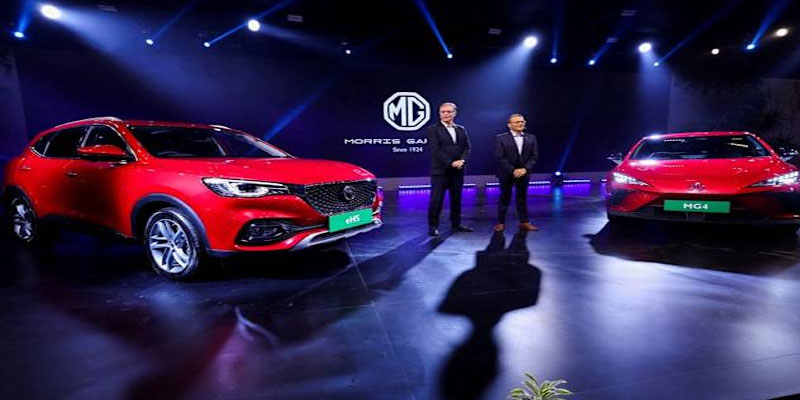
SAIC Motor’s India venture is preparing to invest up to $440 million to scale operations, deepen its push into hybrid and electric vehicles, and strengthen its footprint in one of the world’s fastest-growing automobile markets. The move signals a renewed commitment to India’s transition toward new-energy mobility even as competition intensifies and regulatory scrutiny of foreign investment remains high.
JSW MG Motor’s Expansion Strategy
The investment comes through JSW MG Motor India, the joint venture between China’s SAIC Motor and India’s JSW Group. The company plans to launch three to four new models over the next few years while expanding manufacturing capacity at its Halol facility in Gujarat.
The plant, currently capable of producing around 120,000 units annually, is expected to scale up significantly to support new hybrid and electric offerings. The strategy reflects a broader attempt to capture demand in India’s emerging new-energy vehicle (NEV) segment while addressing infrastructure gaps that still challenge full-scale EV adoption.
Hybrid and EV Focus to Drive Growth
JSW MG Motor is betting on a multi-energy platform that includes internal combustion, hybrid and fully electric vehicles. A key highlight is the planned introduction of a mass-market plug-in hybrid SUV, positioned as an affordable bridge between conventional vehicles and full electrification.
Hybrids are gaining traction in India due to limited charging infrastructure and consumer concerns over range. By combining battery and fuel powertrains, plug-in hybrids offer flexibility while supporting emissions goals. The company also plans additional electric models across price segments, including premium offerings aimed at urban buyers.
Competitive Landscape: Tata and Maruti Lead the Race
Competition in India’s hybrid and EV space is intensifying. Tata Motors remains the dominant player in electric vehicles, with a strong portfolio of mass-market EVs and a growing charging ecosystem. Its models in the compact and mid-range segments continue to capture the bulk of EV sales.
Meanwhile, Maruti Suzuki has emerged as a major force in hybrids through partnerships and strong-hybrid technology. Its focus on fuel-efficient SUVs and MPVs has helped expand hybrid adoption, particularly among consumers wary of charging limitations.
Other players, including Mahindra and Hyundai, are also expanding their EV and hybrid line-ups. This crowded field means JSW MG Motor must differentiate through pricing, technology and localisation to gain market share.
Localisation and Manufacturing Push
To remain competitive, the company aims to increase local sourcing of components and batteries. Higher localisation helps reduce costs, meet government incentives and mitigate risks linked to imports. The expansion of the Halol plant will also support production efficiency and future model launches, potentially enabling economies of scale.
A High-Stakes Bet on India’s Mobility Transition
SAIC’s planned investment underscores confidence in India’s long-term shift toward greener mobility. With government targets encouraging electric adoption and hybrids acting as a transitional technology, the market offers significant growth potential.
However, success will depend on navigating intense competition, regulatory complexities and evolving consumer preferences. If the expansion delivers competitive products and improved localisation, JSW MG Motor could strengthen its position in India’s NEV landscape. More broadly, the move reflects how global automakers are recalibrating strategies to align with India’s rapidly changing automotive future.
(With agency inputs)