Strategic funding from MUFG–SMBC consortium marks a significant boost for India’s renewable transmission network
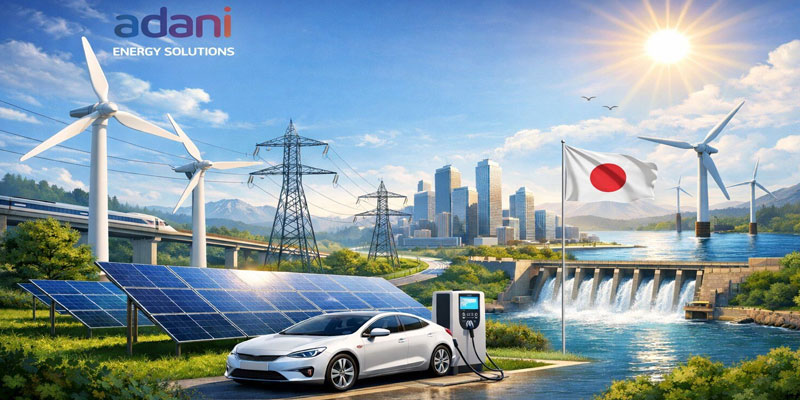
Adani Energy Solutions has secured long-term financing from a consortium of Japanese banks led by Mitsubishi UFJ Financial Group (MUFG) and Sumitomo Mitsui Banking Corporation (SMBC), marking a major milestone for its high-voltage direct current (HVDC) green power corridor project. The funding agreement signals renewed global confidence in India’s energy infrastructure expansion and underlines the importance of international capital in accelerating renewable energy integration across the national grid.
Financing the Next Phase of India’s Energy Transition
India’s ambitious renewable energy targets have increased the urgency of building robust transmission networks capable of moving power from generation hubs to consumption centres. While solar and wind installations continue to grow rapidly, transmission bottlenecks have emerged as a critical constraint. The financing secured by Adani Energy Solutions for its large-scale HVDC corridor reflects a broader trend: global financial institutions are increasingly investing in grid infrastructure that enables the clean-energy transition.
This project is designed to transport renewable electricity from western India’s solar-rich regions to high-demand northern markets, strengthening grid stability and improving power availability. It also reflects a strategic partnership between Indian infrastructure developers and Japanese lenders seeking stable, long-term investments in sustainable assets.
Project Significance and Market Context
The proposed transmission corridor will stretch across several states, carrying large volumes of renewable power over long distances with minimal losses. HVDC technology is particularly suited to such projects, offering efficiency advantages over conventional alternating current systems. By linking renewable generation centres to industrial and urban demand clusters, the corridor is expected to reduce curtailment of clean energy and enhance grid reliability.
India’s broader energy transition strategy aims to significantly expand renewable capacity by the end of the decade. However, transmission capacity must keep pace with generation growth to prevent stranded power. Investments in high-capacity corridors are therefore essential for balancing regional supply and demand. The Adani project is also part of a wider pipeline of privately developed transmission assets awarded through competitive bidding mechanisms, which have attracted both domestic and international investors.
From a financial perspective, the involvement of Japanese lenders highlights the attractiveness of India’s infrastructure sector. Long-term transmission projects offer predictable returns backed by regulated tariffs, making them appealing to global banks seeking stable yields amid uncertain global markets.
Role of MUFG and SMBC in India’s Renewable Financing
MUFG and SMBC have emerged as key financiers of India’s clean energy ecosystem. Over the past decade, both institutions have committed billions of dollars to renewable generation, transmission, and associated infrastructure. Their involvement typically combines long-tenor loans with sustainability-linked financing frameworks, aligning with global environmental, social, and governance (ESG) objectives.
MUFG has played a leading role in funding solar parks, hybrid projects, and grid infrastructure, often partnering with export credit agencies and technology providers. SMBC has similarly backed major renewable developers and transmission ventures, supporting India’s localisation goals and infrastructure expansion. Together, these banks bring not only capital but also technical expertise and international credibility, which can help lower financing costs and attract additional investors.
A Catalyst for Grid Modernisation
The financing secured by Adani Energy Solutions represents more than a single project milestone; it illustrates the growing convergence of global capital and India’s renewable ambitions. As renewable capacity expands, transmission infrastructure will determine how effectively clean power reaches consumers. Japanese bank participation underscores confidence in India’s long-term energy transition and its regulatory framework. If executed on schedule, the corridor could become a model for future cross-regional transmission projects, strengthening grid resilience and accelerating the country’s shift toward a cleaner, more reliable energy system.
(With agency inputs)