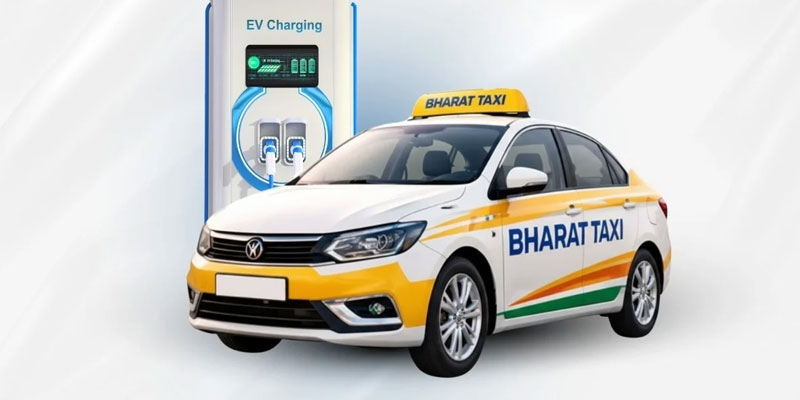
Union Home and Cooperation Minister Amit Shah on February 5, 2026, unveiled Bharat Taxi at Vigyan Bhavan in Delhi-NCR, positioning it as India’s first government-supported, cooperative ride-hailing platform. The service, run by Sahakar Taxi Cooperative Ltd, begins with an initial fleet of roughly 2.5 lakh vehicles and promises a zero-commission structure in which drivers retain the full fare after paying a nominal daily subscription. The launch is framed as part of the broader “Sahkar se Samriddhi” (prosperity through cooperation) agenda to extend cooperative models into emerging service sectors.
A Homegrown Alternative to Platform Dominance
Bharat Taxi enters a market long dominated by private aggregators. Its arrival signals an attempt to rebalance the economics of app-based transport by shifting ownership and earnings power toward drivers. The cooperative structure treats drivers not as contractors but as stakeholders—each participant holds shares and participates in governance. The model aims to address long-standing grievances in the gig economy around commissions, opaque algorithms, and limited social security.
Beyond symbolism, the initiative has a practical economic goal: to provide a scalable, driver-centric alternative that can reach smaller cities and rural clusters often overlooked by venture-capital-driven platforms. With government backing and integration with cooperative networks, Bharat Taxi is designed to combine digital convenience with grassroots institutional support.
How Bharat Taxi Differs from Ola and Uber
· Ownership and Governance
The central distinction lies in structure. While Ola and Uber operate as corporate platforms extracting a commission per ride, Bharat Taxi is organized as a cooperative where drivers are shareholders. This gives drivers voting rights and a share in decision-making, theoretically aligning incentives and reducing friction between platform and workforce.
· Earnings Model
Private aggregators typically deduct a significant percentage from each fare. Bharat Taxi replaces this with a flat daily fee, allowing drivers to keep their entire earnings. The shift could significantly raise take-home income, particularly for high-volume drivers. The model also introduces basic insurance and welfare benefits, addressing the lack of social protection common in gig work.
· Pricing Philosophy
Another point of divergence is pricing. Unlike dynamic surge systems used by existing platforms, Bharat Taxi proposes fixed, transparent fares without peak-hour multipliers. This could appeal to passengers frustrated by volatile pricing, though it also raises questions about demand-supply balancing during busy periods.
· Technology and Reach
Technologically, the platform mirrors standard ride-hailing apps with GPS tracking, digital payments, and rating systems. However, it also integrates cooperative dashboards to show earnings and shareholding details. Its expansion strategy leans on India’s vast cooperative network—particularly Primary Agricultural Credit Societies—to extend services beyond major metros into tier-2 and tier-3 markets where private aggregators have limited penetration.
Broader Implications and Challenges
Bharat Taxi’s rollout reflects a policy push to formalize and stabilize gig work. By embedding ride-hailing within cooperative institutions, the government hopes to channel income into local economies and reduce dependence on foreign-funded platforms. The initiative could also create pathways for women drivers and electric-vehicle adoption through cooperative financing.
However, success will hinge on execution. App reliability, driver onboarding, and passenger adoption will determine whether the cooperative model can compete with established networks. Private players still command vast user bases and technological maturity.
A Cooperative Bet on Fair Mobility
Bharat Taxi represents an ambitious attempt to reshape India’s ride-hailing landscape by blending digital platforms with cooperative ownership. If it delivers on fairer earnings, stable pricing, and wider reach, it could redefine how gig mobility operates in the country. Yet its long-term impact will depend on whether a state-supported cooperative can match the efficiency and scale of entrenched private competitors while preserving its promise of equitable growth.
(With agency inputs)