Central Bank Holds Repo Rate at 5.25%
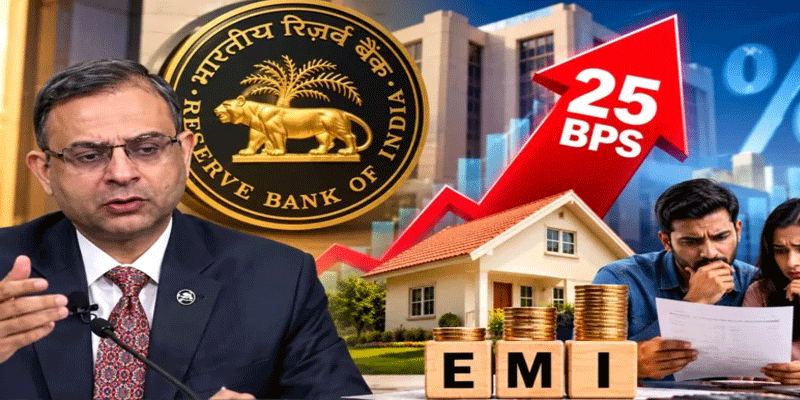
The Reserve Bank of India (RBI) on February 6, 2026, unanimously decided to keep the policy repo rate unchanged at 5.25%, maintaining a neutral policy stance. The decision comes amid easing inflation and steady economic momentum, signalling the central bank’s preference for stability while monitoring global and domestic uncertainties. With consumer price inflation hovering below the medium-term target and growth indicators holding firm, policymakers appear content to pause and assess rather than act pre-emptively.
A Wait-and-Watch Monetary Approach
The RBI’s latest policy decision reflects a balancing act between supporting growth and keeping inflation expectations anchored. Price pressures have moderated in recent months, aided by softer food inflation and stable core readings. Meanwhile, domestic demand, infrastructure spending, and services activity continue to show resilience.
Against this backdrop, the Monetary Policy Committee opted for continuity. By holding rates steady, the central bank aims to preserve the benefits of earlier rate adjustments while ensuring financial conditions remain supportive without risking inflationary flare-ups. The neutral stance indicates that the RBI is not committing to either immediate rate cuts or hikes, preferring flexibility as global conditions evolve.
Why the RBI Chose to Hold Rates
The decision to pause reflects confidence in the current macroeconomic environment. Inflation projections remain within the comfort zone, and growth is expected to stay robust through the fiscal year. Strong capital expenditure, stable consumption patterns, and improving external trade dynamics have contributed to a relatively balanced outlook.
At the same time, liquidity conditions in the banking system and bond markets require careful management. Government borrowing, currency interventions, and global capital flows can influence domestic liquidity, making it prudent for the RBI to maintain policy stability while using other tools—such as open market operations and liquidity injections—to manage short-term pressures.
Impact on Home Loans and EMIs
For borrowers, the unchanged repo rate brings continuity rather than immediate relief. Most home loans in India are linked to external benchmarks such as the repo rate, meaning equated monthly instalments (EMIs) generally move in tandem with policy changes. With the rate held steady, existing floating-rate home loan EMIs are expected to remain unchanged in the near term.
The absence of a rate cut means borrowers hoping for lower EMIs may need to wait longer. However, the pause also reduces the likelihood of sudden increases in borrowing costs. Banks are likely to maintain current lending rates, keeping housing finance relatively predictable. For new borrowers, loan rates are expected to stay broadly stable, supporting demand in the real estate sector.
Homeowners may still explore options such as refinancing, partial prepayments, or tenure adjustments to optimise repayment schedules. Overall, the policy pause ensures continuity in borrowing costs, allowing households and lenders to plan with greater certainty.
Stability Now, Flexibility Ahead
The RBI’s decision to keep the repo rate unchanged underscores a cautious but confident outlook. With inflation under control and growth holding steady, the central bank has chosen to prioritise stability while keeping its options open for future action. For borrowers, especially home loan customers, the policy offers predictability rather than immediate relief. As global and domestic conditions evolve, the RBI’s neutral stance provides room to respond swiftly if needed—ensuring that monetary policy remains aligned with both price stability and sustainable growth.
(With agency inputs)