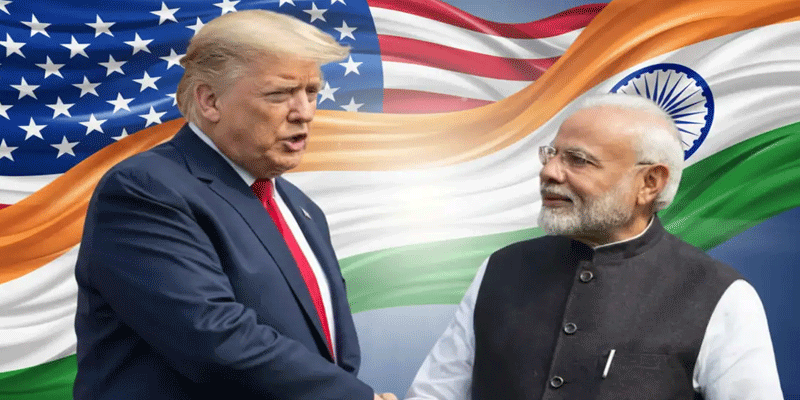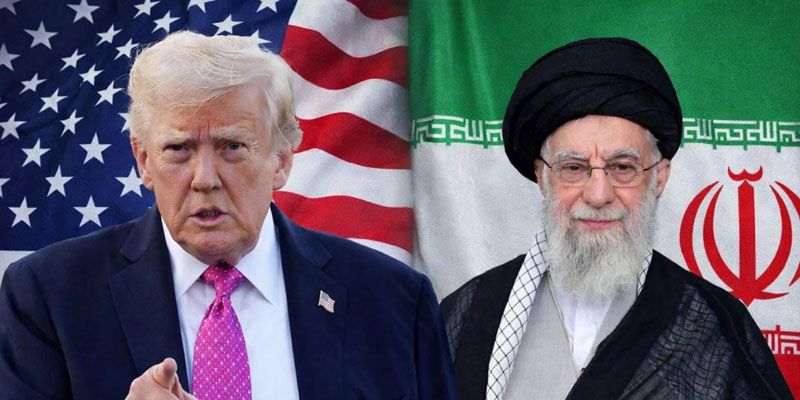
Iran has sharply rejected escalating pressure from U.S. President Donald Trump ahead of critical nuclear talks scheduled in Geneva on February 26, 2026. Tehran dismissed Washington’s claims about its nuclear ambitions as “outrageous falsehoods” and accused the United States of coercive diplomacy. Foreign Ministry spokesperson Esmaeil Baghaei insisted that unilateral demands would not force concessions, while Foreign Minister Abbas Araghchi signaled that Iran remains open to “respectful diplomacy”—provided sanctions are lifted and its right to peaceful uranium enrichment is acknowledged.
The defiance comes amid the most significant U.S. military build-up in West Asia in decades, raising the stakes of negotiations already shadowed by mistrust and recent hostilities.
Maximum Pressure 2.0: The Military Leverage
Since late January, Washington has repositioned formidable naval and air assets around Iran. Satellite imagery shows U.S. Navy 5th Fleet warships redeployed from their usual docking positions in Bahrain into active maritime patrols. The USS Abraham Lincoln carrier strike group operates in the Arabian Sea, roughly 150 miles off Oman, while the USS Gerald R. Ford is en route through the Mediterranean to reinforce presence.
Destroyers, surveillance aircraft, drones, and coast guard vessels now conduct near-continuous patrols across the Strait of Hormuz and Persian Gulf. The build-up provides rapid-strike capability and deterrence amid concerns over Iranian missile activity and proxy threats.
On land, a squadron of F-15E Strike Eagles has been deployed to Jordan’s Muwaffaq Salti Air Base, joined by 18 F-35 Lightning II stealth fighters and EA-18G Growlers for electronic warfare. Refueling tankers, reconnaissance aircraft, and air defense batteries—including at Qatar’s Al Udeid base—round out a layered posture designed for precision strikes if diplomacy falters.
Trump has warned of direct action against senior Iranian leadership should talks collapse, reinforcing what analysts describe as “maximum pressure 2.0”—diplomacy backed unmistakably by force.
Negotiation Fault Lines
The Geneva talks follow indirect Oman-mediated rounds earlier this month that stalled over scope. Iran insists discussions remain confined to its nuclear program. Washington, however, seeks broader commitments on ballistic missiles and Tehran’s regional proxy networks.
The background is fraught. The 2025 U.S.-Israel “Operation Midnight Hammer” strikes severely damaged Iranian nuclear facilities, weakening Tehran’s leverage but not eliminating its enrichment capabilities. Iran rejects any “zero enrichment” formula, arguing its civilian program is protected under the Nuclear Non-Proliferation Treaty. President Masoud Pezeshkian, facing inflation above 40 percent and domestic pressures, balances defiance with cautious openness to sanctions relief.
Global and Regional Stakes
The build-up risks miscalculation. A failed negotiation could trigger oil price spikes beyond $100 per barrel and destabilize Gulf shipping lanes. For energy-dependent nations like India—importing roughly 85 percent of its crude—the Strait of Hormuz remains a strategic lifeline. Meanwhile, Israel-Hamas tensions and broader regional rivalries add combustible context.
Trump seeks a legacy-defining agreement that surpasses the dismantled 2015 nuclear deal. Iran seeks survival, sanctions relief, and preservation of sovereign rights. Both sides engage in calibrated brinkmanship, aware that escalation carries global costs.
Diplomacy at the Edge of Deterrence
As Geneva approaches, the confrontation encapsulates a broader contest between coercion and compromise. The United States has assembled overwhelming military leverage; Iran has responded with rhetorical defiance and strategic patience. Whether this culminates in a breakthrough or breakdown will shape not only nuclear proliferation risks but also energy markets, regional stability, and the credibility of American power. In Geneva, diplomacy stands balanced precariously atop a foundation of warships and fighter jets.
(With agency inputs)