Water Cannons Signal a Deeper Recruitment Crisis
Water cannons were used in Patna on August 25 after government-job aspirants broke police barricades while marching towards Chief Minister Samrat Choudhary’s residence. The confrontation followed growing demands for cancellation and re-conduct of the 70th Bihar Public Service Commission (BPSC) examination, amid allegations of irregularities and a paper leak. What began as an examination dispute has now become a wider test of Bihar’s recruitment system, administrative accountability and the government’s willingness to engage with frustrated youth.
From Peaceful March to Street Confrontation
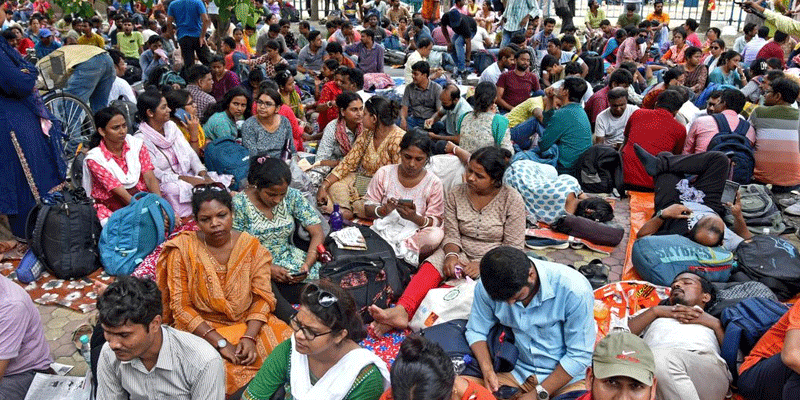
Hundreds of BPSC and Bihar Staff Selection Commission aspirants gathered at Gandhi Maidan before attempting to march towards Raj Bhavan and the Chief Minister’s residence. Police had erected barricades at several points, including the Dak Bungalow crossing, to prevent protesters from entering restricted areas.
When some demonstrators breached the barricades, police deployed water cannons and resorted to lathi charges, while several protesters were detained. The immediate demand remained clear: candidates want the 70th BPSC examination cancelled and conducted afresh, arguing that concerns about examination integrity cannot be addressed merely through action at selected centres.
Student leaders have also sought direct assurances from the Chief Minister or Education Minister, rejecting an administrative proposal for discussions through a lower-level delegation.
A Protest Bigger Than One Examination
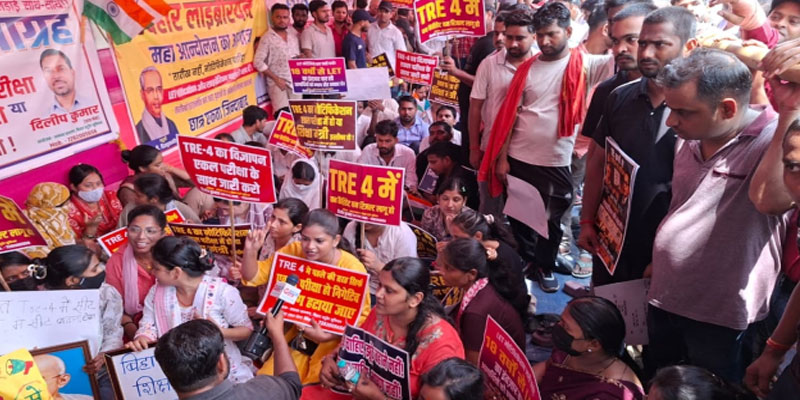
The agitation reflects accumulated frustration among Bihar’s job aspirants over recruitment delays, alleged examination irregularities and uncertainty surrounding upcoming recruitment exercises, including TRE-4.
Their broader demands include a transparent recruitment calendar, changes in examination patterns, removal of contractual-service weightage in certain recruitments, a higher upper-age limit, fewer negative-marking provisions, greater opportunities for Hindi-medium candidates and increased domicile-based recruitment. Candidates have also raised concerns involving librarian vacancies, police recruitment and assistant-professor eligibility.
However, these demands are not identical. Allegations of malpractice require evidence-based investigation, while issues such as age limits, domicile rules and examination formats involve policy decisions. Treating them as one issue may strengthen the agitation but could complicate meaningful negotiations.
Government Faces a Difficult Balancing Act
The Bihar government must maintain public order and protect sensitive government premises. Breaking security barricades cannot simply be ignored. At the same time, relying primarily on force risks deepening the perception that legitimate grievances are being dismissed.
The government has maintained that it has addressed “almost all” concerns and remains open to dialogue. Education Minister Mithilesh Tiwari has also indicated that discussions can continue. Opposition leader Tejashwi Yadav, meanwhile, has urged the Chief Minister to intervene personally and resolve the confrontation.
The immediate priority should therefore be preventing escalation while creating a credible channel for negotiations.
The Real Battle Is Over Trust
The most sensitive question is whether alleged irregularities were localised or systemic. Cancelling an entire examination without sufficient evidence could unfairly penalise candidates who appeared honestly. Conversely, refusing an independent investigation where credible evidence exists could permanently damage the BPSC’s credibility.
The authorities should publish a time-bound and independently verifiable assessment covering affected centres, examination records, evidence collected, investigation findings and the legal basis for any remedial action. If malpractice was confined to particular locations, targeted cancellation and re-examination may suffice; if systemic compromise is established, a wider re-examination may be unavoidable.
Beyond Water Cannons, Restore Faith
For Bihar’s aspirants, government employment represents far more than a job—it is a pathway to economic security and social mobility. The confrontation on the streets is therefore a warning that administrative assurances alone are no longer enough.
Bihar can restore confidence only through examinations that are demonstrably fair, investigations that are transparent, results that arrive on time and a government willing to listen before frustration turns into confrontation.
(With agency inputs)