A Sudden Resignation Shakes Confidence
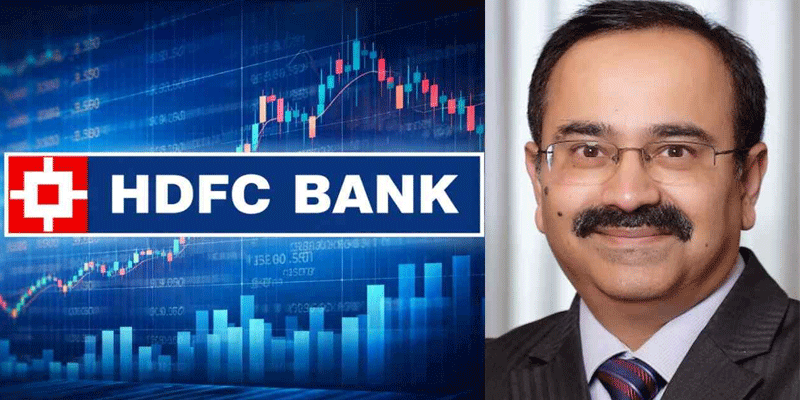
The abrupt resignation of Atanu Chakraborty as chairman of HDFC Bank has triggered widespread concern across markets and regulatory circles. Citing “ethical” misalignment, Chakraborty stepped down with immediate effect, sending the bank’s shares sharply lower both in India and in its overseas listings. The timing and tone of his exit—without detailing specific issues—have amplified uncertainty around governance at one of India’s most systemically important financial institutions.
What Chakraborty Said — and Didn’t
In his resignation letter, Chakraborty pointed to “certain happenings and practices” within the bank over the past two years that did not align with his personal values. Notably, he refrained from specifying these concerns and clarified that his decision was not linked to any wrongdoing. This careful wording has created a grey area—raising questions without offering clarity.
His departure is significant not just because of the reasons cited, but also because it marks the first time a chairman has stepped down mid-term from HDFC Bank on such grounds. Given the bank’s scale and influence, the move carries strong signalling value for investors and regulators alike.
Market Reaction and Regulatory Response
The markets reacted swiftly and sharply. Shares of HDFC Bank fell over 4% on the Bombay Stock Exchange, while its American Depositary Receipts dropped nearly 8%, erasing tens of thousands of crores in market value. The resignation came at a time when global conditions were already fragile, exacerbating investor anxiety.
In response, the Reserve Bank of India issued an unusually direct statement, assuring that its supervisory assessments had found no material governance concerns. The RBI also moved quickly to approve Keki Mistry as interim chairman for three months, aiming to stabilise leadership while a permanent successor is identified.
Governance Concerns and Strategic Risks
Despite regulatory reassurance, the episode has raised deeper governance questions. The absence of specific details about the “ethical concerns” leaves investors speculating about internal practices, board dynamics, or decision-making processes. Analysts expect closer regulatory engagement with the bank, particularly around internal controls and oversight mechanisms.
The timing is particularly sensitive. HDFC Bank is still navigating the complexities of its merger with HDFC Ltd, while also dealing with past issues such as digital outages and increased regulatory scrutiny. These factors had already begun to weigh on its valuation, and the resignation adds another layer of uncertainty.
The Road Ahead for India’s Largest Private Lender
For HDFC Bank, restoring confidence will depend on how transparently it addresses the situation. Clear communication from the board, swift appointment of a credible long-term chairman, and visible steps to strengthen governance will be critical. Investors will be watching closely for any signs of deeper structural issues or cultural misalignment within the institution.
A Moment of Reckoning
Chakraborty’s resignation may not point to immediate financial instability, but it underscores the importance of trust and transparency in large financial institutions. For a bank that has long been seen as a benchmark of stability, this episode serves as a reminder that governance standards must continuously evolve. Whether this is a one-off event or a signal of deeper challenges will depend on how decisively and openly the bank responds in the coming months.
(With agency inputs)