India’s fuel consumers are once again feeling the heat. Petrol and diesel prices have been increased for the fourth time in less than 10 days, marking one of the sharpest phases of fuel inflation in recent years. The latest revision comes against the backdrop of escalating tensions in West Asia, disruptions in global crude supply chains, and a weakening rupee, all of which have significantly raised India’s energy import bill. The repeated hikes are now triggering concerns not only about transportation costs but also about their wider impact on inflation and household finances.
Fourth Hike in Less Than 10 Days
In the latest round of revisions, petrol prices were increased by 87 paise per litre and diesel by up to 91 paise per litre across major cities. This follows similar increases just two days earlier, taking the cumulative rise in fuel prices since May 15 to nearly ₹5–₹7.5 per litre.
As a result, petrol prices in Delhi have climbed above ₹99.5 per litre, while diesel has crossed ₹92 per litre. The burden is not limited to conventional fuels. Compressed Natural Gas (CNG), widely used by public transport and commercial vehicles, has also witnessed a fresh increase of around ₹1 per kg, taking the cumulative rise in recent days to approximately ₹4 per kg in several key markets.
West Asia Crisis Driving Global Crude Prices
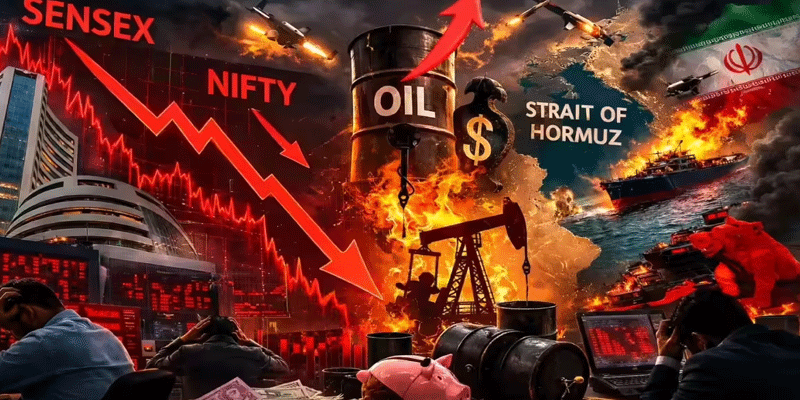
The primary trigger behind the current fuel-price escalation is the sharp rise in global crude oil prices. The ongoing conflict in West Asia has intensified concerns over supply disruptions, particularly through the Strait of Hormuz, one of the world’s most critical oil transit routes.
With crude oil prices hovering around $120 per barrel, the cost of importing and refining crude has risen substantially. For India, which imports more than 80 per cent of its crude oil requirements, such geopolitical disruptions translate directly into higher energy costs. State-owned oil marketing companies (OMCs), after maintaining a prolonged freeze on retail fuel prices, are now passing a greater share of these increased costs on to consumers.
The Rupee Factor and Inflation Risks
The fuel-price challenge has been compounded by the depreciation of the rupee against the US dollar. Since crude oil transactions are denominated in dollars, every decline in the rupee’s value raises the effective cost of imports, even if global prices remain unchanged.
This combination of expensive crude and a weaker currency creates a double pressure on domestic fuel prices. The impact is already beginning to spread across the economy. Higher transportation and logistics costs are feeding into freight charges, food distribution expenses and commodity prices, raising fears of broader inflationary pressures.
For low- and middle-income households, the consequences are particularly significant, as fuel inflation reduces disposable income and increases the cost of essential goods and services.
Policy Dilemma for the Government
The fuel-price revision initiated on May 15 effectively ended a nearly four-year period of relative price stability. Policymakers now face a difficult balancing act: protecting the financial viability of OMCs while limiting the inflationary and political fallout of rising fuel costs.
A Delicate Balance Between Energy Security and Inflation Control
The latest fuel-price hikes underscore India’s vulnerability to global energy shocks and currency fluctuations. Unless crude prices ease significantly or the rupee stabilises, the pressure on fuel prices is likely to persist. In the coming weeks, the challenge for policymakers will be to manage inflationary risks without undermining energy-sector sustainability, as households and businesses brace for the economic ripple effects of higher fuel costs.
(With agency inputs)