Turning Waste into Jobs, Investment and Climate Gains
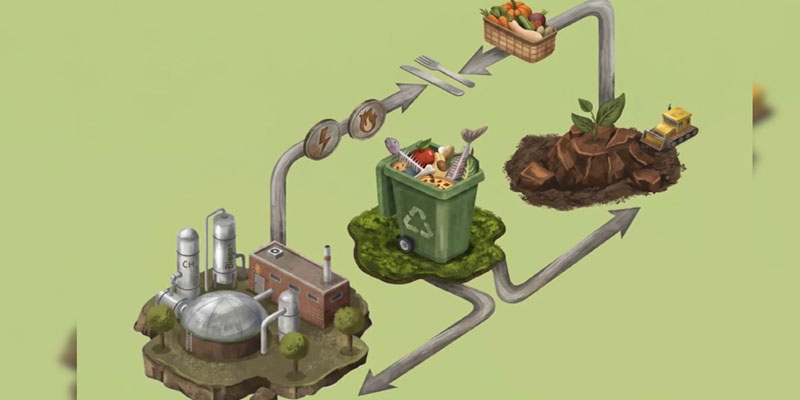
India’s growing mountains of food waste, vegetable scraps, garden residues and other biodegradable refuse are increasingly being viewed as an economic resource rather than an environmental burden. According to a recent study by the Council on Energy, Environment and Water (CEEW), better management of urban organic waste could create nearly 26 lakh direct jobs, attract around $24 billion in investments and unlock a market opportunity worth $51 billion by 2047. If supported by the right policies and infrastructure, organic waste could become a key driver of employment generation, climate action and urban sustainability.
A Growing Waste and Emissions Challenge
Much of this waste currently ends up in landfills, where it decomposes in the absence of oxygen and releases methane, a greenhouse gas significantly more potent than carbon dioxide. As urbanisation accelerates, waste-related emissions have risen sharply. According to CEEW, greenhouse gas emissions from India’s waste sector increased by 226% between 1994 and 2020. By 2019, the sector accounted for about 2.34% of the country’s total emissions.
This trend highlights a dual challenge: managing rapidly increasing waste volumes while reducing the environmental costs associated with disposal. At the same time, it presents a major opportunity to create value through a circular economy approach.
The Emerging $51 Billion Market Opportunity
The study estimates that under an accelerated policy scenario, India’s urban organic waste sector could generate a market worth nearly $51 billion by 2047. This value would emerge from products and services such as compost, bio-CNG, biogas, soil enhancers and other organic inputs.
An even more ambitious pathway—achieving complete collection and processing of urban organic waste—could expand the market to approximately $62 billion. Such a transition would also help avoid nearly 101 million tonnes of carbon dioxide equivalent emissions by reducing methane releases from landfills.
Importantly, the sector offers a strong economic multiplier. The estimated $24 billion investment required for collection systems, composting facilities, biomethanation plants and logistics infrastructure could support a recurring and expanding market over the long term.
Benefits and Challenges
The advantages of improved organic waste management are substantial. Besides creating up to 26 lakh direct jobs, the sector can improve urban cleanliness, reduce landfill dependence, lower methane emissions and support renewable energy production. Compost can enhance soil health, while bio-CNG can replace fossil fuels in transport and industry.
However, several challenges remain. Effective waste segregation at source continues to be inconsistent across cities. Many urban local bodies face financial and technical constraints, while composting and biomethanation facilities often struggle with irregular feedstock supplies. Market demand for compost and bio-CNG also requires policy support, procurement incentives and stronger supply chains.
Without sustained public participation, regulatory enforcement and investment, the sector’s potential may remain underutilised.
Policy Priorities for a Circular Future
Unlocking this opportunity will require universal source segregation, efficient collection systems, reliable treatment infrastructure and stronger integration with climate finance mechanisms. Long-term contracts, performance-based incentives and support for green markets can further strengthen the ecosystem.
Organic Waste Could Power India’s Green Economy
India’s organic waste challenge is increasingly becoming an opportunity for economic transformation. By converting biodegradable waste into energy, compost and employment, the country can simultaneously address urban pollution, reduce greenhouse gas emissions and create a thriving circular economy. If backed by robust policies and investments, organic waste could evolve from a growing environmental liability into a cornerstone of India’s sustainable development journey by 2047.
(With agency inputs)