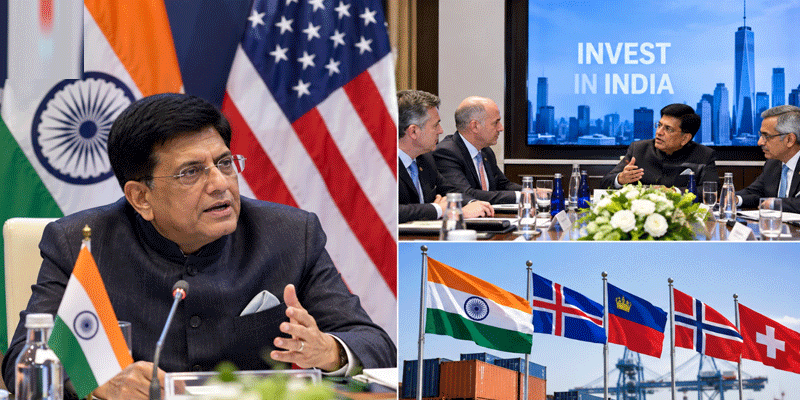
Even as India continues to strongly articulate its concerns over terrorism and regional security at international forums, New Delhi is simultaneously advancing an ambitious economic agenda with key global partners. In a significant development, India and Canada have accelerated efforts to rebuild bilateral ties through deeper trade and investment engagement. The renewed push was evident during Union Commerce and Industry Minister Piyush Goyal’s recent visit to Toronto, where both countries reaffirmed their commitment to concluding a Comprehensive Economic Partnership Agreement (CEPA) and substantially expanding economic cooperation.
A Fresh Start After Diplomatic Strains
India and Canada have spent the past few years navigating diplomatic tensions that affected the momentum of bilateral engagement. However, recent interactions indicate a conscious effort by both governments to separate economic priorities from political disagreements and focus on long-term mutual interests.
The renewed engagement is centered on an ambitious target: tripling bilateral trade from approximately $17 billion to $50 billion by 2030. The initiative reflects growing recognition in both capitals that stronger economic integration can generate jobs, investment, innovation, and greater resilience in an increasingly uncertain global economy.
The improving political atmosphere has also helped revive discussions that had previously slowed, creating fresh optimism about the future of India-Canada economic relations.
CEPA at the Heart of the Economic Agenda
At the center of this trade reset is the proposed Comprehensive Economic Partnership Agreement (CEPA), a broad-based pact covering trade in goods, services, investment, and economic cooperation. Following the signing of the Terms of Reference earlier this year, negotiations have gained momentum, with both sides expressing confidence about reaching an agreement by the end of 2026.
Speaking during his visit, Goyal described CEPA as a major catalyst that could unlock new opportunities across sectors ranging from technology and clean energy to manufacturing, agriculture, and advanced services. The proposed agreement is expected to reduce trade barriers, improve market access, and create a more predictable framework for businesses operating in both countries.
Canadian leaders have also described the agreement as potentially transformative, emphasizing its ability to strengthen commercial ties and create new opportunities for workers, entrepreneurs, and investors.
Strengthening Business-to-Business Engagement
A key feature of Goyal’s visit was the strong emphasis on private-sector participation. Accompanied by a delegation of around 150 Indian business leaders, the minister engaged with Canadian industry representatives to showcase India’s evolving investment landscape.
India highlighted a series of economic reforms aimed at improving ease of doing business, streamlining regulations, and attracting foreign investment. The message to Canadian businesses was clear: India seeks to be a preferred destination for capital, innovation, and strategic partnerships.
At the same time, Indian companies are increasingly looking toward Canada as a gateway to North American markets, particularly in sectors such as information technology, clean technology, pharmaceuticals, critical minerals, and advanced manufacturing.
Strategic Importance and Remaining Challenges
The drive toward a $50 billion trade relationship carries significance beyond economics. It reflects a broader effort to strengthen supply-chain resilience, diversify trade partnerships, and address common challenges such as energy transition and technological transformation.
However, negotiations are unlikely to be straightforward. Issues including agricultural market access, intellectual property protections, labor standards, and tariff structures have historically complicated trade discussions. Reaching consensus on these areas will require sustained political commitment and pragmatic compromise from both sides.
Nevertheless, the current momentum suggests that both governments view economic cooperation as a strategic priority that outweighs lingering disagreements.
Building a Partnership Around Shared Prosperity
The renewed push for CEPA marks a potentially defining moment in India-Canada relations. By prioritizing trade, investment, and business collaboration, both countries are signaling a shift from diplomatic friction toward constructive engagement. Minister Goyal’s assertion that the next phase of bilateral relations will be driven by trust and shared prosperity captures the broader vision behind the initiative. If successfully concluded, CEPA could become the foundation for a stronger, more resilient partnership—one that benefits businesses, investors, and citizens on both sides while positioning India and Canada as important economic partners in a rapidly changing global landscape.
(With agency inputs)