A Crucial Passage Successfully Completed
An oil tanker carrying petroleum destined for India has successfully crossed the Strait of Hormuz despite heightened regional tensions and unprecedented maritime restrictions in the Gulf. The successful transit of the Very Large Crude Carrier (VLCC) Nissos Keros offers a significant boost to India’s energy security at a time when geopolitical uncertainty continues to disrupt global shipping routes and oil supplies.
Why the Strait of Hormuz Matters
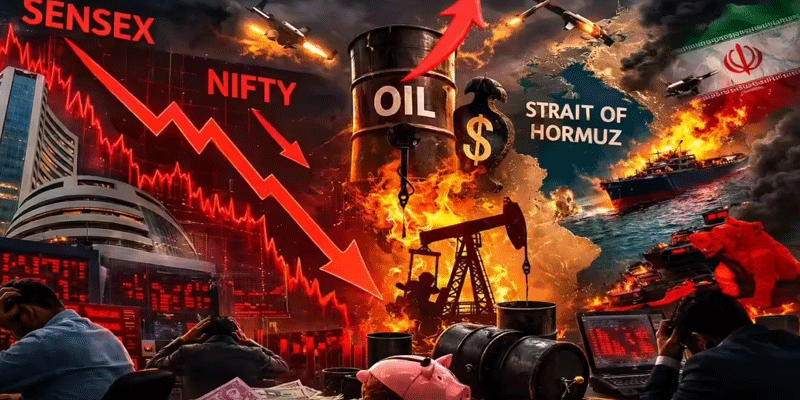
The Strait of Hormuz is one of the world’s most critical energy corridors, connecting Gulf oil producers to global markets. Located between Iran and the Arabian Peninsula, it carries nearly one-fifth of global oil and liquefied natural gas supplies daily, making it vital to international energy security. However, since the outbreak of the U.S.-Israeli conflict with Iran on February 28, 2026, concerns over the strait’s safety and accessibility have grown, slowing shipping movements and heightening fears of supply disruptions for major energy importers such as India.
The Nissos Keros Transit
Against this challenging backdrop, the Nissos Keros has completed a journey of considerable significance. The Marshall Islands-flagged tanker departed Shajrah in the United Arab Emirates on May 21 carrying approximately 1.8 million barrels of Das crude oil. By the morning of May 29, the vessel had reached the northern Arabian Sea off India’s western coast and was continuing toward Visakhapatnam, where it is expected to arrive on June 3.
The voyage is particularly noteworthy because the tanker had reportedly remained stranded in the Persian Gulf for nearly three months due to regional instability. Built in 2019, the vessel is among the largest crude carriers operating on international routes, underscoring the scale of the shipment and its importance to India’s energy requirements.
Latest Developments and Regional Dynamics
The successful crossing occurred under a tightly controlled maritime environment overseen by Iran. According to Iranian reports, the Islamic Revolutionary Guards Corps Navy permitted 23 commercial vessels, including oil tankers and container ships, to pass through the strait within a 24-hour period after formal coordination with Iranian authorities.
This reflects a major departure from normal operations. Before the conflict, between 125 and 140 vessels crossed the strait daily. Today, vessel movements are conducted in limited groups, with shipping volumes significantly reduced. Several major global shipping companies had earlier suspended Hormuz transits and rerouted vessels around southern Africa, increasing transit times and costs.
For India, the development carries strategic importance. The country remains heavily dependent on energy imports from the Middle East, making uninterrupted access to Gulf crude essential. Diplomatic engagement, including earlier efforts involving External Affairs Minister S. Jaishankar, has helped maintain communication channels crucial for facilitating Indian shipping interests.
A Strategic Success Amid Persistent Uncertainty
The passage of the Nissos Keros represents more than the arrival of a single oil shipment. It highlights the resilience of India’s energy supply network, the importance of sustained diplomacy, and the continued relevance of the Strait of Hormuz to global commerce. While the successful transit offers cautious reassurance, it also serves as a reminder that international energy flows remain vulnerable to geopolitical tensions, making diversification and strategic preparedness increasingly vital for the future.
(With agency inputs)