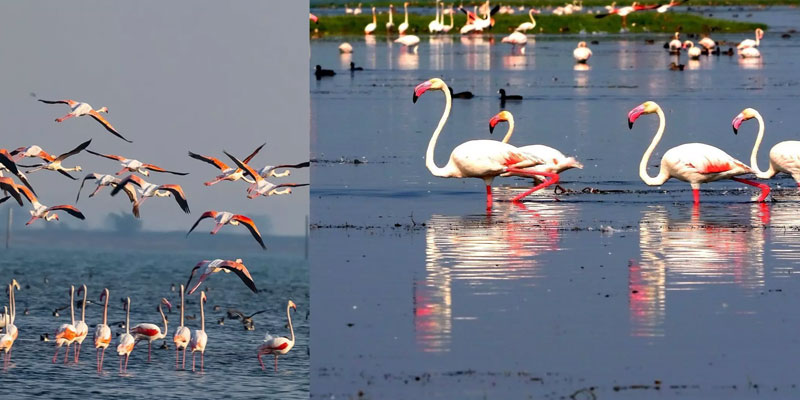
A Promising Census for Asia’s Great Lagoon
The 2026 mid-winter bird census at Chilika Lake has delivered encouraging news for conservationists. This year, enumerators recorded 11.32 lakh birds representing 196 species—slightly higher than last year, but symbolically significant after recent climate shocks and cyclone threats. The marginal rise reinforces confidence that Odisha’s flagship wetland is stabilising as a safe winter refuge for migratory and resident birds, even as wetlands globally continue to shrink.
Chilika Lake: An Ecological Overview
Spread across more than 1,100 square kilometres, Chilika is Asia’s largest brackish water lagoon and one of India’s earliest Ramsar-designated wetlands. Its unique mix of freshwater inflows, saline tides, mudflats, and shallow lagoons creates a mosaic of habitats supporting fish, dolphins, and a spectacular diversity of birds. Between October and April each year, Chilika lies squarely on the Central Asian Flyway, drawing avian visitors from Siberia, Central Asia, and Europe. Within the lagoon, Nalbana Island—declared a bird sanctuary in 1987—functions as the ecological heart of this migration, offering undisturbed roosting and abundant food.
What Drove the Rise to 11.32 Lakh Birds?
The modest yet meaningful increase in bird numbers this year is not accidental. It reflects a convergence of ecological management, community participation, and favourable natural conditions.
· Improved Habitat Conditions
One of the most critical factors has been the steady improvement in water quality and habitat structure. Controlled dredging and desilting over recent years restored optimal salinity gradients, allowing plankton and benthic organisms to flourish. These organisms form the base of the food web for migratory ducks such as northern pintail, Eurasian wigeon, and gadwall, all of which dominated this year’s count. Shallow, fish-rich waters around Nalbana proved especially attractive, explaining why more than half of the season’s birds congregated there.
· Effective Protection and Reduced Disturbance
Stronger anti-poaching enforcement played a decisive role. Nearly 50 protection squads drawn from forest staff and community groups monitored vulnerable zones, curbing illegal nets and human intrusion. Local fishing communities, long dependent on the lagoon, have become stakeholders in conservation through plantation drives and surveillance efforts. Regulated tourism—with visitor limits and defined routes—further reduced stress on sensitive roosting sites.
· Recovery Momentum from Long-Term Conservation
Chilika’s resurgence is the result of decades of adaptive management following severe degradation in the 1990s. Interventions such as invasive weed control, sewage diversion, and strategic opening of the lagoon mouth have stabilised hydrology. Technical support from scientific institutions has refined both habitat management and census methods, ensuring that conservation decisions are evidence-based. The return of species such as flamingos in higher numbers signals a healthier nutrient balance in the lagoon.
· Favourable Climatic and Migratory Dynamics
Weather patterns also worked in Chilika’s favour. A relatively mild cyclone season and early winter conditions across Eurasia encouraged timely migration. As wetlands elsewhere face degradation, birds appear to be concentrating in secure habitats like Chilika, reinforcing its role as a regional stronghold along the flyway.
A Fragile but Hopeful Trajectory
The rise to 11.32 lakh birds does not signal triumph, but it does mark resilience. Chilika’s experience demonstrates that sustained, science-led conservation combined with community involvement can arrest ecological decline—even under climate stress. However, emerging threats such as pollution, microplastics, and extreme weather remain real. Protecting Chilika’s avian abundance will require continued vigilance, funding, and adaptive management. For now, the lagoon’s crowded skies stand as a reminder that wetlands, when nurtured, can still recover and thrive.
(With agency inputs)