Drivers Plan February 7 Shutdown Across India
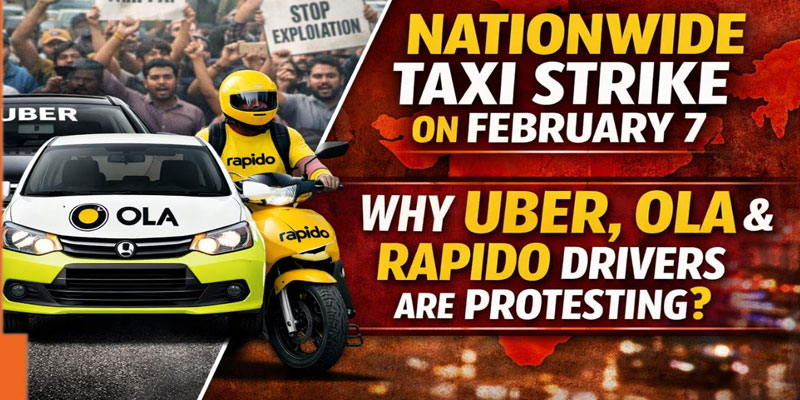
Drivers working with Uber, Ola, and Rapido have announced a nationwide strike on February 7, threatening major disruption to urban transport across India’s largest cities. The call for action, led by gig-worker unions, aims to spotlight grievances over falling earnings, rising costs, and platform policies that drivers say undermine their livelihoods. The planned shutdown is expected to affect peak commuting hours, potentially leaving commuters scrambling for alternatives and intensifying scrutiny of the ride-hailing industry’s labour model.
Rising Discontent in the App-Based Transport Sector
India’s app-based mobility ecosystem has expanded rapidly over the past decade, transforming how millions commute. Yet behind this growth lies mounting frustration among drivers who argue that algorithm-driven pricing, high commissions, and volatile incentives have steadily eroded their incomes. The recent launch of a government-backed cooperative taxi platform has further heightened tensions by offering a commission-free alternative, emboldening drivers to push for reforms.
At the heart of the February 7 strike is a demand for fairer working conditions and more predictable earnings. The Telangana Gig and Platform Workers Union (TGPWU), along with allied groups, has mobilised drivers in multiple cities, calling for coordinated action to pressure both companies and regulators into addressing long-standing concerns.
Root Causes of the Strike
Drivers contend that fare structures and incentive systems have become increasingly unsustainable. Despite guidelines intended to regulate aggregator platforms, unions argue that deep discounting and fluctuating surge pricing continue to squeeze driver earnings. Rising fuel prices, vehicle maintenance costs, and platform commissions have compounded the strain, leaving many drivers with minimal take-home pay despite long working hours.
The emergence of a cooperative ride-hailing model promising transparent pricing and direct payments to drivers has sharpened comparisons with private platforms. Many drivers view this alternative as evidence that different business models are possible, strengthening calls for structural changes across the industry.
TGPWU’s Key Demands Beyond Minimum Fares
While minimum base fares remain a central issue, the TGPWU’s demands extend far beyond pricing. A major priority is stricter enforcement of existing regulatory guidelines to prevent arbitrary fare cuts and excessive discounting that reduce driver earnings. The union has also called for the removal of clauses that allow platforms to undercut base fares, arguing that such provisions destabilise incomes.
Another core demand involves clearer rules on vehicle usage. Unions want restrictions on private vehicles operating commercially without proper licensing, claiming this practice increases competition and drives down fares. They also seek limits on using passenger ride apps for goods delivery services, which drivers say adds pressure without adequate compensation.
Driver welfare is a central theme. The union is pushing for guaranteed minimum monthly income thresholds, access to health and accident insurance, and protection from sudden account deactivations or algorithmic penalties. Transparent grievance redressal systems—ideally involving human oversight rather than automated processes—are also on the agenda.
More broadly, unions are advocating for legal recognition of gig workers as employees or a distinct protected category, which would enable collective bargaining rights, social security coverage, and formal dispute resolution mechanisms.
A Turning Point for India’s Gig Mobility Model
The February 7 strike represents more than a single-day disruption; it reflects deeper tensions within India’s gig economy. As ride-hailing platforms continue to dominate urban mobility, questions about fairness, sustainability, and worker protections are becoming harder to ignore. Whether through regulatory reform, new cooperative models, or negotiations with driver unions, the industry may be approaching a pivotal moment. How companies and policymakers respond could determine whether app-based transport evolves into a more equitable ecosystem—or faces recurring cycles of unrest and disruption.
(With agency inputs)