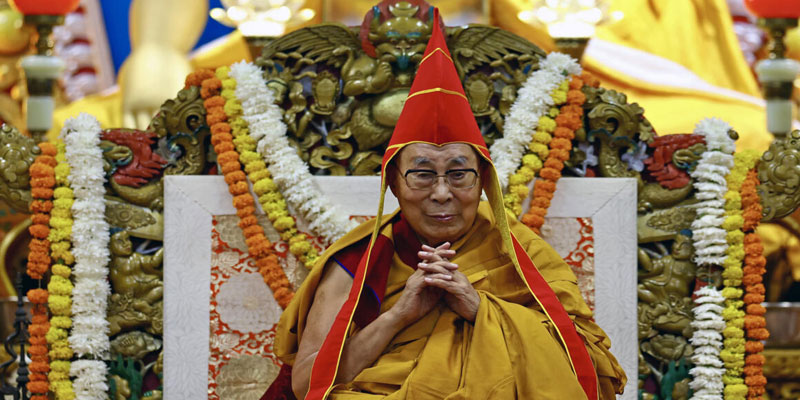
A New Honour on a Global Journey
The Dalai Lama has added an unexpected yet fitting distinction to his long list of international accolades: a Grammy Award. At the 68th Grammy Awards held in Los Angeles on February 1, 2026, the 90-year-old Tibetan spiritual leader won in the category of Best Audiobook, Narration, and Storytelling Recording. The recognition places him in a rare cultural space where spirituality, spoken word, and global pop culture intersect.
The Grammy Context: More Than Just Music
Since their inception in 1959, the Grammy Awards have stood as the highest recognition in the global music and audio industry. Decided by nearly 12,000 members of the Recording Academy across 94 categories, the Grammys influence not only careers and sales but also cultural conversations. While typically associated with chart-topping musicians, the spoken-word category has long acknowledged voices that shape public thought—making it a natural, if uncommon, platform for a figure like the Dalai Lama.
The Winning Work: Meditations – The Reflections of His Holiness the Dalai Lama
The award-winning project is a spoken-word album that blends contemplative narration with classical Indian music. Rather than songs or lyrics, the album offers a sequence of short meditative reflections delivered in the Dalai Lama’s calm, measured voice. These reflections focus on themes central to his lifelong teachings: compassion, mindfulness, inner peace, environmental responsibility, and the idea of universal human interconnectedness.
Interwoven between these narrations are musical passages performed by legendary sarod maestro Ustad Amjad Ali Khan. His Hindustani classical compositions provide emotional texture and rhythmic pauses, allowing listeners to absorb the reflections more deeply. The result is neither a conventional audiobook nor a guided meditation series, but a hybrid listening experience designed for contemplation rather than consumption.
Production Choices and Creative Process
Produced in late 2025, the album reflects careful artistic restraint. The Dalai Lama recorded his narration remotely from Dharamshala, ensuring vocal clarity while preserving the natural cadence of his speech. The production team deliberately avoided heavy digital effects, opting instead for subtle ambient sounds—soft gongs, wind chimes, and natural resonances—that evoke Himalayan stillness.
Amjad Ali Khan’s sarod segments were recorded live in India, lending the album an organic quality often missing from digitally constructed soundscapes. The music follows classical ragas associated with serenity and introspection, reinforcing the album’s meditative intent. Final mixing and mastering were completed in Los Angeles, adapting the work for modern streaming platforms without diluting its spiritual core.
Cultural and Symbolic Resonance
Beyond the technical achievement, the Grammy win carries broader significance. It brings Tibetan Buddhist philosophy into mainstream global consciousness at a time of deep geopolitical and social polarization. Collaborating with Indian artists also subtly reinforces cultural ties between India and the Tibetan exile community, adding a layer of soft power symbolism.
In an industry dominated by spectacle, the Dalai Lama’s victory affirms that quiet wisdom still resonates. It follows a lineage of spoken-word Grammy winners such as Barack and Michelle Obama, highlighting the category’s role in amplifying ideas rather than entertainment alone.
When Silence Speaks Loudest
The Dalai Lama’s Grammy is not a departure from his life’s work but an extension of it. By reaching millions through a contemporary cultural platform, Meditations demonstrates that messages of compassion and shared responsibility can transcend formats and generations. In honoring stillness on one of the world’s loudest stages, the Grammys have underscored a timeless truth: wisdom, when authentically voiced, needs no amplification to be heard.
(With agency inputs)