Expecting Praise Without Action
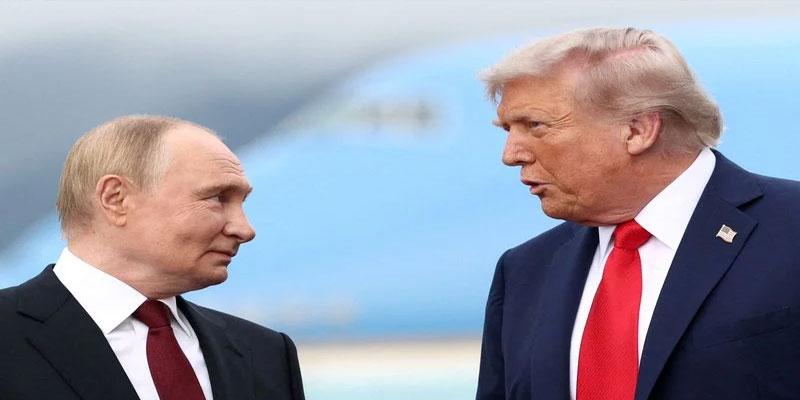
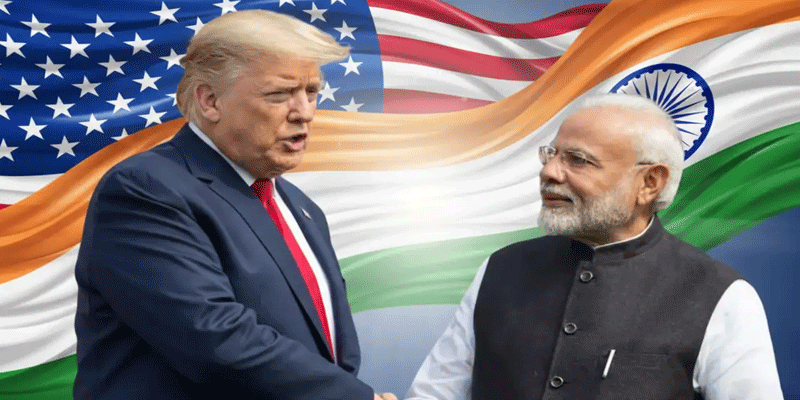
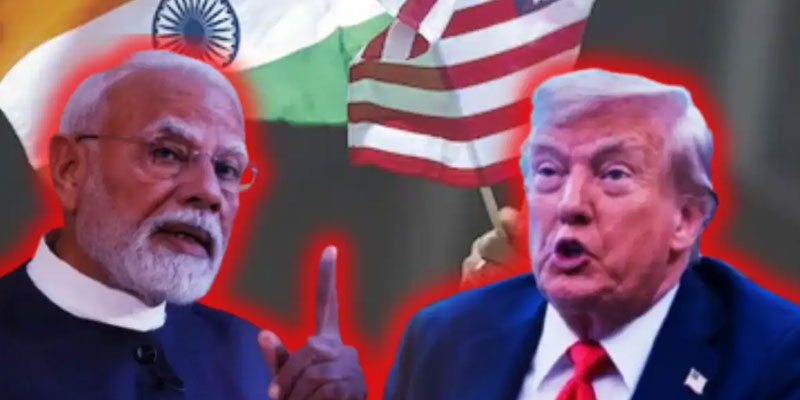
U.S. President Donald Trump has long been known for claiming victories, but this time, experts suggest his frustration stems from not being recognised for something he never truly achieved. Trump reportedly feels “cheated” for not receiving credit for the India–Pakistan ceasefire in May 2025—a diplomatic outcome he had little to do with. This perceived snub, according to U.S. strategic affairs expert Ashley J. Tellis, has contributed to a souring of Washington–New Delhi relations, compounded by trade disputes and energy policy disagreements.
In an interview with NDTV, Tellis explained that Trump believed he deserved acknowledgment for ending tensions between India and Pakistan. “I think he feels cheated that he did not get the credit that he believes is his due,” Tellis said. He added that Prime Minister Narendra Modi’s clarification call, intended to smooth over the matter, may have only deepened Trump’s resentment.
This sentiment, Tellis argued, is not merely about tariffs or oil imports but reflects a deeper grievance rooted in Trump’s obsession with recognition.
Tariffs as Retaliation
Relations took a sharper turn when Trump’s administration imposed sweeping secondary tariffs on Indian exports, now exceeding 50 percent—among the steepest levies imposed on any U.S. trading partner apart from Brazil. Officials in Washington linked these penalties to India’s continued purchases of Russian oil, despite similar or larger imports by other nations.
Tellis suggested that Trump’s personal dissatisfaction over the ceasefire credit, rather than purely economic reasoning, was driving his hardline stance on trade with India.
Oil Politics and Double Standards
While India has faced harsh criticism, China remains the world’s top buyer of Russian crude, importing $62.6 billion worth in 2024 compared to India’s $52.7 billion. Despite this, Trump’s rhetoric has fixated almost exclusively on New Delhi.
His trade adviser Peter Navarro amplified the accusations, branding India the “Maharaj of tariffs” and alleging its refiners were running a “profiteering scheme” that benefitted the Kremlin. Navarro argued that before the Ukraine war, India’s reliance on Russian oil was negligible, whereas today it accounts for over a third of its imports.
India Pushes Back
India has rejected these charges outright. Foreign Minister S. Jaishankar, during a visit to Moscow, reminded Washington that it was the U.S. itself that encouraged India to buy Russian oil to stabilise volatile global energy markets. Expressing “perplexity” at the criticism, he defended India’s choices as pragmatic rather than political, underscoring that New Delhi would not compromise its energy security under external pressure.
A Relationship Tested by Ego and Economics
The current friction between India and the United States reflects more than policy divergence—it illustrates how personal grievances at the top can strain international ties. Trump’s sense of being denied recognition for an unearned diplomatic success has mixed with disputes over oil and trade to create one of the sharpest rifts in years.
Yet the durability of India–U.S. relations has historically rested on shared interests that go beyond individual leaders. As both nations face shifting global challenges, their ability to navigate this turbulent phase will depend on whether pragmatism can outweigh personality-driven politics.
(With agency inputs)