As the Modi government completes 12 years in office, India's reform report card presents a mixed picture of big achievements alongside persistent challenges.
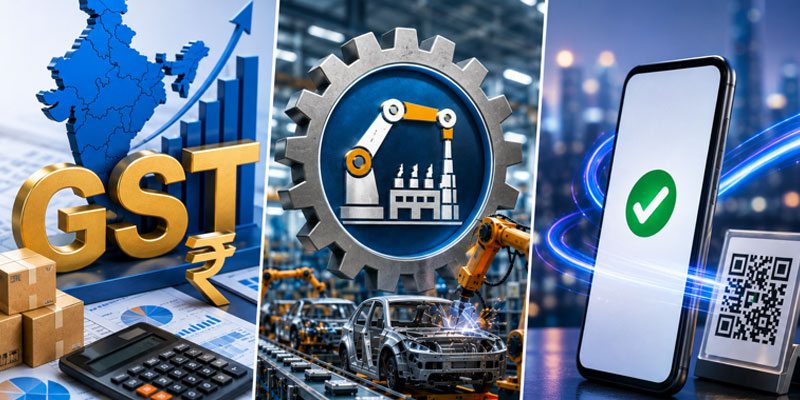
While experts have cheered the Goods and Services Tax (GST), the digital transformation brought by the Unified Payments Interface (UPI), and the Production-Linked Incentive (PLI) scheme that has boosted manufacturing investment, concerns remain over private investment expansion and job creation.
Key Reform Areas: What Worked & What Stalled
-
GST: With over 1.5 crore registered taxpayers, it has created a unified national market and improved tax compliance. However, compliance burden for small businesses and multiple tax slabs remain challenges.
-
UPI: Used by over 50 crore users and 6.5 crore merchants, it has revolutionised digital payments and financial inclusion. Yet, the digital divide persists and payment providers face revenue model challenges.
-
PLI: Has attracted investment and boosted exports in sectors like electronics, pharma, and auto. However, employment gains have lagged behind investment gains.
-
Private Investment: Corporate balance sheets have improved, but a broad-based private investment cycle remains uneven.
-
Job Creation: Formal payrolls and gig economy have grown, but insufficient quality jobs, youth unemployment, and manufacturing employment challenges persist.
Women's Empowerment: A Quiet Revolution
Schemes like Jan Dhan, Mudra credit, and PM Awas Yojana have moved millions of women from the margins towards the mainstream.
The Road Ahead
"But participation is not the same as empowerment, and that is the next frontier," Nikore added. "If we are serious about the target of 70% of women in the workforce by 2047, we have to turn these gains into decent, dignified, well-paid work. A Viksit Bharat simply cannot be built with half its talent sitting on the sidelines."