Fresh Conflict Fears Lift Global Crude Prices
Global oil prices moved higher as renewed military tensions in the Middle East revived concerns about energy supplies. Markets reacted sharply after the United States and Iran exchanged fresh strikes, while Israel ordered its forces to advance deeper into Lebanon. The developments weakened hopes that a fragile ceasefire between Washington and Tehran could soon be extended, prompting traders to once again price in geopolitical risk.
Brent crude climbed above $93 a barrel, recovering from earlier declines triggered by optimism over diplomatic progress. The latest surge highlights how quickly energy markets respond to military developments in a region that remains central to global oil flows.
Why the Middle East Matters to Oil Markets
The Middle East remains the world's most strategically important energy-producing region. Any conflict involving major regional powers can affect supply routes, shipping costs, and investor confidence.
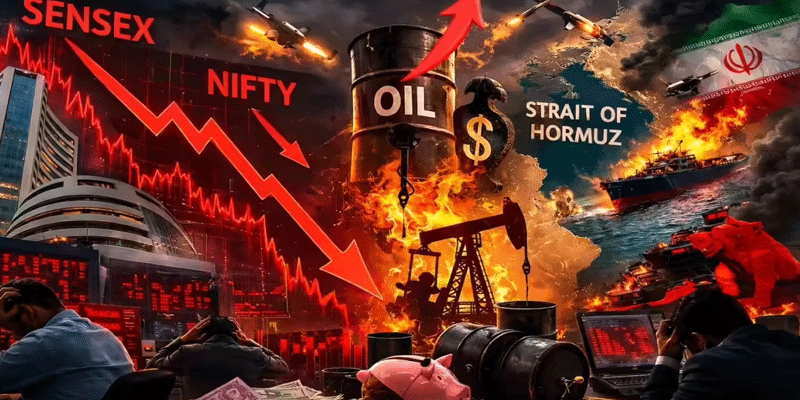
Particular attention remains focused on the Strait of Hormuz, a narrow waterway through which roughly one-fifth of global oil and gas exports pass. Even the possibility of disruptions in the strait can send prices higher as traders factor in potential supply shortages.
In recent weeks, oil prices have swung dramatically between optimism and anxiety. Announcements of ceasefires, peace talks, and diplomatic breakthroughs pushed prices lower, while military confrontations repeatedly reversed those gains.
Israel Orders Troops Deeper into Lebanon
One of the main triggers behind the latest rally was Israel's decision to expand military operations inside Lebanon. The move came despite ongoing diplomatic efforts aimed at reducing hostilities along the border.
Washington recently hosted talks involving Israeli and Lebanese representatives in an effort to preserve a ceasefire and create conditions for broader negotiations. However, reports of Israeli military advances and raids near Beirut's southern suburbs have cast doubt on the prospects for a lasting settlement.
The expansion of ground operations has heightened fears that the conflict could widen further, drawing in additional regional actors and increasing instability across the eastern Mediterranean.
US Pushes De-escalation as Iran Tensions Persist
At the same time, tensions between the United States and Iran have intensified following fresh military strikes. The renewed confrontation has revived concerns about security around the Strait of Hormuz, one of the world's most critical energy chokepoints.
Even as military exchanges continue, Washington is reportedly pursuing a gradual de-escalation framework aimed at extending ceasefire arrangements and reducing the risk of a broader regional conflict. The challenge for U.S. diplomacy is balancing military deterrence with efforts to keep negotiations alive.
For markets, the uncertainty surrounding these talks remains a major driver of volatility. Every sign of escalation tends to push prices upward, while indications of diplomatic progress often trigger sharp declines.
Goldman Sachs Warns of Weak Demand
Despite the geopolitical premium supporting oil prices, analysts caution that demand fundamentals remain weak. Goldman Sachs has highlighted slowing oil consumption in China and Europe, two major engines of global demand growth.
This softer demand outlook could limit the sustainability of any prolonged price rally. If geopolitical tensions ease, weak consumption trends may once again become the dominant market factor, placing downward pressure on crude prices.
A Market Caught Between Risk and Reality
Oil markets are currently navigating a delicate balance between geopolitical uncertainty and economic fundamentals. On one side are escalating conflicts involving Israel, Lebanon, the United States, and Iran, all of which threaten supply stability. On the other is evidence of slowing demand from key global economies. Whether crude moves toward the symbolic $100-per-barrel mark or retreats again will largely depend on which force proves stronger: military escalation or diplomatic de-escalation. For now, markets remain firmly focused on the Middle East, where every strategic move continues to shape the direction of global energy prices.
(With agency inputs)