Sensex Tumbles as Global Risks Shake Markets
Indian equity markets witnessed a sharp reversal on June 1, 2026, as investors grappled with a combination of geopolitical uncertainty, foreign fund outflows, and profit-booking. After showing resilience earlier in the session, the benchmark indices lost momentum in the latter half of the day, with the Sensex plunging nearly 1,000 points from its intraday high and settling around the 82,000 mark.
The Nifty 50 fell 359 points, or about 1.5%, to close below the crucial 23,400 level, marking its lowest close in nearly two weeks. The sharp decline underscored the fragility of market sentiment amid growing global and domestic concerns.
Markets Caught Between Optimism and Risk
Indian equities had entered June on the back of a strong recovery in recent sessions, supported by easing inflation expectations, hopes of policy stability, and resilient corporate earnings. However, global developments quickly altered investor sentiment.
Markets across the world have been closely tracking geopolitical developments in the Middle East, particularly the evolving situation between the United States and Iran. At the same time, investors were preparing for major portfolio adjustments linked to MSCI index rebalancing, which often triggers large institutional flows and heightened volatility.
Against this backdrop, even a minor shift in sentiment was enough to trigger widespread selling.
Geopolitical Uncertainty Weighs on Sentiment
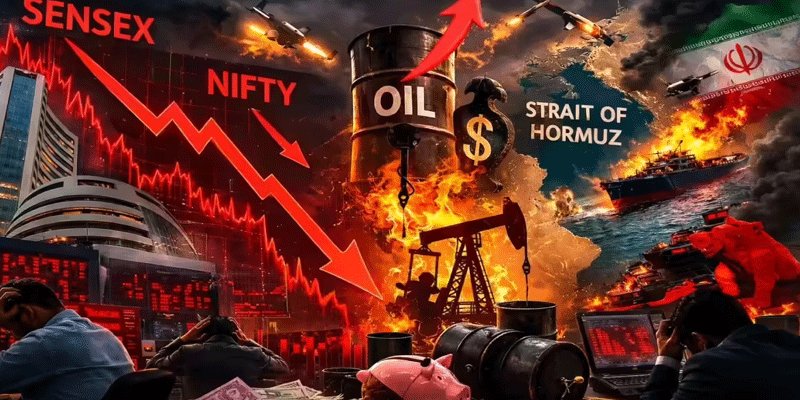
One of the biggest factors behind the market decline was renewed uncertainty surrounding the fragile ceasefire between the United States and Iran. Hopes of a broader peace agreement weakened after fresh military exchanges and rising tensions in the region.
Investors remain concerned that any escalation could disrupt shipping through the Strait of Hormuz, a critical energy corridor through which nearly one-fifth of global oil supplies pass. Such risks pushed crude oil prices higher, raising fears of imported inflation and increased costs for oil-dependent economies like India.
The rise in crude prices added pressure on sectors sensitive to energy costs and contributed to the cautious mood across the market.
Massive FII Selling Adds to the Pressure
Another major trigger was heavy selling by Foreign Institutional Investors (FIIs). Foreign investors reportedly offloaded equities worth ₹21,106 crore in the previous trading session, largely driven by MSCI rebalancing-related adjustments.
Such large-scale selling often affects heavyweight stocks that dominate benchmark indices, leading to broader market weakness. The outflow also reinforced concerns about foreign investor confidence amid global uncertainty and a strengthening U.S. dollar.
The impact was visible across sectors, particularly in large-cap counters that typically attract significant institutional participation.
Profit-Booking and Other Headwinds
Markets were also vulnerable to profit-booking after a recent rally. Traders who had benefited from earlier gains chose to lock in profits, especially during the final hour of trading, accelerating the sell-off.
Additional pressure came from a weakening rupee, rising crude oil prices, concerns over below-normal monsoon rainfall, and a stronger dollar that reduced the appeal of emerging-market assets.
Together, these factors created a challenging environment for equities and amplified intraday volatility.
What Lies Ahead for the Market?
The sharp decline reflects a convergence of global uncertainty, institutional selling, and technical weakness. While the broader market structure remains intact, analysts believe the near-term outlook will depend heavily on whether the Nifty can reclaim key resistance levels.
The 23,800 mark is now seen as a critical threshold. A decisive move above this level could restore bullish momentum and improve investor confidence. Until then, the market is likely to remain vulnerable to further volatility, with geopolitical developments, foreign fund flows, and crude oil prices continuing to dictate sentiment.
(With agency inputs)