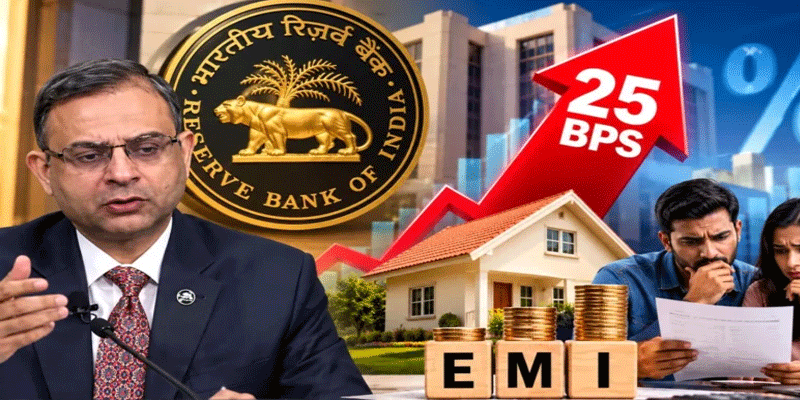
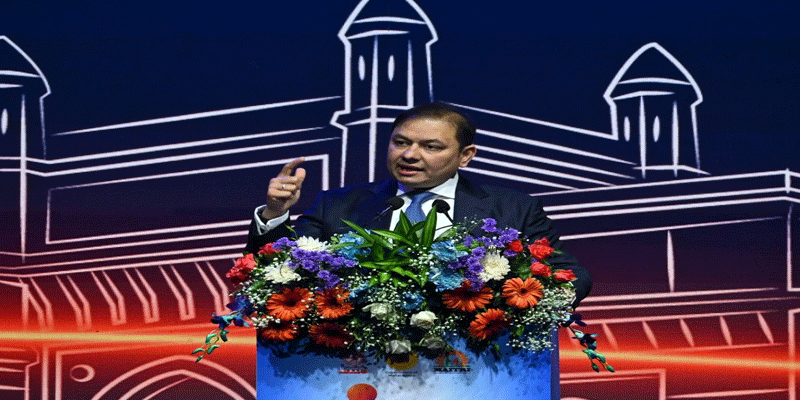
The Reserve Bank of India Monetary Policy Committee (MPC) concluded its June 2026 meeting by keeping the repo rate unchanged at 5.25 percent while maintaining a “neutral” policy stance. RBI Governor Sanjay Malhotra stated that the central bank remains focused on balancing slowing economic growth with rising inflationary pressures and global uncertainties. The policy decision signals continuity rather than aggressive intervention, reflecting caution amid volatile international conditions and domestic inflation risks.
Why the RBI Is Proceeding Carefully
The RBI’s latest policy stance comes at a time when India’s economy is showing signs of moderation after a strong recovery phase. Global energy price volatility, geopolitical tensions, trade disruptions and concerns over food inflation have complicated the macroeconomic environment.
While India continues to remain among the world’s fastest-growing major economies, the central bank has revised its FY26 GDP growth projection downward from 7.6 percent to 7.3 percent. For FY27, growth is expected to slow further to 6.9 percent. The RBI acknowledged that rising crude oil prices, supply shortages and external risks are creating fresh pressure on economic stability.
At the same time, inflation remains a concern. Consumer Price Index inflation is projected to rise gradually during the year, peaking around 5.2 percent in the third quarter before moderating later.
Key Takeaways from Governor Malhotra’s Policy Statement
One of the most significant aspects of the policy statement was the RBI’s warning about slowing global and domestic growth momentum. Governor Malhotra noted that geopolitical tensions, especially rising energy-related uncertainties, could impact investment and consumption patterns.
The second major takeaway involved inflation risks. The RBI projected a U-shaped inflation trajectory for 2026, beginning at around 4 percent before rising sharply during the middle of the year. Food prices and crude oil movements remain the biggest risks to price stability.
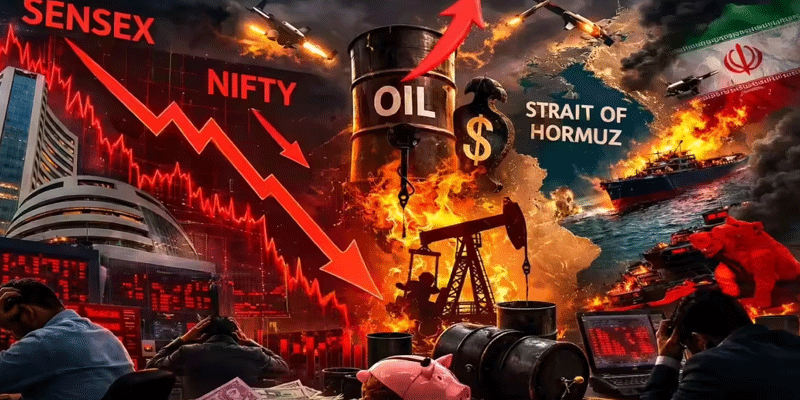
Another important concern highlighted was global crude oil volatility. The RBI specifically referred to geopolitical tensions involving Iran and disruptions in energy markets that may raise India’s import costs and widen inflationary pressures.
The central bank also flagged weather-related risks. Although forecasts indicate a normal monsoon, the RBI warned that any climate-related disruptions could impact agricultural output and trigger higher food inflation in the second half of FY26.
Finally, Governor Malhotra emphasized measures aimed at strengthening foreign capital inflows. India’s forex reserves reportedly recovered to nearly $697.1 billion, helping improve investor confidence and support rupee stability amid uncertain global conditions.
What Will Be the Impact on Loan EMIs?
For borrowers, the RBI’s decision means there will be no immediate increase or decrease in monthly loan repayments. Since the repo rate remains unchanged at 5.25 percent, floating-rate home loans, vehicle loans and personal loans linked to external benchmarks are expected to continue at existing interest rates.
The Standing Deposit Facility rate also remains at 5 percent, while the Marginal Standing Facility and bank rate stay at 5.50 percent. However, the RBI’s neutral stance indicates that future policy moves will depend on how inflation and growth evolve in the coming months.
Latest Update and Market Outlook
Financial markets interpreted the policy decision as a signal of stability rather than aggressive tightening. Economists expect the RBI to maintain a cautious wait-and-watch approach through much of 2026 unless inflation rises beyond expectations or global conditions worsen significantly.
Stability with Vigilance Defines RBI’s Current Strategy
The June 2026 MPC meeting underscored the RBI’s attempt to carefully navigate competing economic challenges. By keeping rates unchanged while acknowledging inflationary and geopolitical risks, the central bank has prioritised stability over short-term policy shifts. The coming months will determine whether the RBI can successfully balance growth support with inflation control in an increasingly uncertain global economy.
(With agency inputs)