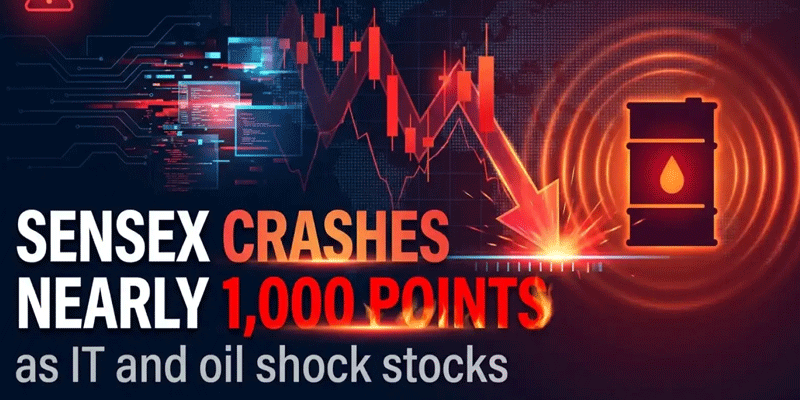
“Not a Drop” of Oil Will Flow
The six-month US-Iran conflict is entering a dangerous new phase, shifting from direct military confrontation towards economic warfare and control of global energy flows. On August 24, Washington is preparing to unveil what Treasury Secretary Scott Bessent calls an “economic D-Day” against Tehran, while Iranian security chief Mohsen Rezaei has warned that, if the economic war continues, “not a drop” of oil will leave the Persian Gulf.
From Military Strikes to Economic Warfare
The confrontation began on February 28 with large-scale US and Israeli strikes on Iran. The conflict has since inflicted heavy casualties, damaged Iran’s military capabilities and disrupted regional trade and energy markets. Although major direct US-Iran strikes have subsided in recent weeks, diplomacy has failed to produce a durable political settlement.
Washington now appears to be betting that economic pressure can achieve what military action alone cannot: weaken Tehran’s financial capacity and force it back towards negotiations.
Washington’s “Economic D-Day”
Bessent has described the coming measures as the “greatest financial offensive ever marshalled”, with the United States expected to target not only Iranian entities but also countries and commercial networks sustaining Tehran’s economy.
The critical question is whether Washington will rely primarily on sanctions against Iranian companies or deploy extensive secondary sanctions against foreign banks, shippers, refiners and oil buyers. Such measures could widen the confrontation considerably, forcing countries to choose between commercial relations with Iran and access to the US-led financial system.
Tehran Raises the Stakes Over Hormuz
Iran’s response has transformed the economic confrontation into a potential global energy crisis. Rezaei warned that Iran could halt oil exports not only through the Strait of Hormuz, but from anywhere in the Persian Gulf, if Washington persists with its economic campaign. Tehran has also warned regional countries participating in the US pressure campaign that it could regard their actions as acts of war.
This remains a conditional threat, not confirmation of a new complete blockade. But its strategic purpose is unmistakable: make the consequences of isolating Iran extend beyond Tehran to Gulf producers and energy-consuming economies.
Why Hormuz Makes the Threat Global
The Strait of Hormuz is one of the world's most critical energy chokepoints. In 2025, about 20 million barrels per day of crude and petroleum products—roughly a quarter of global seaborne oil trade—passed through it, with around 80% destined for Asia. China, India and Japan are among the major destinations.
Any serious disruption would therefore threaten oil prices, shipping insurance, freight costs and inflation across Asia and beyond. The stakes are even higher because current regional disruptions have already sharply reduced traffic through the waterway.
Economic Pressure Risks Becoming Energy Shock
The latest US-Iran escalation is no longer simply about sanctions versus sanctions. Washington is testing whether financial isolation can force Tehran to yield, while Iran is threatening to make the economic consequences global. For India and other Asian importers, the immediate concern is energy security and price volatility. The most dangerous outcome would be a cycle in which economic pressure triggers disruption of Gulf energy flows, producing a crisis far larger than either side initially intended.
(With agency inputs)