Texmaco Partners Global Rail Leaders to Build Freight Ecosystem
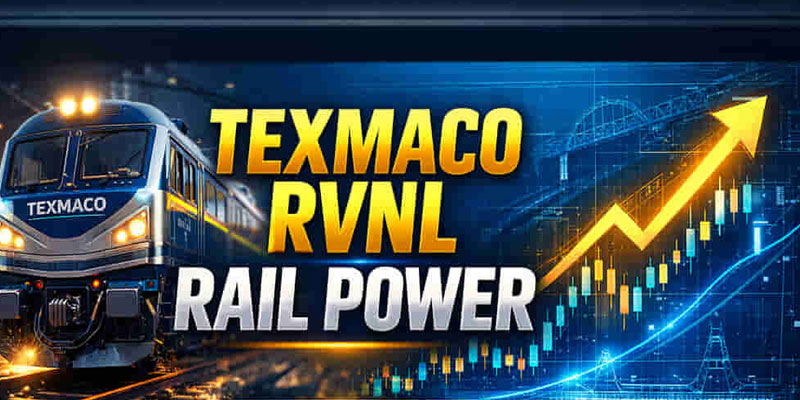
India's rail freight ambitions have received a major boost with Texmaco Rail & Engineering Ltd. joining hands with France's Touax Group and US-based TrinityRail Global to create what the partners describe as India's first global railcar leasing platform. The collaboration marks a significant milestone in the country's logistics transformation, signalling growing international confidence in India's rapidly expanding freight rail sector. More than a corporate partnership, the agreement reflects a strategic effort to build a world-class freight leasing ecosystem that combines manufacturing, financing, leasing and maintenance under a single integrated platform.
Transforming India's Freight Rail Landscape
India has been steadily modernising its freight transportation network under the National Rail Plan, which aims to increase rail's share of freight movement from around 27 per cent to 45 per cent over the coming years. Achieving this ambitious target requires more than expanding railway infrastructure—it demands a modern leasing ecosystem that allows businesses to access freight wagons without bearing the heavy capital costs of outright ownership.
Globally, mature rail markets in Europe and North America rely extensively on leasing models, enabling operators to improve fleet utilisation, reduce financial burdens and ensure better lifecycle maintenance. India, however, has traditionally depended on direct procurement and ownership of rolling stock, leaving significant scope for innovation.
The partnership between Texmaco, Touax and TrinityRail seeks to bridge this gap by introducing international best practices into India's freight rail sector. The integrated platform will offer end-to-end services ranging from wagon manufacturing and financing to leasing, maintenance and lifecycle engineering.
₹1,800 Crore Investment Planned
As part of the expanded collaboration, the three partners have announced plans to invest nearly ₹1,800 crore over the next three to five years while adding 100 new freight rakes to India's rail network.
Under the revised ownership structure, TrinityRail Global will acquire a 32 per cent stake in Touax Texmaco Railcar Leasing Pvt. Ltd., while Texmaco Rail & Engineering and Touax Group will each retain 34 per cent ownership.
This equity arrangement transforms the venture into a genuinely international platform rather than a conventional supplier-client relationship. It enables Texmaco to leverage global expertise in rail leasing and asset management, while providing its foreign partners with direct exposure to one of the world's fastest-growing freight markets.
The collaboration is expected to accelerate fleet expansion, improve wagon availability and promote more efficient asset utilisation across industrial corridors and container transportation networks.
Why the Partnership Matters
The agreement reflects a broader shift in India's logistics sector from traditional asset ownership towards integrated mobility and leasing solutions.
A robust railcar leasing ecosystem offers several strategic advantages:
· Reduces upfront capital expenditure for freight operators.
· Enables faster fleet expansion through flexible leasing models.
· Improves wagon utilisation and maintenance efficiency.
· Supports the objectives of the National Rail Plan.
· Strengthens domestic manufacturing under the Make in India initiative.
· Attracts international investment, technology and operational expertise.
· Creates a sustainable financing framework for long-term freight growth.
Beyond expanding rolling stock, the partnership also lays the foundation for a modern freight-financing ecosystem capable of supporting India's rapidly evolving logistics requirements.
A New Chapter in India's Logistics Transformation
The Texmaco-Touax-TrinityRail collaboration represents more than an investment in railway wagons—it signifies a structural shift in how India's freight sector is financed, managed and expanded. By combining domestic manufacturing strengths with global capital, technology and leasing expertise, the venture has the potential to reshape the country's rail logistics landscape. If implemented successfully, it could become a benchmark for future public-private partnerships, helping India scale freight capacity efficiently while reducing dependence on public investment alone. As global confidence in India's infrastructure story continues to grow, this partnership could emerge as a defining model for the next generation of rail-led economic development.
(With agency inputs)