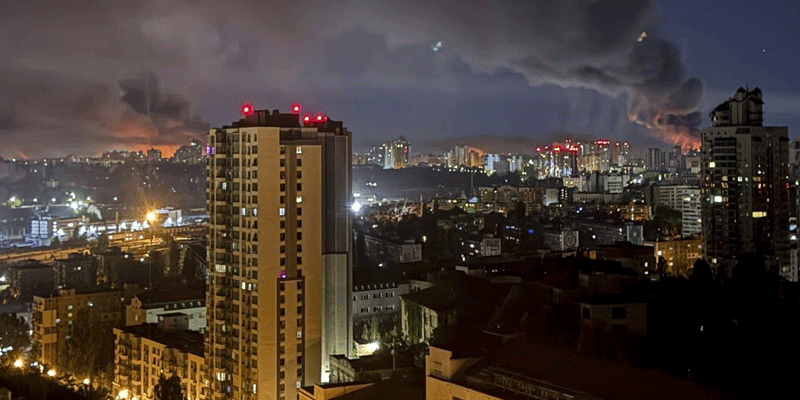
“Over 400 drones targeted Moscow on the final day of voting in Russia’s parliamentary election” captures the extraordinary convergence of warfare and domestic politics on September 20, when Russia was concluding its three-day State Duma election. Russian authorities said more than 1,600 drones had been intercepted across the country since Saturday, including about 450 directed toward Moscow. The reported assault caused deaths, damaged an oil refinery and forced hundreds of residents to evacuate.
An Unprecedented Attack on the Capital
Moscow Mayor Sergei Sobyanin described the barrage as unprecedented and said Russian air defences had intercepted the drones before they could cause wider damage. Regional authorities reported at least three deaths, while a drone-related fire at a 21-storey residential building led to the evacuation of around 400 people. Part of the Moscow Oil Refinery was also damaged.
The scale remains based largely on Russian official reporting, and independent verification of the full number of drones and their effectiveness is difficult amid wartime information restrictions.
Election Day Turns into a Security Test
The attack came as Russians cast ballots on the final day of the first parliamentary election since Russia launched its full-scale invasion of Ukraine in February 2022. Voting took place from September 18 to 20 and covered all 450 seats in the State Duma.
The election was conducted under tight political restrictions. The Kremlin-aligned United Russia dominated the political landscape, while liberal opposition forces faced significant barriers. Yabloko, which has opposed the war, was barred from running its federal party list, although some candidates remained eligible in individual constituencies. Voting was also organised in Russian-controlled Ukrainian territories, a process rejected by Ukraine and widely disputed internationally.
Energy Infrastructure Becomes a Major Target
The refinery strike highlights Ukraine’s expanding campaign against Russia’s energy infrastructure. Kyiv has increasingly used long-range drones to hit facilities that contribute to Russia’s fuel supply and wartime revenues. The Moscow refinery is particularly significant, having processed about 11.6 million tonnes of crude in 2024, according to Reuters.
The broader campaign has also coincided with disruptions to Russia’s domestic fuel market, including shortages and higher prices in several regions.
War Reaches Deeper into Russia
Moscow’s response was equally political and military. Sobyanin accused Ukraine of deliberately attempting to disrupt the election, while Ukrainian President Volodymyr Zelenskyy praised the impact of the long-range strikes and said key oil and logistics facilities had been hit.
A War That Can No Longer Stay Outside Russia
The timing gave the attack particular significance. Even as authorities sought to present voting as proceeding normally, the drone barrage demonstrated the growing reach of Ukraine’s strike capabilities into Russia’s political and economic heartland. The episode therefore illustrated a broader reality of the fifth year of the war: domestic political events in Russia are increasingly unfolding alongside, rather than apart from, the direct consequences of the conflict.
(With agency inputs)